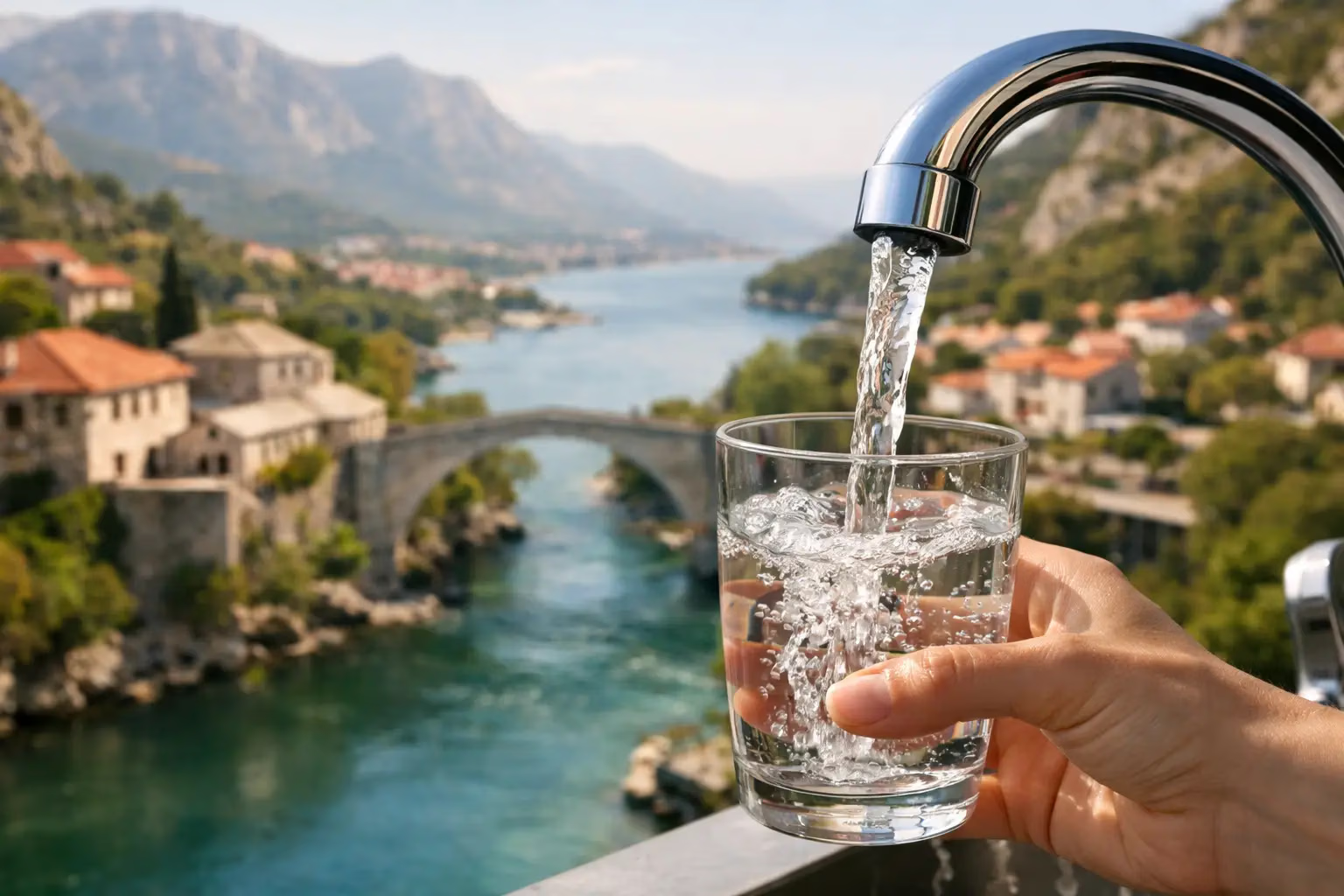
The question “is tap water safe Balkans” looks simple in a search bar, but the useful answer is more specific: it depends on the country, the town, the building, and sometimes the weather that week. Across much of the region, tap water is safe and perfectly normal to drink. Still, a good travel habit is knowing when to trust the faucet and when to ask one quick local question.
For travelers visiting family, driving between coastal towns, or taking a short break from the U.S. or Western Europe, water should not become a planning headache. You just need a realistic approach - not the blanket assumption that all Balkan tap water is unsafe, and not blind confidence in every apartment’s old plumbing.
Is Tap Water Safe in the Balkans?
In many major cities and established tourist areas, yes. Croatia, Slovenia, Serbia, Bosnia and Herzegovina, Montenegro, North Macedonia, Bulgaria, Romania, and Greece all have places where residents regularly drink tap water. Ljubljana, Zagreb, Belgrade, Sarajevo, Skopje, Sofia, and many inland towns are generally straightforward examples.
The catch is that “safe” is not identical to “tastes great,” and a country-level answer can hide local differences. Water quality can vary between a capital city and a small village, between a modern hotel and a decades-old holiday apartment, or between the main coastal network and a small island or mountain settlement. Temporary notices after heavy rain, maintenance work, or summer pressure on local systems also matter.
If you are staying in a hotel, ask the reception desk. In a private apartment, ask the host directly: “Do you drink the tap water?” That phrasing gets a clearer answer than asking whether it is technically safe. Locals will usually tell you if they use a filter, buy bottled water, or avoid the faucet after storms.
Where You Can Usually Drink From the Tap
Slovenia has an especially strong reputation for good drinking water, including in Ljubljana and many mountain and lake areas. Travelers around Lake Bled, Lake Bohinj, or the Soča Valley will often find that tap water is one of the easiest parts of the trip. Bring a refillable bottle and use it.
Croatia is similarly reliable in most cities and along much of the coast. In Split, Dubrovnik, Zadar, Rijeka, and Zagreb, tap water is generally safe to drink. That does not mean every rental has ideal pipes, particularly in old stone buildings near historic centers. If the water has an unusual color, smell, or taste, let the host know and use bottled water until you get an answer.
In Serbia, city tap water is commonly used for drinking, especially in Belgrade and Novi Sad. The same is true in much of Bosnia and Herzegovina, where travelers often find excellent spring-fed water in Sarajevo and mountain regions. Bosnia can be a good reminder that the water source may be excellent while a specific property’s plumbing still deserves attention.
Montenegro has good tap water in many towns, but the coastal summer season adds a practical variable. During periods of very high demand, some areas may rely more heavily on stored or supplementary supplies. Most visitors will be fine, yet it is sensible to ask in Budva, Kotor, Herceg Novi, or smaller coastal settlements, particularly if you are traveling with young children or have a sensitive stomach.
North Macedonia, Bulgaria, Romania, and Greece also have plenty of destinations where tap water is drinkable, particularly in larger cities. Local advice becomes more valuable in smaller settlements, mountain areas, and islands. In Greece, many travelers choose bottled water on some islands because of mineral content, desalination, or taste rather than a clear safety problem.
Albania Requires More Careful Local Checks
Albania is the destination where travelers should be more cautious with tap water, especially outside newer hotels and well-managed properties. In Tirana and coastal areas, standards can vary significantly by building and neighborhood. Many residents and visitors use bottled or filtered water for drinking.
That does not mean you need to panic about every ice cube or spend your trip brushing teeth with bottled water. In reputable hotels and restaurants, basic food and drink hygiene is usually manageable. But for drinking water, making coffee, filling a child’s bottle, or taking medication, bottled water is the safer default unless your accommodation confirms otherwise.
The same principle applies anywhere you are unsure: use sealed bottled water for the first day, ask locally, then adjust. It is a small cost compared with losing two beach days to an avoidable stomach problem.
The Building Matters as Much as the Destination
A well-located apartment can have a completely different water experience from the one next door. This is especially common in older parts of Adriatic towns, where charming narrow streets and stone houses come with aging pipes, rooftop tanks, or intermittent pressure.
Before drinking, look for obvious warning signs. Cloudiness that clears after a few seconds is often just trapped air and usually harmless. Brown, yellow, or persistently cloudy water is different - do not drink it until the host explains the issue. A strong chemical smell, metallic taste, or a notice from the accommodation also calls for bottled water.
If water has been sitting in the pipes after a property was empty, let the cold tap run briefly before filling your bottle. Use cold water for drinking and cooking rather than hot water from the faucet. This is sensible travel practice anywhere, including in the U.S.
What About Restaurants, Ice, and Brushing Your Teeth?
Where tap water is safe, restaurant ice and rinsed salad are normally not worth worrying about. Constantly avoiding them can make travel feel harder than it needs to be. In Croatia, Slovenia, Serbia, Bosnia and Herzegovina, and most larger cities across the region, order a drink with ice if you want one.
In places where you are using bottled water as a precaution, apply the same logic to brushing teeth and making baby formula. Ask for drinks without ice if you are uncertain, especially at small roadside stops or in remote areas where you do not know the water source.
Food-related stomach problems are often blamed on water when the real cause is heat, heavy meals, poor hand hygiene, or food that has been sitting out too long. Balkan summer travel has its classics: a long drive, a stop for grilled meat, cream-filled pastries in the afternoon sun, then hours at the beach. Drink enough water, wash hands, and do not assume every upset stomach came from the faucet.
A Simple Water Plan for Road Trips
For a Balkan road trip, keep one reusable bottle per person and a small reserve of bottled water in the car. This is useful even in areas with excellent tap water, since remote beaches, hiking trails, border crossings, and long mountain roads do not always offer an easy refill point.
A compact filter bottle can improve taste and reduce plastic use, but it is not a substitute for local guidance where the water supply is questionable. Standard travel filters may not address every possible issue, and they do nothing for water you should avoid altogether. Use a filter for convenience, not as permission to ignore an advisory.
Families should be slightly more conservative. If a local host says the water is “usually fine” but they personally buy bottled water for children, follow their lead. The same goes for travelers with compromised immune systems or a medical reason to be careful. A few bottles from a store are easier than testing your luck midway through a trip.
Ask the Right Question When You Arrive
Rather than searching endlessly for a definitive national answer, ask three practical questions at check-in: Do you drink the tap water here? Has there been any recent water notice? Is there a refill point you recommend? You will usually have your answer in less than a minute.
The Balkans are not one water system, just as they are not one kind of holiday. A city break in Ljubljana, a family week on the Croatian coast, and a road trip through Albania call for slightly different habits. Pack a bottle, listen to local advice, and let water be the easy part of getting where you want to go.
Ready for your next adventure?
Compare flights, accommodation and activities – ljetovanje.com helps you find the best deals for your perfect holiday.
ljetovanje.com
Travel expert and contributor for Ljetovanje.com