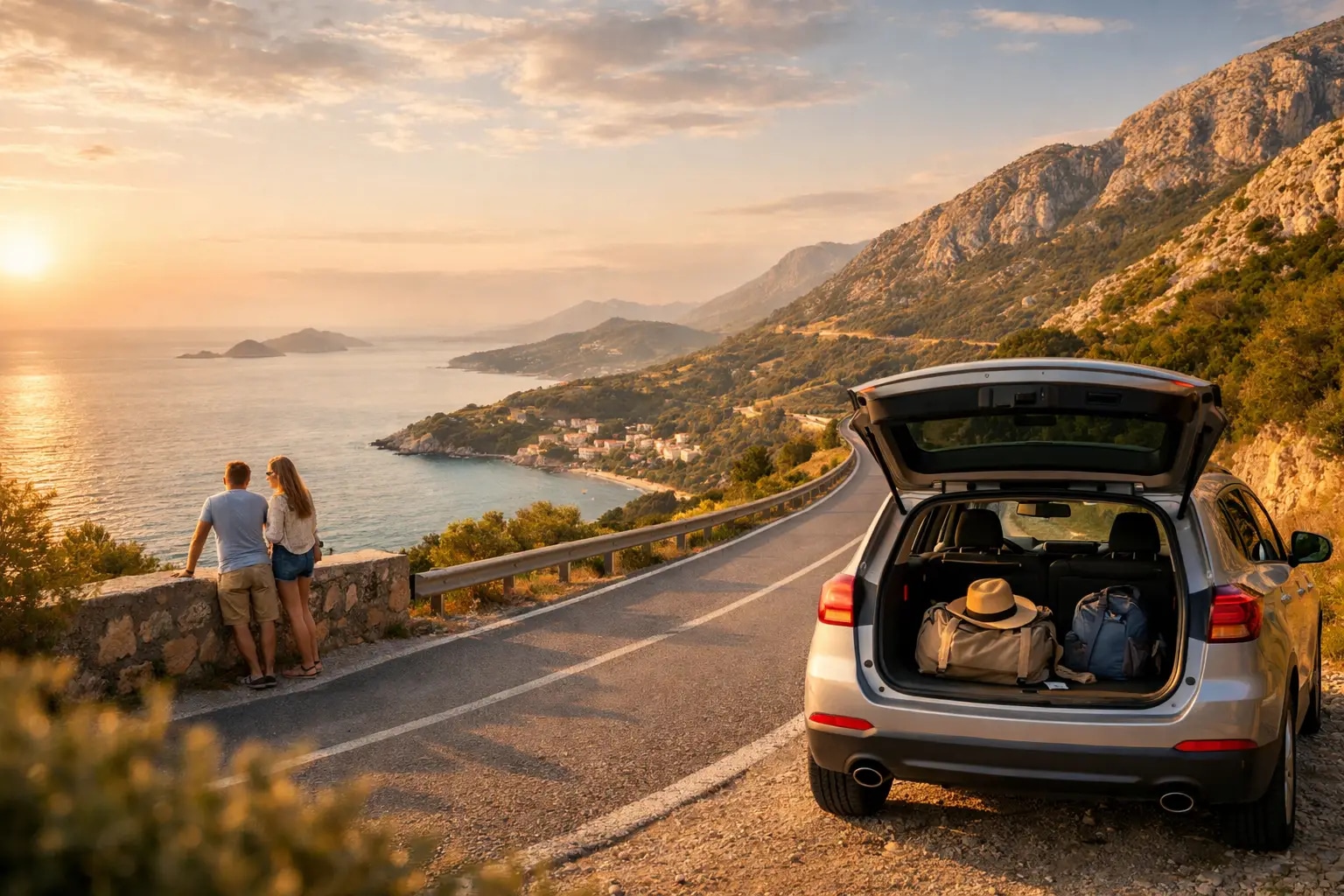
The map makes the Adriatic coast look deceptively simple. A line of blue water, a string of towns, and a few hours between each stop. Then summer traffic builds near Split, parking disappears in a historic center, and the beach you saved is a steep 20-minute walk downhill. Knowing how to plan a coastal roadtrip means planning for the road you will actually drive, not the one suggested by a map.
For travelers arriving from the U.S., Germany, Switzerland, or elsewhere in Europe, a coastal drive can be the best way to combine a proper beach holiday with places that are harder to reach by plane. It also gives families the flexibility to carry beach gear, make supermarket stops, and choose an apartment outside the busiest old towns. The key is not fitting in every famous stop. It is building a route that leaves room for swimming, long lunches, and the occasional change of plan.
Start With the Direction, Not the Wishlist
The first decision is where to begin and end. A one-way route is usually better than retracing the same coast, especially if you have a week or more. For Croatia, a north-to-south drive from Istria toward Dalmatia works well when flights allow it. A route beginning around Split and ending in Dubrovnik is more compact and makes sense for a shorter trip. Montenegro is small enough to combine with the southern Adriatic, but its coastal roads can be slower than the distance suggests.
Choose your endpoints around real flight schedules, rental-car availability, and the time you land. An evening arrival is not the moment to take on a three-hour coastal drive after an overnight flight. Spend the first night near the airport or in the arrival city, then collect yourself before heading out. This is especially useful for diaspora travelers coming with children, luggage, and plans to see relatives along the way.
A route also needs a clear pace. For seven nights, two or three bases are enough. For 10 to 14 nights, add a few more, but resist the temptation to change accommodations every day. Checking out, finding the next apartment, unloading bags, and locating parking can quietly consume half a holiday morning.
How to Plan a Coastal Road Trip Around Real Drive Times
Coastal routes are scenic because they follow the terrain. That also means curves, village speed limits, narrow lanes, construction, and traffic at popular junctions. A route that looks like two hours online can take three or four in peak summer, particularly on a Saturday. Treat drive-time estimates as a starting point, then add time for fuel, lunch, viewpoints, and the inevitable search for a parking space.
Avoid making your longest drive on your first full day or on a weekend changeover. July and August are when apartments turn over, roads fill, and even ordinary stops become crowded. If your schedule is fixed, leave early. A 7:00 a.m. departure can turn a stressful transfer day into a pleasant arrival before the heat peaks.
There is also a practical choice between the coastal road and the highway. The highway is usually faster for covering distance, while the coast delivers the views and access to smaller towns. Use each deliberately. Take the highway when you need to reach a base, then use local roads for day trips. Driving every kilometer beside the sea sounds romantic until the third hour behind a bus.
Build Your Trip Around Bases, Not Overnight Pins
A good coastal base is not always the town with the most photographs. It is the place where you can park, buy breakfast, walk to the water, and get out easily the next morning. In high season, staying just outside a famous center can make a major difference in price and stress. You may trade a waterfront balcony for a 10-minute drive, but gain a quieter evening and a reserved space for the car.
For a Dalmatian route, consider pairing one larger, practical base with a smaller town. Split offers services, restaurants, and transport links, but its center is not ideal for keeping a car. A nearby coastal area or an apartment with confirmed parking may suit road trippers better. Farther south, the Pelješac Peninsula can offer a slower rhythm between major stops, with beaches, small wineries, and less pressure to spend every day in a crowded old town.
In Montenegro, a stay above the Bay of Kotor can be memorable, but check the road access before booking. Some beautiful properties sit on steep, narrow roads that are inconvenient with a large rental car or tired children. Around Budva and the coast farther south, proximity to the beach is useful, but so is knowing whether your accommodation has parking that is genuinely on-site rather than somewhere vaguely nearby.
When comparing apartments, prioritize the practical details: air conditioning, washing machine, kitchen, exact parking arrangement, stairs, and beach access. For a family holiday, these can matter more than an extra point on a review score.
Leave Space for Beaches That Are Not on the Main Route
The best beach day rarely happens when you arrive at noon, circle for parking, and settle on the first patch of shade available. Look at beaches near each base before you travel and identify one easy option and one quieter backup. The easy option is for a low-effort morning. The backup is for days when you are willing to drive, walk, or arrive early for clearer water and fewer people.
Understand the local beach reality too. Many Adriatic beaches are pebble rather than sand, so water shoes are more useful than another pair of dress sandals. Natural shade can be limited. A small umbrella, sun protection, and enough water for a few hours make a bigger difference than elaborate beach equipment.
Do not force every afternoon into sightseeing. The coast rewards a looser schedule: a morning market, a swim before lunch, and a late dinner after the heat fades. If you are traveling in July or August, this rhythm is not laziness. It is smart timing.
Treat Parking as Part of the Accommodation Decision
Parking is one of the least glamorous parts of a coastal road trip and one of the most likely to affect your mood. Old towns were not built for modern traffic, and public lots near popular beaches can fill early. Never assume that "parking available" means free, reserved, close, or suitable for your vehicle.
Before booking, ask whether a space is included, whether it must be reserved, and how far it is from the property. If the answer is unclear, plan as though you will need paid parking. It is often worth paying for a centrally located garage on a sightseeing day rather than losing an hour trying to save a few dollars on a distant lot.
Keep your car light and easy to manage. A compact vehicle is usually more comfortable on narrow roads and easier to park, especially if you are traveling as a couple. Larger families may need the space of an SUV or wagon, but should accept that some apartments and town centers will be less convenient. The right car depends on who is traveling, how much luggage you have, and whether you expect to drive into historic areas often.
Plan Ferries and Borders as Fixed Parts of the Day
If islands are part of your route, decide whether you truly need to take the car. Bringing it can be useful for a longer island stay or for reaching remote beaches. For a day trip, parking on the mainland and traveling as a foot passenger may be simpler. Ferry capacity, sailing times, and seasonal demand can shape the entire day, so avoid scheduling a dinner reservation or airport transfer too tightly around a crossing.
The same principle applies when your coastal route crosses a border. Keep travel documents and rental-car paperwork accessible, and leave a time buffer even when the distance between stops is short. Border delays vary by season and time of day. A relaxed plan absorbs them; an overpacked plan turns them into a problem.
Keep One Day Intentionally Unplanned
The most useful day in a coastal itinerary may be the one without a fixed destination. Use it for weather changes, a beach you want to revisit, a boat trip, a long lunch, or simply recovery after a busy transfer day. Travelers often plan road trips as a collection of stops. The better version feels like a holiday with a car, not a driving challenge.
This is where Ljetovanje.com can help as you compare routes, stays, and the practical distance between one base and the next. Start with the essentials, then leave enough open space for the coast to surprise you. The right road trip is not the one that covers the most shoreline. It is the one where you still have energy to walk down for an evening swim when you arrive.
Ready for your next adventure?
Compare flights, accommodation and activities – ljetovanje.com helps you find the best deals for your perfect holiday.
ljetovanje.com
Travel expert and contributor for Ljetovanje.com