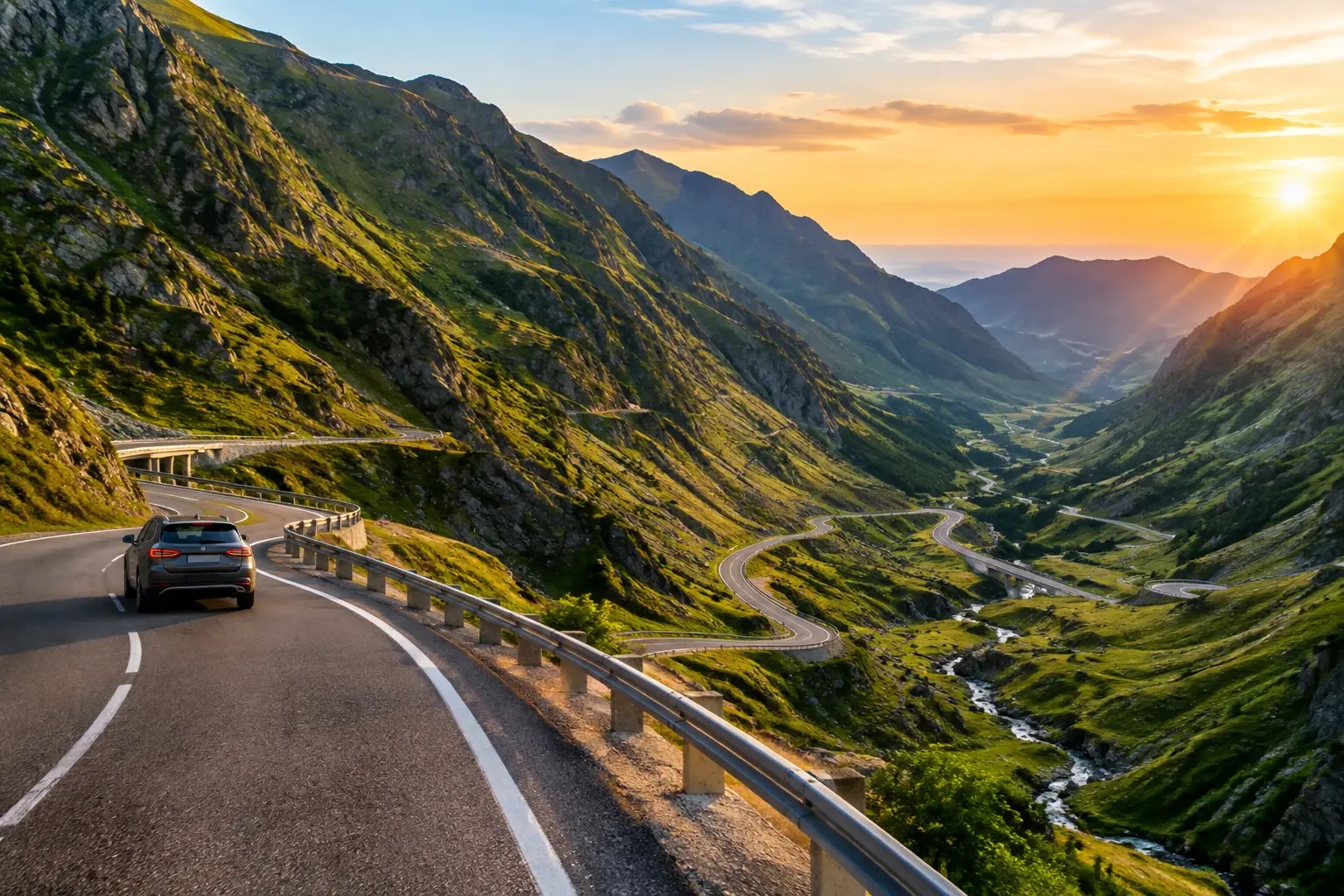
The Transfagarasan driving experience is not a quick scenic detour you squeeze between breakfast and a hotel check-in. It is a full mountain day: steep climbs, hairpin turns, sudden fog, sheep on the pavement, and views that make even seasoned Balkan road-trippers pull over without checking the clock. For travelers who like roads with character, Romania's DN7C is one of the Carpathians' most rewarding drives.
It is also a route that needs realistic planning. The famous switchbacks are only one section of a longer road through the Fagaras Mountains, and the conditions can change fast. Go prepared, give it enough time, and the drive feels exhilarating rather than rushed.
When to plan a Transfagarasan driving experience
The high-altitude section around Balea Lake is generally open only in the warmer part of the year, often from late June or early July until late October. Exact opening and closing dates depend on snow, rockfall risk, and weather, so do not treat a calendar estimate as a guarantee. Check the current road status shortly before departure, especially if your trip falls early or late in the season.
For most drivers, September is the sweet spot. The road is usually open, the mountain colors begin to shift, and summer crowds have eased. July and August offer the best chance of clear roads and longer daylight, but weekends can bring slow traffic, crowded parking areas, and drivers stopping in awkward places for photos.
Start early. Leaving before 8 a.m. gives you more space on the road and a better chance of seeing the upper section before afternoon cloud rolls in. The route is still worthwhile in mist, but the grand views disappear quickly when visibility drops. If your schedule is flexible, choose the clearest forecast rather than committing to a specific date.
Which direction is best?
Most visitors drive the Transfagarasan from north to south, beginning near Cartisoara and finishing toward Curtea de Arges. This direction builds anticipation well: forests and wide valleys gradually give way to the dramatic upper switchbacks beneath Balea Lake. It is the version most people picture when they think of the road.
Driving south to north works too, particularly if you are staying near Curtea de Arges or continuing toward Sibiu afterward. The southern approach has its own appeal, including the impressive Vidraru Dam and lake. But the northern descent tends to deliver the bigger visual payoff, with the ribbon of road opening below you.
If you are making a larger Romania road trip, avoid treating the Transfagarasan as a straight line between two overnight stops. A realistic crossing with photo breaks, a walk around Balea Lake, lunch, and traffic delays takes five to seven hours. Add time if you enjoy hiking, travel with children, or want to stop at the dam and Poenari area on the southern side.
What the road is really like
This is a paved public road, not an off-road expedition. In good summer conditions, a regular compact car can handle it perfectly well. You do not need a large SUV for the route, although a vehicle with decent ground clearance and responsive brakes can feel more comfortable on uneven edges and rougher patches.
The challenge is not technical terrain. It is concentration. The road includes sharp bends, narrow stretches, changing surfaces, cyclists, motorcycles, and drivers who may be unfamiliar with mountain roads. On the upper section, a few minutes of rain or fog can completely change the mood and visibility.
Drive slowly and stay patient. Use lower gears on long descents rather than relying entirely on the brakes, keep a generous distance from the car ahead, and never stop in a bend simply because the view looks good. There are designated pull-offs and wider areas for photos. Use them, even if it means passing one view and waiting for the next.
Fuel up before entering the mountain section, carry water and snacks, and download maps for offline use. Mobile coverage can be inconsistent in the higher parts of the route. A light waterproof layer is useful even in midsummer, because Balea Lake sits at high elevation and can feel surprisingly cold once the wind picks up.
The animals are part of the route
You may encounter sheep, cows, dogs, or horses near the road. Slow down rather than trying to edge through impatiently. Wildlife is also present in the area, so do not leave food outside your car or turn an animal sighting into a roadside crowd. The sensible rule is simple: enjoy the mountain as a guest, not as a spectator demanding a show.
Stops that make the drive more than a photo opportunity
Balea Lake is the obvious centerpiece. Set beneath steep peaks, it is where many drivers park, walk around the water, have a simple meal, or begin a short hike. The area can feel busy in peak season, and the food options are practical rather than memorable. Bring a picnic if you want a quieter, more relaxed break away from the busiest terraces.
On the north side, the Balea Waterfall area makes a worthwhile stop before the high road begins. It gives you a sense of the landscape without requiring a long hike. The approach from Cartisoara is also a good place to buy basic supplies before the mountain section.
On the southern side, Vidraru Dam is worth your time, especially for travelers who appreciate engineering as much as scenery. The reservoir changes the character of the journey from alpine drama to deep forest and water views. It is an easy place to pause after the concentration of the upper switchbacks.
Do not try to stop everywhere. That is how a beautiful mountain drive becomes a long, tiring queue of parking maneuvers. Pick two or three stops that suit your pace, then leave room for the unplanned viewpoint that catches your attention.
Common mistakes to avoid on the Transfagarasan
The first mistake is arriving late and assuming the route will be fast because it is not especially long on a map. Hairpins, traffic, and photo stops slow everything down. Begin early and avoid scheduling an important dinner reservation or a late hotel arrival on the same evening.
The second is packing for summer city weather. Even when Bucharest or Sibiu is hot, the upper road can be cold, wet, and windy. Comfortable walking shoes, a warm layer, and rain protection belong in the car.
The third is expecting an empty cinematic road. Social media often shows the Transfagarasan with no traffic at all. That can happen early in the morning or outside peak season, but during popular summer hours you should expect other visitors. The better mindset is to enjoy the movement of the place rather than chase a perfect solitary photograph.
Finally, do not build your whole itinerary around the Transfagarasan without a backup. A weather closure or poor visibility can happen. Nearby Transylvania has enough strong alternatives - historic towns, forest roads, mountain walks, and relaxed guesthouses - that changing plans does not mean losing the trip.
Where to stay before or after the drive
For a north-to-south crossing, staying around Sibiu the night before is convenient, especially if you want restaurants and a lively old town before an early departure. Smaller villages on the northern approach offer a quieter start and reduce morning driving time, though choices can be more limited.
On the southern side, Curtea de Arges works well as a practical overnight stop. It is a calmer place to reset after a long day behind the wheel, and it positions you well for onward travel. Couples looking for a slower mountain break may prefer a rural guesthouse near the route, while families should prioritize parking, breakfast hours, and room size over a view alone.
For diaspora travelers used to covering long distances across Europe in one push, this is the day to resist that instinct. The road rewards attention, daylight, and a little margin in the plan. Drive it when it is open, start before the crowds, and let the mountain set the pace.
Ready for your next adventure?
Compare flights, accommodation and activities – ljetovanje.com helps you find the best deals for your perfect holiday.
ljetovanje.com
Travel expert and contributor for Ljetovanje.com