The difference between a relaxing beach day and a stressful one is often decided before you leave home. Knowing how to avoid beach crowds is less about finding a secret cove on social media and more about making a few smarter choices on timing, location, accommodation, and daily routine. For travelers heading from Zurich, Munich, Chicago, or Belgrade toward the Adriatic, those choices can turn a short summer break into actual rest.
Crowded beaches are not automatically bad. A lively promenade, a busy waterfront restaurant, and children playing nearby are part of a classic coastal vacation. The problem starts when you cannot find shade by 10 a.m., spend 30 minutes parking, or feel like every swim requires negotiating around inflatables. Here is how to plan around the rush without giving up clear water, good food, or convenient logistics.
How to avoid beach crowds by changing your dates
The most reliable strategy is also the least glamorous: avoid the peak calendar whenever you can. On much of the Croatian coast, Montenegro, Greece, and Albania, the busiest period runs from roughly mid-July through the third week of August. School holidays, annual leave, and diaspora return trips all overlap then.
If your schedule has any flexibility, target the second half of June or the first three weeks of September. The sea is usually warm enough for long swims, restaurants are open, and the roads are noticeably easier. September is particularly good for couples, remote workers, and families with preschool children. Days are still long, but the midday scramble for parking and sunbeds has eased.
June has its own trade-off. Water can be cooler, especially after a few windy days, and some smaller places may not yet have their full summer rhythm. In return, you get better value, more choice in apartments, and a beach that still feels like a beach rather than an event venue.
Even within peak season, think in terms of days rather than just weeks. Saturday is often the worst day for beaches near popular resorts because one group is checking out while another is arriving. Sunday can also be busy around towns used for day trips. A Tuesday or Wednesday beach day is usually calmer, especially if you are staying for seven nights or more.
Pick a quieter base, not just a quieter beach
Many travelers search for a famous beach first and then book nearby. That is understandable, but it creates the same result for everyone: a beautiful beach with too many people trying to reach it at the same hour.
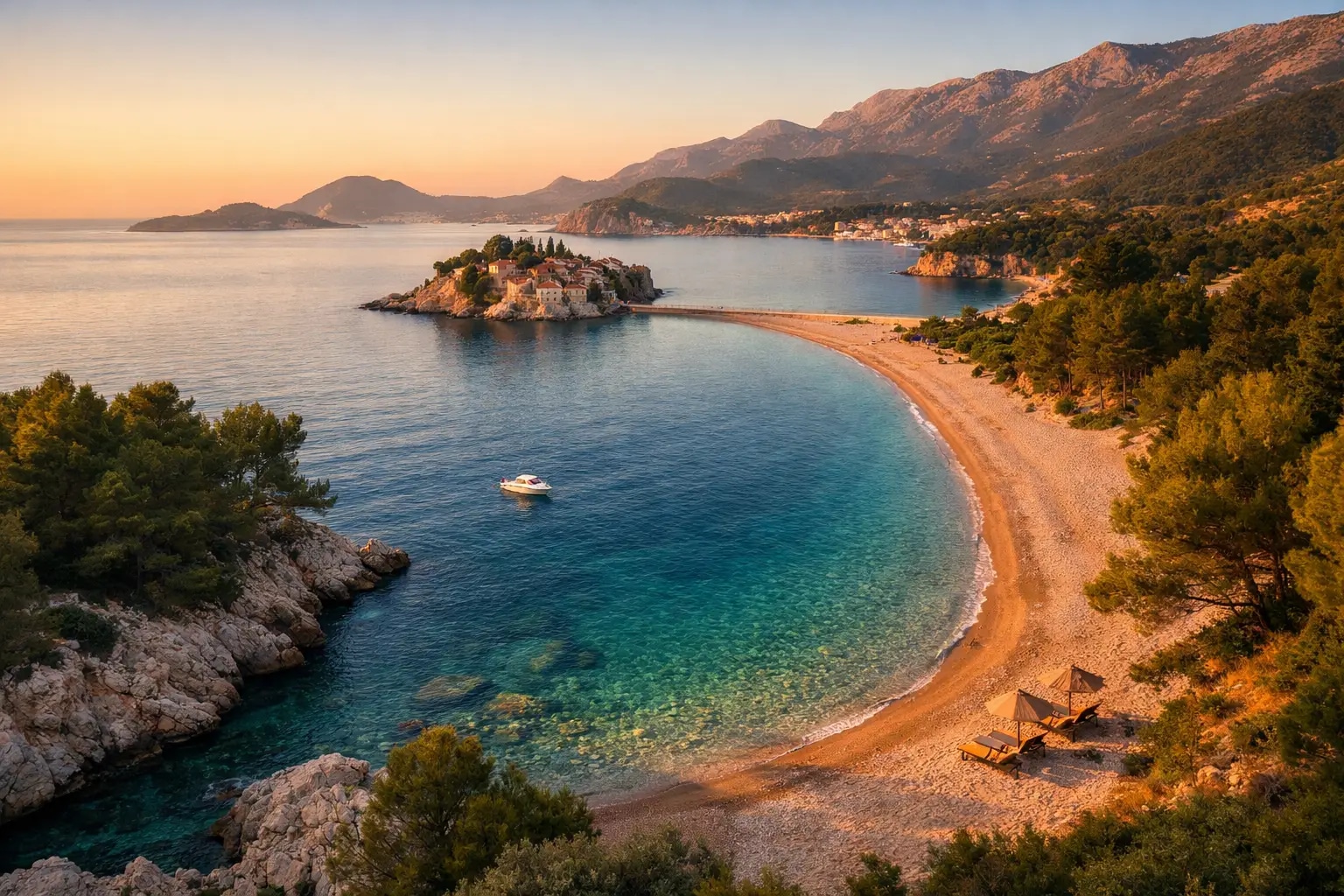
A better approach is to choose a town or village with several usable swimming spots within a short drive or walk. You are not betting the entire vacation on one postcard view. A quieter base might have a small pebble cove, a waterfront platform, a family-friendly municipal beach, and a less obvious bay five minutes away. Variety matters more than one famous address.
On the Croatian coastline, this often means looking beyond the best-known resort centers and considering smaller places with access to a longer stretch of coast. In Montenegro, staying just outside the most concentrated waterfront areas can make morning and evening much easier, provided you check the road and parking situation. In Greece and Albania, a slightly inland accommodation base may offer better prices and quieter evenings, but only if the route to the sea is genuinely simple.
That last point matters. A cheap apartment 20 minutes from the beach can become a poor deal if those 20 minutes turn into an hour of narrow roads, heat, and parking queues every day. Before booking, ask practical questions: Is there private parking? Is the beach walkable? Are there several beaches within reach? Is the route steep enough to be difficult with a stroller or beach gear?
Arrive before the beach day begins
The crowd pattern is predictable. Many people have breakfast slowly, pack up around 9:30, and reach the beach between 10 and 11 a.m. If you arrive at 8:30, the same shore can feel entirely different.
Early arrival is not about spending every hour under the sun. It is about claiming the easy part of the day. Swim while the water is calm, let children play before the heat builds, and leave or take a long lunch when the beach reaches its busiest point. You can return later in the afternoon, when day visitors start heading back to their accommodation.
For a more relaxed rhythm, use the beach in two sessions: morning until around 11:30, then late afternoon from 4:30 or 5 p.m. This works especially well in July and August, when the midday sun is intense anyway. It also leaves room for a proper lunch, a nap, or a short drive to explore a nearby town.
If you want a sunbed at a managed beach, do not assume you can decide at noon. In high season, book or arrive early where reservations are available. If you prefer free public beaches, bring your own shade. A compact umbrella can be the difference between choosing a comfortable corner and settling for the only exposed space left.
Use maps differently from everyone else
Maps are useful, but the most reviewed beach is rarely the quietest choice. Instead of searching only for "best beach," look for the coastline around your base and identify access points, small bays, local campsites, and less-promoted waterfront areas. Then check recent photos and reviews for clues about parking, shade, beach size, and whether the access is realistic for your group.
Pay attention to the wording. A review that says "crystal-clear water, but difficult road" may be a warning for a family with a rental car and two young children. For a couple willing to walk 15 minutes with water shoes, it may be exactly the filter that keeps the crowds away.
Also look for beaches that are a little inconvenient in ordinary ways, not dangerous ones. A ten-minute walk from parking, a pebbly entrance, or the absence of beach bars will reduce numbers. But do not confuse quiet with unsuitable. Check shade, drinking water, toilet access, mobile signal, and the sea conditions before committing to a remote spot for the day.
Avoid the crowd habits that create crowds
A surprising amount of beach congestion comes from repeating the same routine as everyone else. Driving to the closest famous beach at 11 a.m., expecting parking by the water, and looking for a table at 2 p.m. is a recipe for frustration in August.
Build one flexible day into your itinerary. If the forecast is hot and calm, use that day for an early swim at a less accessible beach. If there is wind or clouds, visit a market, a historic town, a winery, or take the scenic drive you would otherwise postpone. Travelers who treat every day as a mandatory all-day beach day end up competing with the largest crowd.
It helps to separate your priorities. If your main goal is shallow water and easy facilities for children, a popular family beach may still be the right choice - just visit earlier. If your priority is quiet swimming, accept that you may trade a beach bar and smooth access for a more peaceful cove. There is no universal “best” beach, only the best fit for the day you want.
Choose accommodation that gives you options
An apartment with a terrace, shade, a kitchen, and reliable parking can reduce your dependence on packed restaurants and packed beaches. This is especially valuable for families and diaspora travelers staying longer than a weekend. Being able to prepare breakfast early, pack lunch, or rest during the hottest hours gives you more control over the day.
When comparing stays, do not focus only on the distance listed in miles. Ask whether that distance is uphill, whether it crosses a busy road, and whether the nearest beach is actually pleasant. A five-minute walk to a tiny crowded strip is not better than a 15-minute walk to several good swimming options.
Ljetovanje.com is built around this kind of practical comparison: the right trip is not simply the lowest nightly rate or the most photographed beach. It is the combination of route, accommodation, timing, and local access that makes your vacation feel easy once you arrive.
A quieter beach vacation is usually a better-planned one
You do not need to chase an isolated island or travel in May to find breathing room. Shift your dates by a week or two, stay near more than one swimming option, show up before the late-morning wave, and leave room to change plans when a beach is clearly too busy. Those small decisions protect the part of the trip people actually remember: the first swim, an unhurried coffee by the water, and the feeling that your vacation has room to breathe.
Ready for your next adventure?
Compare flights, accommodation and activities – ljetovanje.com helps you find the best deals for your perfect holiday.
ljetovanje.com
Travel expert and contributor for Ljetovanje.com