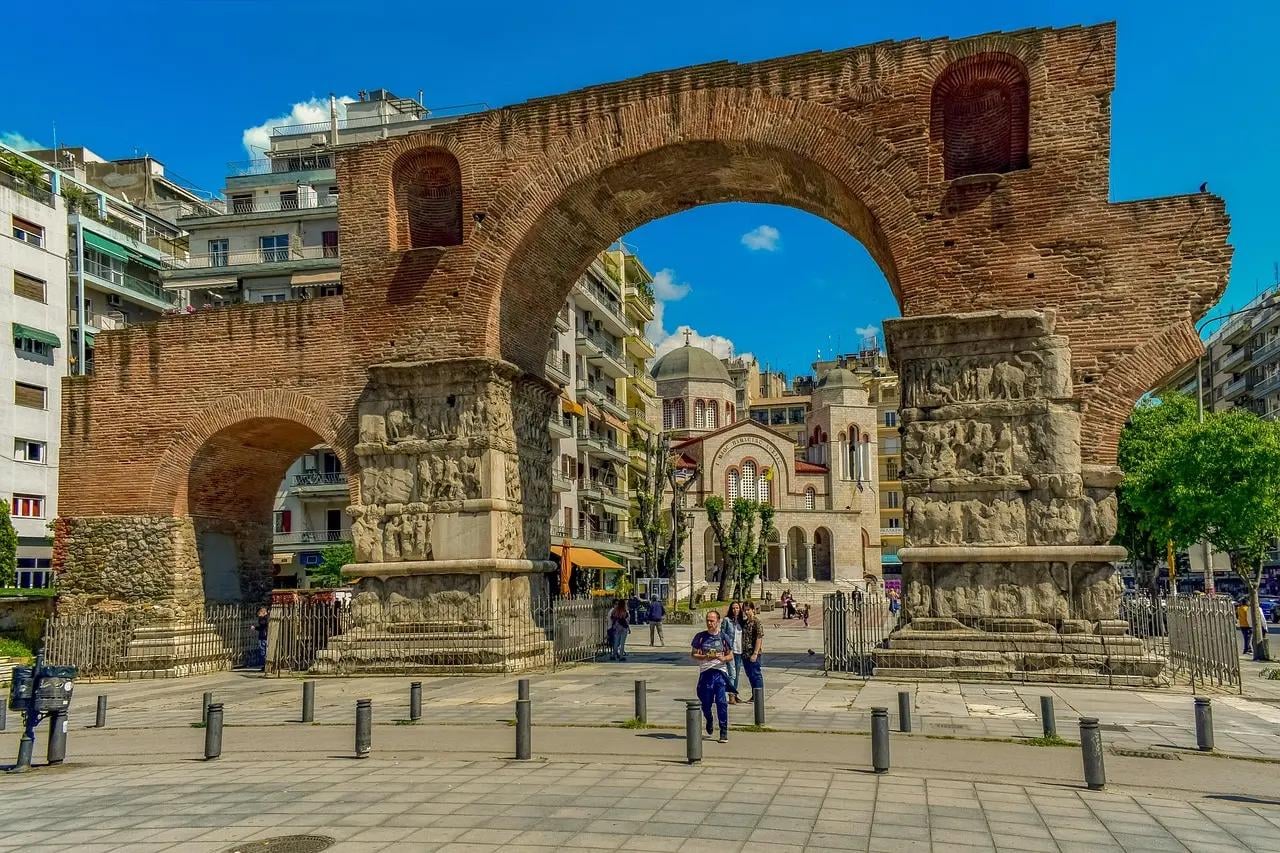
Thessaloniki: The Ultimate 2026 Travel Guide
The city at the crossroads of civilizations and a highway of flavors
Why visit Thessaloniki? 2026 Travel Guide
Thessaloniki is not Athens, and that is its greatest distinction. Every stone in the Upper City narrates chapters of Byzantine empire, Ottoman conquest, and the Sephardic Jewish community that once made it one of the Mediterranean's most cosmopolitan ports. In Thessaloniki, one eats with serious intent rather than merely visiting — at the Modiano market, in tavernas with no English menus, with a glass of tsipouro at dawn beside fishermen returning from the Thermaic Gulf.
Byzantine Treasure and Ottoman Shadows
Thessaloniki harbours one of the greatest concentrations of early Christian and Byzantine monuments in the world: eleven churches and monasteries bearing UNESCO World Heritage status. The Rotunda, the Basilica of St. Demetrius, and the Hagia Sophia are not museum pieces — liturgy continues within them today, the scent of incense mingling with light filtering through mosaics fifteen centuries old. Above it all stands the Heptapyrgion fortress, from whose walls unfolds the most dramatic possible view across the Thermaic Gulf, particularly at dusk when the sky assumes shades of apricot and deep amber.
The Gastronomic Capital of the Aegean
Thessaloniki's cuisine represents the boldest and most complex interpretation of Aegean gastronomy. This is the city that gave the world bougatsa — a warm pastry of cream or cheese from the oven — and koulouri, sesame rings sold from baskets balanced on the heads of street vendors. At the Modiano market, giant squid are grilled and served with glasses of ouzo directly from wooden carts. At the tavernas of Ladadika, fish salads draw Athenians who make the drive specifically to eat here. And in the bars of Kastra, housed in centuries-old Ottoman mansions, music plays until dawn.
Main attractions in Thessaloniki

White Tower
Aristotelous Square
Agia Sofia Church
Quick facts about Thessaloniki: Rating, Climate & Budget
Air (average)
Water (average)
Budget
Best time
Language
Practical info for Thessaloniki: Currency, Safety, Internet & Transport
Visa
✓ For Serbian citizens, a Greek visa or Schengen visa is required. Check current conditions.
Check for your passportCurrency
Euro (€) — cards are accepted everywhere, ATMs available in the center
Safety
Very safe city, especially in tourist zones. Standard attention in crowds at markets.
Internet
EU roaming free for EU users. Wi-Fi excellent in cafes and hotels. 4G/5G signal outstanding.
Transport
Metro Lines 1 and 2 cover the center and the airport. Taxis affordable, Beat app recommended. Pedestrian zone in the center is ideal.
Water
Tap water is potable and safe. Bottled water is available everywhere and symbolically cheap.
Best time to visit Thessaloniki: Spring, Summer, Autumn & Winter
Jul - Avg
Peak Season
Apr - Jun
Best Time
Sep - Okt
Golden Autumn
Nov - Mar
Off-season
Where to stay? Accommodation in Thessaloniki: Hotels, Apartments & Villas
How to reach Thessaloniki? Traveling by car, bus or plane
Air transport
The fastest and most comfortable way to travel
16km from the center. Metro line directly to Aristotelous Square in about 25 minutes, €0.90. Taxi around €20.
Ready for the trip?
Find the best flight prices and plan your arrival to Thessaloniki.
View flight detailsBus Transport
Affordable and regular bus lines from all major regional hubs.
Travel by Car
The most flexible way to explore Thessaloniki and its surroundings.
Local transport and how to get around Thessaloniki
Modernized metro opened in 2023 covering the airport, Aristotelous Square, and the Central Bus Station. The fastest and most reliable transport.
The Beat app (Greek Uber) is safer than street taxis. Airport to center: around €20.
A car is necessary for an excursion to the beaches of Halkidiki. Agencies in the center and at the airport. Recommended to book before arrival in season.
Gastronomy and Food: Local specialties you must try in Thessaloniki
"Thessaloniki Eats Like Nowhere Else in Greece"
Must try:
Hidden Gems: What do locals recommend in Thessaloniki?
Bougatsa in Thessaloniki at 7 AM
Heptapyrgion Fortress Rooftop Bar
Modiano Market at 6:30 AM
Church of St. Nicholas Orphanos – Hidden Mosaics
"To Makedoniko" Tavern in Ano Poli
White Tower at Noon – No Tourists
Itinerary: How to spend 3 days in Thessaloniki?
Byzantium, Sea, and Bougatsa
Upper Town and Ottoman Traces
Halkidiki – Turquoise Exodus
Culture and Museum Depth
Travel Guides and Articles
All Articles
Visitor Reviews
Be the first to leave a review for this destination.
More recommendations similar to Thessaloniki

Tours and activities in Thessaloniki: Organized excursions
Discover unforgettable experiences, local tours, and adrenaline adventures with our verified partners.
Top tours and activities in one place
Find the best-rated activities in partnership with leading global tour operators.
Accommodation in Thessaloniki: Best hotels and apartments
Find the perfect accommodation in Thessaloniki. From luxury 5-star hotels and private villas to affordable apartments – explore the best options for your 2026 holiday and book at the best prices.
Interactive Accommodation Map
Move the map and click on markers to view prices and book directly.
Preparing map...
Flights and plane tickets to Thessaloniki
Flight search coming soon
Currently displaying the best flight prices to Thessaloniki exclusively through our partners.
Search global flights