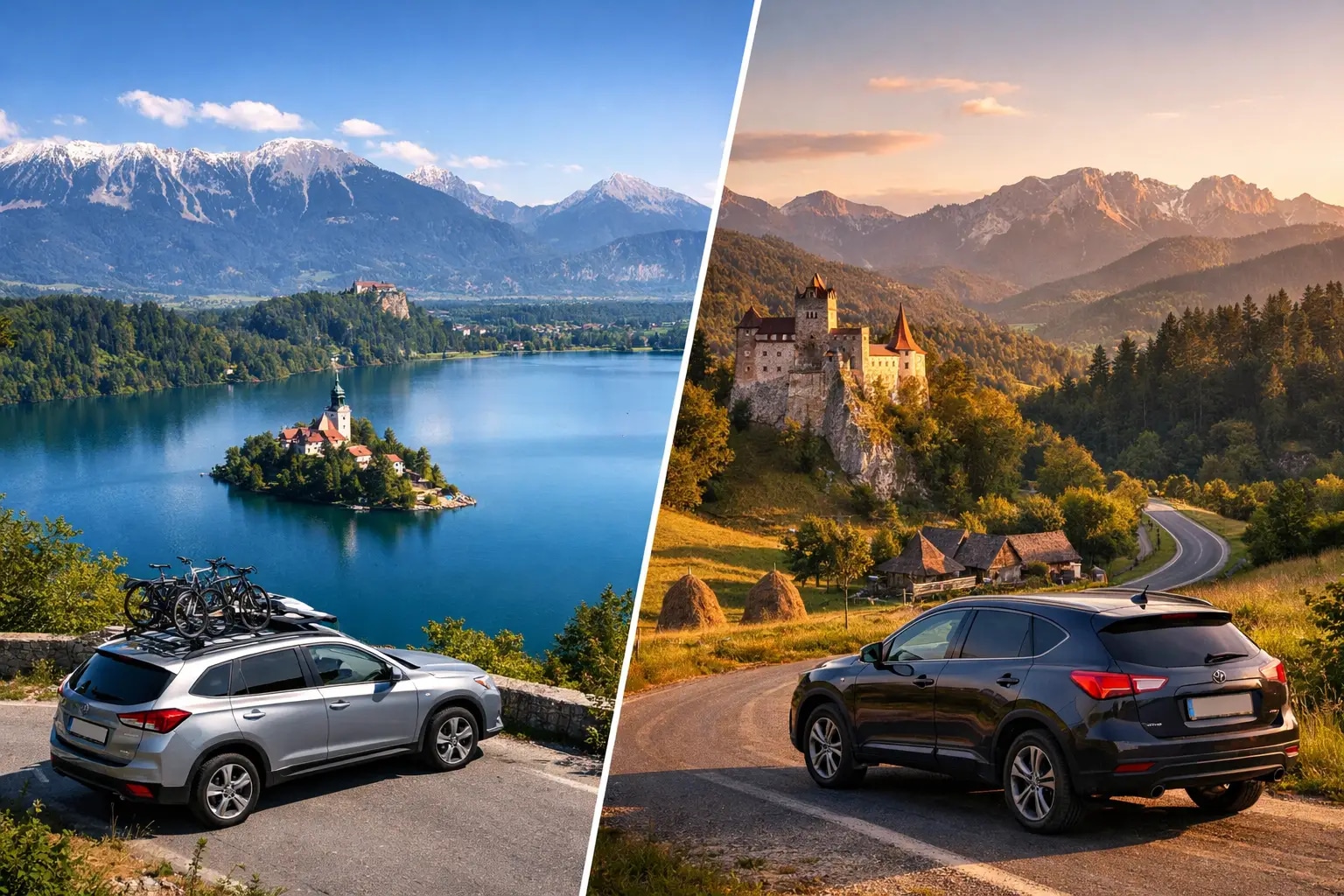
A Slovenia or Romania roadtrip is not really a choice between a prettier country and a cheaper one. Both deliver mountain roads, strong food, historic towns, and enough variety to fill a week. The real difference is pace. Slovenia is compact, polished, and easy to combine into a short, low-stress drive. Romania is larger, wilder in feel, and better when you have time to follow the road rather than chase a checklist.
For travelers from the Balkans or diaspora visitors building a European vacation around a rental car, that distinction matters. A road trip can look affordable on paper, then lose its appeal when every second day is spent moving luggage, finding parking, and driving after dark. Choose the country that matches your available days and your travel style first.
Slovenia or Romania roadtrip: the quick answer
Choose Slovenia if you have four to seven days, want short driving distances, and like a trip that can include Ljubljana, Lake Bled, Lake Bohinj, alpine scenery, caves, and the coast without constant route changes. It works especially well for couples, families with younger children, first-time road trippers, and anyone flying in from Western Europe for a long weekend.
Choose Romania if you have at least seven to 10 days and want a fuller sense of discovery. The reward is bigger scale: Transylvanian towns, the Carpathians, rural villages, fortified churches, mountain passes, and a food scene that feels less packaged for visitors. It suits travelers who enjoy long drives with meaningful stops and do not need every day to run to a perfect schedule.
Neither is a bad value. Slovenia generally costs more for accommodations in popular areas and can feel busy in peak summer. Romania usually gives you more space for the budget, but distances and road conditions can make a cheap itinerary less relaxed than expected.
The driving experience is the deciding factor
Slovenia is built for efficient movement. Ljubljana to Lake Bled is a short drive, Bled to Bohinj is even shorter, and the route toward the Soča Valley or the Karst region can be handled without turning the day into a transit day. Roads are generally well maintained, signage is clear, and the country is small enough that you can stay in two bases rather than changing hotels every night.
That convenience has a trade-off. In July and August, popular roads, lakeside parking lots, and coastal areas can feel crowded. Slovenia is best when you use the car to reach places outside the obvious stops, then leave it parked. Spend a morning around Bohinj, take a quieter walk in Triglav National Park, or stay in a village near the wine regions rather than treating Bled as the entire country.
Romania asks more from the driver, but that is part of its appeal. Routes between Bucharest, Sinaia, Brașov, Sibiu, Sighișoara, and Cluj-Napoca can be straightforward, yet average speeds are often lower than map estimates suggest. Traffic can build near cities and popular resort areas, while rural roads may require patience. Avoid planning late arrivals after a long day of sightseeing, particularly if you are not used to mountain driving.
The Transfăgărășan is the image most people associate with a Romania road trip. It can be spectacular when open, but it should not carry your entire itinerary. Seasonal closures, weather, traffic, and the simple fact that it is a long mountain day all matter. Build a route that still works if the pass is unavailable. Romania has plenty of alternatives, including the roads and villages around Sibiu, the Bucegi Mountains, and quieter stretches of Transylvania.
A practical note on car planning
In either country, check the rental agreement before you book. Confirm cross-border rules if your route includes neighboring countries, understand the insurance excess, and ask about pickup hours if your flight arrives late. Slovenia uses a motorway vignette, while Romania requires a road-use vignette as well. These systems are simple when handled in advance, but fines are an unnecessary souvenir.
For Slovenia, a compact car is usually enough and easier to park. For Romania, choose comfort over the smallest possible rate if you will be covering long distances. A slightly larger vehicle can make several mountain days far more pleasant, especially for a family with luggage.
What each country does best
Slovenia is excellent at giving you a lot of contrast in very little time. You can drink coffee in Ljubljana, see Lake Bled before lunch, sleep near Bohinj, and be in the Julian Alps or Soča Valley the next day. Then there is the other side of the country: Postojna Cave or the Škocjan Caves, hilltop wine country, and Piran on the Adriatic. This is a road trip for travelers who want variety without friction.
Romania is better at building atmosphere day by day. Brașov and Sibiu have the walkable historic centers many visitors expect, but the memorable moments often happen between them: a roadside lunch, a local market, a village detour, a view of the Carpathians in changing weather. Places such as Sighișoara, Maramureș, or Bucovina reward travelers who can slow down and stay overnight rather than rushing through for a photo.
If your priority is hiking, Slovenia makes access easier. Trailheads, alpine lakes, and well-marked walks are close to major bases, although high-mountain routes require proper preparation. Romania offers more raw scale and a stronger feeling of remoteness in the Carpathians, but routes can demand more time, local knowledge, and weather awareness. Families looking for gentle outdoor days will usually find Slovenia simpler. Experienced hikers with a flexible itinerary may prefer Romania.
Budget: lower prices versus fewer wasted days
Romania usually wins on daily spending. Outside the busiest areas, you can often find better value in guesthouses, meals, and longer stays. That makes it appealing for travelers who want a 10-day itinerary without turning every restaurant choice into a calculation. It is also a strong option for multigenerational travel, where apartment space and parking can matter as much as the nightly price.
Slovenia is not bargain travel, especially around Bled, the coast, and peak dates. But a higher nightly rate does not automatically mean a more expensive trip. Shorter distances reduce fuel use, fewer hotel changes reduce booking mistakes, and you can see a lot without adding extra vacation days. For a couple flying from Germany, Switzerland, or the United States with limited time, Slovenia may offer better overall value despite the higher prices.
The smart approach in both countries is to avoid trying to sleep at the most famous stop every night. Stay just outside Bled or Brașov, book apartments when traveling with children, and leave room for a second choice if a popular area is fully booked. On Ljetovanje.com, compare the total stay cost rather than just the headline nightly rate, especially once parking, breakfast, and cancellation terms enter the picture.
Two routes that actually fit real vacations
For a six-day Slovenia trip, begin with one night in Ljubljana if your flight timing makes sense. Continue to Lake Bohinj for two nights, using it as a calmer base for Bled and the mountains. Then drive through the Soča Valley for one or two nights before ending in the Karst region or Piran. This route works because no single transfer dominates the day.
For an eight- to 10-day Romania trip, use Bucharest only if your flight requires it, then move toward Sinaia and Brașov. Continue to Sibiu, add Sighișoara if you enjoy historic towns, and give yourself at least two slower nights in one rural or mountain base. If you fly into Cluj-Napoca, reverse the logic: begin in Transylvania, then decide whether the extra drive toward Bucharest fits your return flight. Do not force both ends of the country into one week.
So, which road trip should you book?
Pick Slovenia when you want a trip that feels organized without feeling dull. It is the safer choice for a first road trip, a shorter break, or travel with people who have different energy levels. You will spend less time negotiating the next move and more time outside.
Pick Romania when the journey itself is the point. It is for travelers who can accept imperfect timing in exchange for deeper impressions, broader landscapes, and a route that still feels personal after the famous stops are done.
The best road trip is not the one with the most pins saved on a map. It is the one that leaves enough room for a lake you did not plan to stop at, a longer lunch, and one extra night in the place you would otherwise have driven past.
Ready for your next adventure?
Compare flights, accommodation and activities – ljetovanje.com helps you find the best deals for your perfect holiday.
ljetovanje.com
Travel expert and contributor for Ljetovanje.com