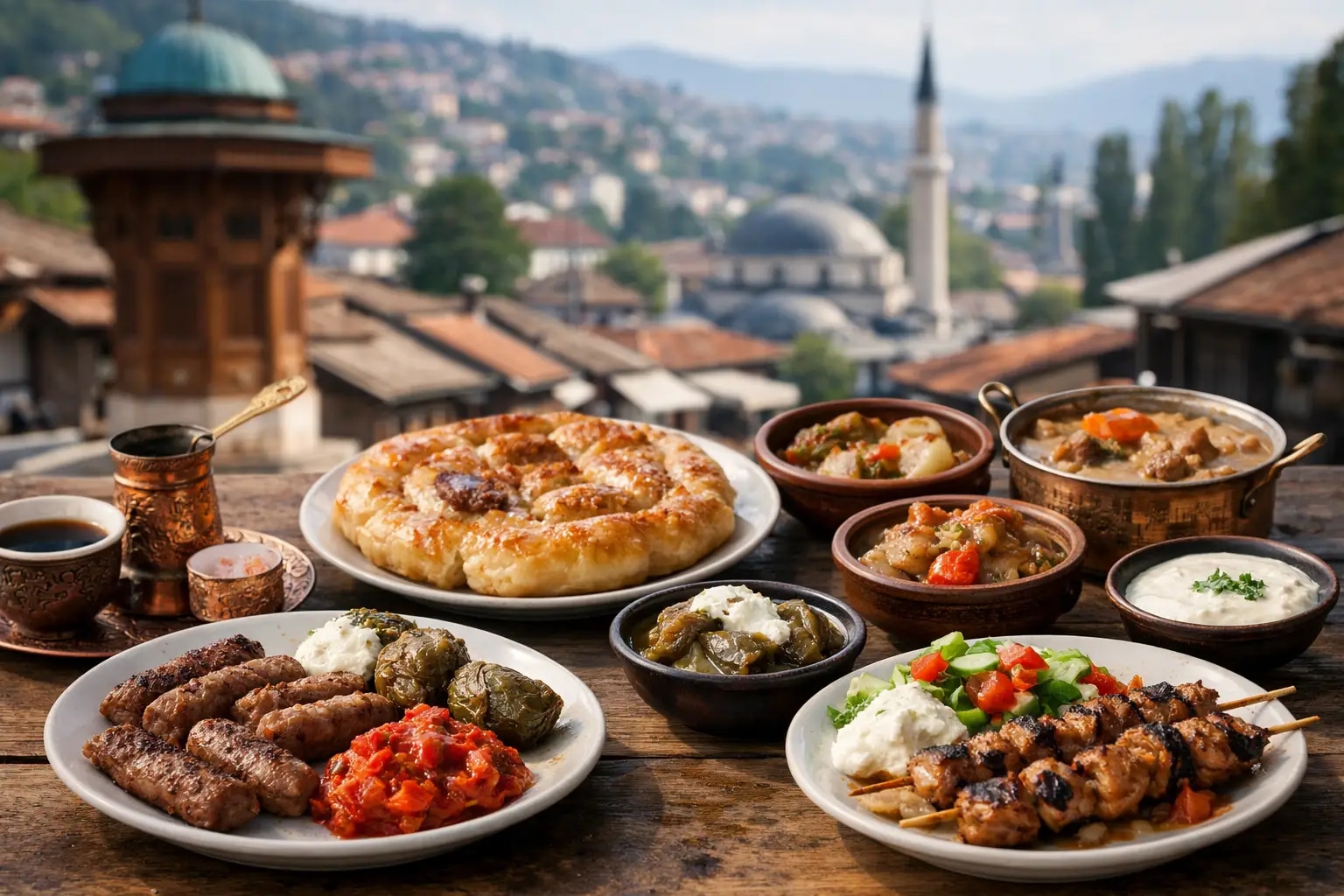
Sarajevo food makes its point early: a warm piece of somun torn open at a grill, a copper pot of coffee arriving with lokum, and the smell of slow-cooked meat drifting through the old center. You can eat well here on a modest budget, but the best meals are not found by chasing a single “must-try” dish. Sarajevo rewards appetite, patience, and a willingness to order what the kitchen does best.
For travelers coming from the Balkans or visiting family from abroad, the city’s table feels familiar but never repetitive. The flavors are direct - grilled meat, flaky pastry, beans, peppers, dairy, and sweets - yet each has its own local rule. Knowing those rules makes the difference between a quick tourist meal and a proper Sarajevo food experience.
Start With the Sarajevo Food Essentials
Ćevapi are unavoidable, and rightly so. Sarajevo-style ćevapi are small, hand-shaped grilled beef sausages, usually served in a soft, lightly charred somun. The classic order comes with chopped raw onion; kajmak may be offered, though it is not essential. Do not expect a giant mixed grill or a plate crowded with sauces. The appeal is the meat, the bread, and the heat of the grill.
A standard portion is often five or 10 pieces, and 10 is generally enough for a full lunch. If you are sharing a larger meal later, start with five. The small distinction matters: ćevapi are at their best when eaten immediately, not after a long walk through Baščaršija or while waiting for everyone to choose their order.
Burek is the second essential, but use the word carefully. In Sarajevo, burek means a pastry filled with meat. Cheese-filled pastry is sirnica, spinach is zeljanica, and potato is krompiruša. Calling every filled pastry “burek” will not ruin your breakfast, but it signals that you have missed a local detail people take seriously.
Look for pastry sold by weight or by portion, often served with plain yogurt. A small piece makes a good breakfast or late-morning snack. A generous portion can easily replace lunch. The best version has thin, crisp layers with a soft, savory center, not a heavy shell of dough.
Order Around the Time of Day
Sarajevo is a city where timing improves the meal. Pastry shops are strongest early, when trays are fresh from the oven. Ćevabdžinicas suit lunch or an unfussy early dinner. For a longer sit-down meal, plan for the evening, especially if you want cooked dishes that need time rather than a plate served at grill speed.
If you arrive late after a flight or drive, do not overcomplicate the first meal. Ćevapi, pita, or a bowl of soup is often more satisfying than searching for a fashionable restaurant. Save the long dinner for the next day, once you have your bearings.
Cooked Dishes Worth Making Time For
The food people remember most is not always the food they post first. Sarajevo’s slower dishes carry more of the home-kitchen side of Bosnian cooking, and they deserve a place on your itinerary.
Begova čorba is a rich chicken soup, often thickened with okra and finished with a soft, comforting texture. It is a sensible choice on a rainy day or after a long day walking uphill through the city. It can look modest on the menu, but it is more filling than many travelers expect.
Bosanski lonac, literally Bosnian pot, is a layered stew of meat and vegetables cooked slowly until everything gives up its sharp edges. Recipes vary from kitchen to kitchen, which is exactly the point. It is not a dish to judge by presentation. Order it when you have time to sit down and want a meal that feels removed from the quick-grill routine.
Dolma and sarma are also worth seeking out. Vegetables such as peppers or zucchini may be stuffed with seasoned meat and rice, while sarma usually refers to cabbage leaves wrapped around a similar filling. These dishes vary with the season and the cook. In warmer months, stuffed vegetables can feel lighter; in cooler weather, cabbage-based dishes are especially satisfying.
You may also see klepe, small filled dumplings served with a garlic-yogurt sauce and melted butter or paprika oil. They are soft, rich, and ideal for a shared table, particularly if everyone wants something different from the usual grilled order.
Coffee Is a Ritual, Not a Takeout Stop
Bosnian coffee is one of Sarajevo’s simplest pleasures, but it is not meant to be rushed. It arrives in a džezva, a small long-handled pot, alongside a cup and often a cube or two of lokum. Pour a little at a time. Let the grounds settle. Stay longer than you planned.
It is strong, but it should not be treated like a shot of espresso. The experience is as much about the pause as the coffee itself. A café table in Baščaršija is a good place to rest, but do not assume the most central terrace provides the best value or quietest setting. Step onto a side street and you may find the same ritual with more room to breathe.
For something sweet with coffee, try baklava, ružice, hurmašice, or tufahija. Baklava is familiar, but local versions tend to be generously soaked and intensely sweet. Tufahija, a poached apple filled with walnuts and topped with whipped cream, is a better choice if you want a dessert that feels less repetitive after several days of pastry and syrup.
A Note on Sweetness and Portions
Desserts here are often made to be shared. Order one or two items for the table rather than one each, especially after a full dinner. The same goes for coffee: it gives you a reason to linger, not an obligation to add another large meal.
Where to Eat Without Following a Script
Baščaršija is the natural starting point, not a place to dismiss because it is popular. It holds excellent grills, pastry shops, coffeehouses, and traditional restaurants within a compact walking area. The trade-off is simple: the busiest streets are convenient, but they can feel rushed and prices may be a little higher. Walk a few minutes beyond the most crowded lanes before choosing.
For a more local rhythm, explore neighborhood restaurants outside the old center. These are often better for stews, daily cooked dishes, and relaxed dinners. The menu may be shorter, which is usually a good sign. A restaurant that does a few dishes well is more reliable than one attempting every regional specialty at once.
Use a practical test when deciding where to sit. Look at the menu, but also look at the tables. Are local diners ordering cooked food, not only grilled meat? Is the bread arriving warm? Is the dining room busy without feeling like a queue? These clues are more useful than a long signboard promising “authentic” cuisine.
Vegetarian travelers can eat well, though they need to order with more care than in a large international city. Sirnica, zeljanica, krompiruša, bean dishes, grilled vegetables, salads, and desserts provide good options. Still, ask how a dish is prepared. A vegetable stew or soup may use meat stock, and not every cheese pastry is suitable for travelers avoiding animal rennet. Those with celiac disease should be especially cautious: bread and pastry are central to many kitchens, and cross-contact is common.
How Much to Budget for Eating in Sarajevo
Sarajevo remains a good-value city for food, particularly compared with many Western European capitals. A simple pastry breakfast, a coffee stop, a lunch of ćevapi, and a casual dinner can fit comfortably into a moderate daily budget. Restaurant prices vary by location, portion size, and whether you choose drinks, but eating well does not require fine dining.
The smarter approach is not to hunt only for the cheapest meal. Spend on the dishes that benefit from care: fresh pita in the morning, grilled meat at a respected local spot, and one unhurried dinner with a cooked specialty. Save money by treating coffee and dessert as a shared pause rather than a separate full stop at every café.
Cash is useful for small bakeries and older family-run places, although card payment is increasingly common. Check before ordering if you are relying on a card, particularly away from the most central areas. Tipping is appreciated for good service but is usually informal; rounding up or leaving a modest amount is normal.
Eat With Curiosity, Not a Checklist
The most satisfying Sarajevo meals often happen when you stop trying to sample everything in 48 hours. Have ćevapi once, and have them properly. Try burek and at least one other pita. Leave room for soup, a stew, or klepe. Then sit down for coffee without treating it as a gap between attractions.
That pace suits the city. Sarajevo food is generous, but it does not need to be consumed as a challenge. Let one good bakery shape your morning, let a neighborhood restaurant decide dinner, and leave enough time at the table for the meal to become part of the trip.
Ready for your next adventure?
Compare flights, accommodation and activities – ljetovanje.com helps you find the best deals for your perfect holiday.
ljetovanje.com
Travel expert and contributor for Ljetovanje.com