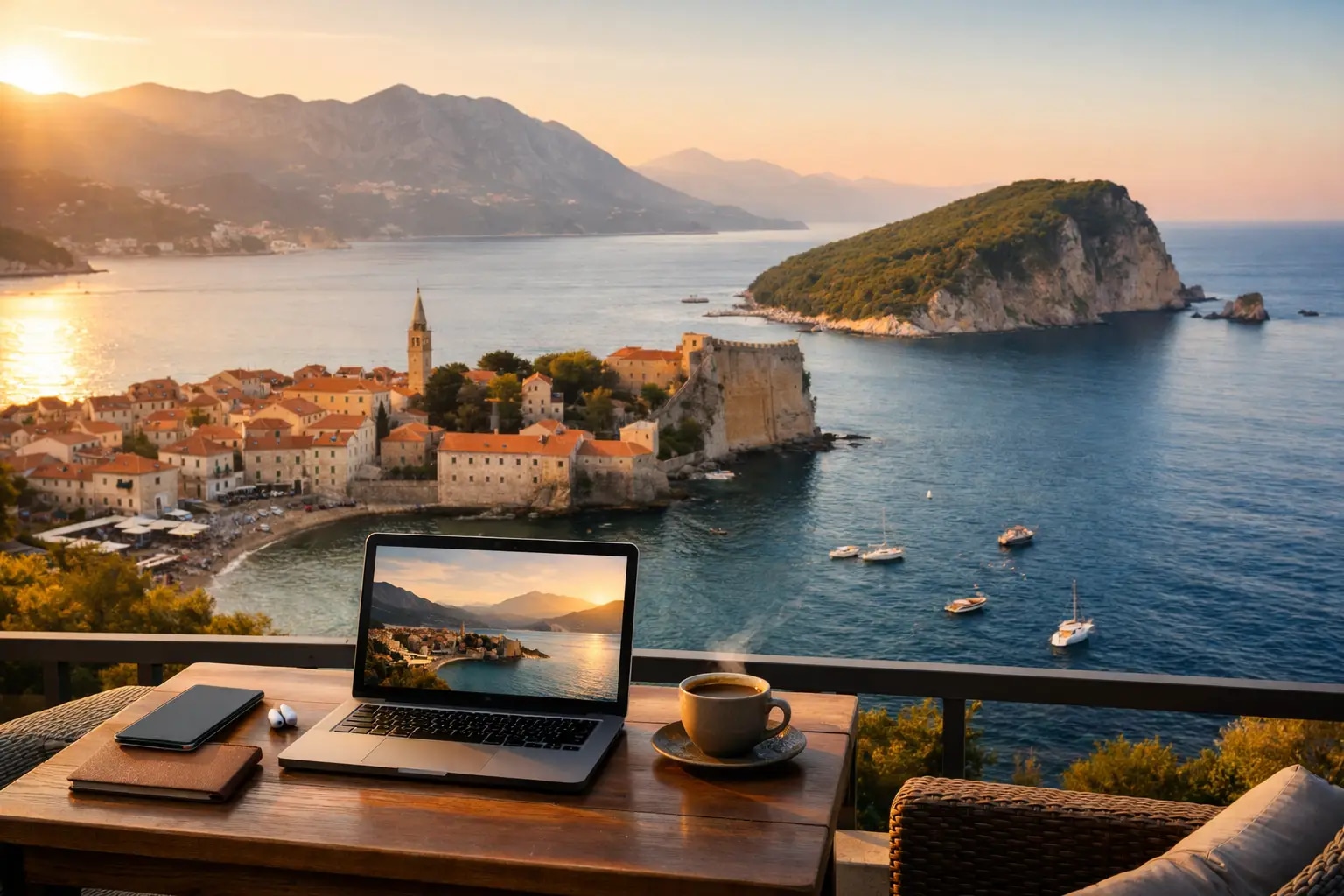
A laptop on a balcony sounds good almost anywhere. The real test of remote work on Adriatic is whether you can take a video call without hunting for signal, buy groceries after a long workday, sleep without nightlife below your window, and still reach the water before sunset. That is why choosing a base matters more than choosing the prettiest beach.
For travelers from the Balkans and diaspora workers arriving from the US, Germany, Switzerland, or elsewhere in Europe, the Adriatic has a particular appeal. It can feel like a proper break without being disconnected from familiar food, language, family, or practical routines. But the coast is not one long coworking space. A lively old town in July and a quieter island village in May are entirely different working environments.
What Makes Remote Work on the Adriatic Practical
The best Adriatic work stay is usually built around a simple balance: dependable accommodation, a town that remains functional outside peak holiday hours, and enough distance from the most crowded promenade. A sea view is a bonus. Reliable internet, a proper desk, air conditioning, and a quiet bedroom are the things that protect your workday.
Start with the time zone. The Adriatic works especially well for remote employees and freelancers working with Europe, since normal local business hours overlap naturally. For US-based teams, the arrangement depends on the coast you choose and your schedule. Afternoon and evening calls can be manageable, but a role requiring daily availability until late local time may turn a beach town into a place you barely experience.
Internet is usually strongest in established coastal cities and larger resort areas, but it should never be assumed. Many attractive apartments are designed for a weeklong family vacation, not eight hours of calls and file uploads. Before booking, ask the host for the actual connection type, whether the Wi-Fi reaches the workspace, and whether there is a backup option such as mobile data. “Internet available” is not the same as internet suitable for work.
Also look beyond the apartment listing. Is there a supermarket open into the evening? Can you get coffee and lunch within a short walk? Is parking realistic if you are arriving by car? Will you need to climb steep streets with groceries every day? These details sound minor until they become your weekday routine.
Choose a Base, Not Just a Beach
Split and Zadar are often the easiest Croatian choices for a first extended stay because they offer more year-round services, transport connections, restaurants, and apartment supply than smaller coastal settlements. They also make it easier to separate work from leisure: you can find a café or coworking-style environment when needed, then leave the center for a swim, walk, or dinner.
The trade-off is noise and price, particularly from June through August. In Split, a stay near the historic center can be exciting for three days and exhausting for three weeks. For remote work, neighborhoods slightly outside the busiest core often offer better value, easier grocery runs, and a more normal residential rhythm.
Zadar can suit workers who want a smaller city feel without giving up useful infrastructure. Its compact center is pleasant, but the smarter long-stay choice may be an area where you are close enough to walk into town without living above a late-night bar. The same logic applies to many coastal destinations: proximity is useful, but being directly in the center is not always the prize it appears to be.
On the Montenegrin coast, Budva has practical advantages: plentiful accommodation, food options, and a well-developed visitor economy. Yet it is at its best for remote workers outside the peak summer rush. Kotor is visually exceptional and appealing for a shorter workation, but its narrow streets, seasonal crowds, and limited everyday space can make it less comfortable for a full month. If calm is your priority, consider staying outside the most photographed core and using it for evenings or weekends.
Smaller places can be excellent when your work setup is already secure. A quieter island, peninsula, or village gives you the kind of reset that no city apartment can offer. The compromise is that you may have fewer backup cafés, fewer stores, less flexible transport, and more dependence on the accommodation itself. This works best for independent workers with predictable schedules, not for someone who needs spontaneous meetings, printing, deliveries, or frequent airport access.
The best stay length is rarely one week
A one-week trip can be a pleasant change of scenery, but it is often too short to settle into a productive pattern. You spend the first days checking internet, finding food, learning parking rules, and figuring out where to work. Two to four weeks is usually the more sensible window if your job allows it.
Longer stays can reduce the nightly accommodation cost, especially in May, early June, September, and October. They also give you room to work normally on weekdays instead of treating every sunny afternoon as a missed opportunity. The coast becomes more enjoyable once you stop trying to turn it into a nonstop vacation.
The Seasons Change the Entire Experience
July and August offer the warmest sea, longest social evenings, and fullest atmosphere. They are also the months when prices rise, roads slow down, beaches fill up, and a quiet call becomes harder to guarantee. For a short working holiday, this may be worth the trade-off. For focused remote work, it often is not.
Late spring and early fall are the stronger choices for most people. In May and June, towns are active but not yet overwhelmed, while September often delivers warm water and calmer evenings after the biggest crowds leave. October can be excellent for deep work, especially in larger coastal towns, though weather becomes less predictable and some seasonal businesses begin to close.
Winter is different again. It can suit travelers looking for lower costs and a slower pace, but not every coastal destination remains lively. Choose a place with year-round residents and services rather than a resort that largely shuts down after summer. A reduced restaurant scene may be fine; a closed grocery store or limited transport is less charming when you have a deadline.
Build Your Work Setup Before You Arrive
A good remote stay starts with questions asked before payment, not with optimism after check-in. Confirm the workspace, internet speed if available, heating or air conditioning depending on season, laundry access, and noise exposure. Ask whether the building is near a bar, construction site, ferry route, or busy road. Hosts who answer clearly are usually easier to deal with if a practical issue appears later.
Bring a compact setup that gives you options: headphones with a microphone, a universal adapter, a power bank, and a local or regional mobile data plan for backup. If your work involves sensitive calls or large transfers, test the connection on arrival while there is still time to change plans. Do not wait until Monday morning to learn that the Wi-Fi only works reliably beside the front door.
It also helps to set one rule for yourself: work from the apartment when you need concentration, and use cafés as a change of scene rather than your primary office. Cafés can be wonderful for an hour or two, but their Wi-Fi, outlets, tables, and background music are not under your control. Ordering coffee does not turn a busy terrace into a meeting room.
Keep the Coast Enjoyable After Log-Off
The Adriatic is most rewarding for remote workers who protect their free time. Take the morning swim before messages begin, use a long lunch break for a market run, or reserve one weekday evening for a nearby beach or old-town walk. Small routines make a workation feel less like working from a different room.
At the same time, leave space for the practical reality of travel. A transfer can run late, weather can change ferry plans, and the apartment that looked peaceful in photos may be next to a seasonal restaurant. Avoid stacking important deadlines into your arrival day or the day before a flight. A little buffer is cheaper than losing a workday to logistics.
Ljetovanje.com is useful when comparing the transport and accommodation side of that decision, but the final choice should still reflect how you actually work. A couple may be happy with one-bedroom apartment near the action; a family may need separate sleeping space, parking, and a kitchen that can handle more than breakfast.
The right Adriatic base is not necessarily the town with the most famous waterfront. It is the one where your workday runs quietly, your essentials are close, and the sea still feels like part of your life rather than something you only see from a browser tab.
Ready for your next adventure?
Compare flights, accommodation and activities – ljetovanje.com helps you find the best deals for your perfect holiday.
ljetovanje.com
Travel expert and contributor for Ljetovanje.com