Landing in Skopje can feel surprisingly easy. The airport is small enough to navigate without stress, prices are generally lower than in more obvious European city-break spots, and within a few hours you can be in a lively capital, a quiet mountain area, or by Lake Ohrid. That is exactly why a north macedonia travel guide for first timers what to know matters - the country is simple to enjoy, but easier still when you understand a few local basics before you go.
North Macedonia suits travelers who want a Balkan trip without the heavy logistics. Distances are manageable, food is familiar but distinct, and the pace is usually more relaxed than people expect. For first-time visitors from the US or from the Balkan diaspora planning from abroad, the main questions are rarely about whether to go. They are about how many days you need, where to base yourself, and what catches people off guard.
North Macedonia travel guide for first timers: what to know first
The first thing to understand is that North Macedonia is best approached as a short, well-planned trip rather than a box-ticking tour. You can technically move fast between places, but the country rewards slower travel. Sitting by the lake in Ohrid, taking your time over grilled meat and salad in Skopje, or driving through mountain scenery on the way to a national park often ends up being more memorable than trying to cram in every landmark.
If this is your first visit, give yourself at least four full days. A long weekend can work for Skopje and one more destination, but six to seven days gives you enough space to see the capital, spend real time in Ohrid, and add one inland stop if you want something quieter.
Another useful point - this is not a place where everything is built around international tourism. That is usually a good thing. Prices feel more grounded, many restaurants still serve local regulars first and tourists second, and the overall experience feels less staged. The trade-off is that service can be uneven and transport information is not always perfectly clear online.
When to go and how the seasons change the trip
For most first timers, late spring and early fall are the sweet spots. May, June, and September usually give you warm weather, easier movement, and better value. July and August are lively, especially in Ohrid, but also busier and hotter. If you want lake time and evening energy, summer is ideal. If you want a calmer, more flexible trip, shoulder season is a better call.
Winter depends on your expectations. Skopje can work as a short city break, and mountain areas can be attractive if you like colder landscapes, but this is not the strongest season for a classic first visit. Some places feel quiet rather than atmospheric.
It also depends on your style. Families often prefer summer because the lake has a holiday feel and travel is simpler. Couples and solo travelers often enjoy September more, when the weather is still pleasant but the pace is less crowded.
Where first timers should actually go
Most first trips should center on Skopje and Ohrid. That combination gives you the clearest introduction to the country without unnecessary complexity.
Skopje
Skopje works best when you accept it for what it is - layered, sometimes visually confusing, and more interesting than it first appears. You have the old bazaar area, city squares, riverside walks, and a food scene that can be both affordable and very satisfying. It is not a polished capital in the way some travelers expect, but that is part of its character.
One or two nights is usually enough unless you like moving slowly. The city is a practical arrival point, and it gives you a feel for daily life beyond postcard travel.
Ohrid
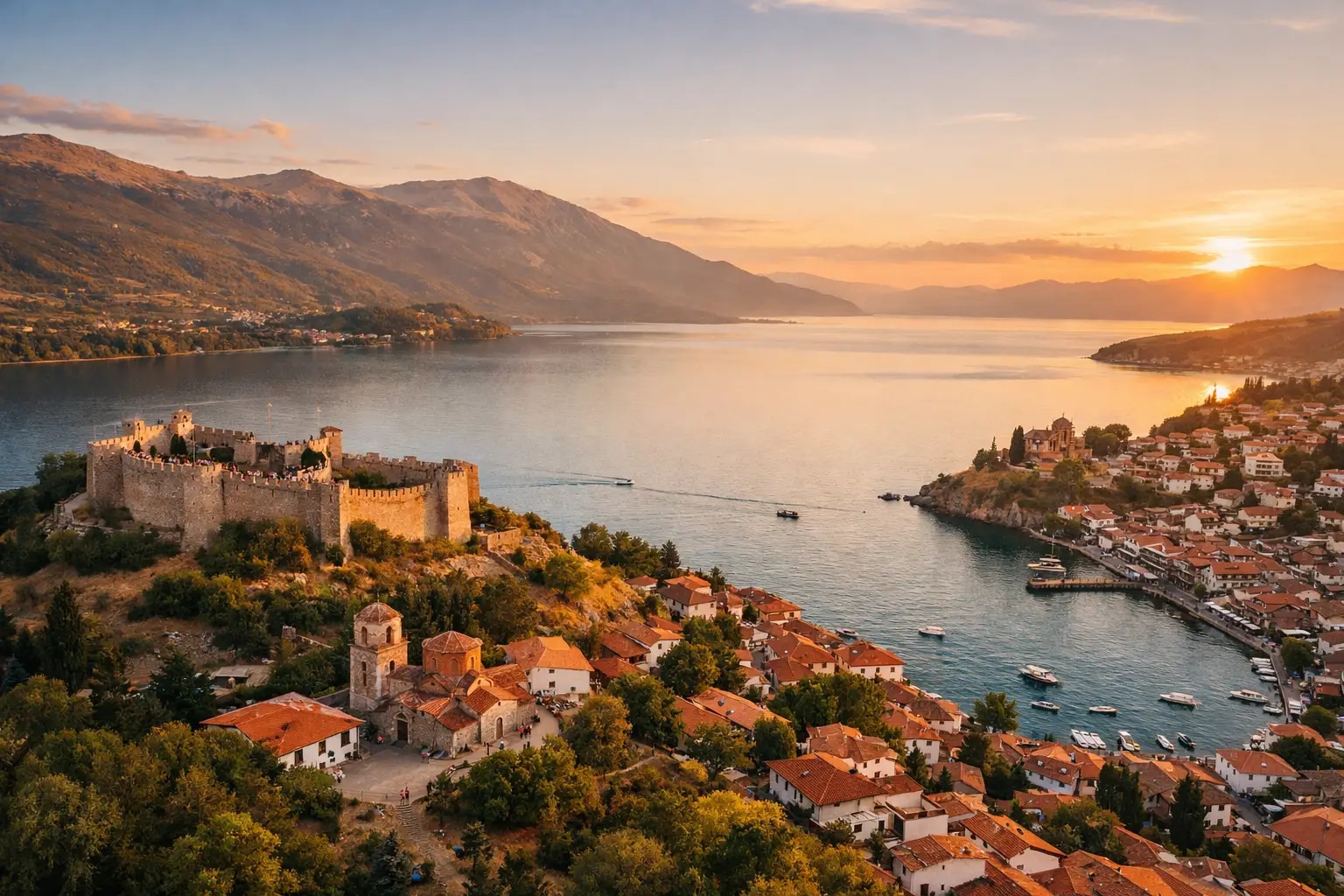
Ohrid is the stop that convinces many people to come back. The lake setting is the obvious draw, but what makes it work is the balance - old-town streets, churches, waterfront restaurants, swimming in season, and enough activity without feeling overwhelming.
If you only have time for one destination beyond Skopje, make it Ohrid. Stay at least two or three nights. A rushed day trip misses the atmosphere, especially in the evening and early morning when the town feels most like itself.
Beyond the obvious
If you have extra time, Bitola can be a strong addition. It has a more lived-in feel, a pleasant city center, and works well for travelers who prefer local rhythm over landmark chasing. Mavrovo and other mountain areas are worth considering if nature matters more to you than urban sightseeing, but they usually make more sense with a car.
Money, prices, and how much to budget
North Macedonia is still relatively affordable by US and Western European standards, which is one of its biggest advantages. You can eat well without overspending, local transport is manageable, and accommodation often offers better value than in nearby, more heavily marketed destinations.
Cash still matters. In larger hotels, better restaurants, and central city spots, cards are commonly accepted. But in smaller cafes, local bakeries, markets, taxis, or family-run places, having cash makes life easier. Do not assume every small payment can be made by card.
For budgeting, mid-range travelers usually do well here. You can find comfortable apartments and hotels at fair prices, and restaurant meals are often reasonable enough that you do not feel forced into strict planning. The main variable is summer in Ohrid, when prices rise and the best-value places get booked early.
Getting around without making the trip harder
Transport is where first-time visitors should think ahead. The country is not huge, but getting from place to place is not always as smooth as on paper.
Buses connect major destinations and are the default option for many travelers. They are affordable and usually practical between Skopje and Ohrid. The downside is that schedules can change, online information may be incomplete, and comfort varies. If you are easygoing, buses are fine. If you want full flexibility, especially for rural stops or national parks, a rental car is the better choice.
Driving is often easier than people expect, especially outside the busiest city areas. Roads between main destinations are generally manageable. A car becomes most useful if you want to combine Ohrid with quieter villages, mountain scenery, or multiple inland stops. For a simple Skopje and Ohrid trip, though, you can travel well without one.
Taxis are common in cities, but agree on the fare or confirm the meter if there is any doubt. This is less about serious risk and more about avoiding unnecessary friction.
Food, coffee, and what everyday travel feels like
One reason the country feels comfortable for Balkan travelers and diaspora visitors is that the food culture is immediately readable. Grilled meat, salads, pastries, peppers, cheese, and strong coffee all have a familiar logic, even when details differ from neighboring countries.
You do not need a strict food plan here. It is often better to choose busy local places and order simply. Shopska-style salads, tavche gravche, grilled meats, fresh bread, and lake fish in Ohrid are a good start. Portions are often generous, and meals can be slower than in more tourist-centered destinations.
Coffee culture matters. Sitting down for coffee is part of the pace, not just a stop between attractions. If you try to rush every day, you will miss one of the easiest pleasures of being there.
Safety, language, and common first-timer concerns
Most first-time visitors find North Macedonia straightforward and comfortable. In practical terms, it is generally an easy country to navigate if you use normal travel awareness. City basics apply - keep an eye on your belongings in busy areas, do not assume every taxi situation is identical, and plan late arrivals sensibly.
English is spoken in many tourist-facing settings, especially by younger people, though not everywhere. In smaller towns or more local businesses, communication may be more limited. That usually is not a major problem. A polite attitude goes a long way, and many travel interactions are simple enough to manage even without much shared language.
The bigger adjustment for some US travelers is not safety or language. It is pace. Things can feel less systemized, a little less digital, and more dependent on asking locally. If you accept that early, the trip becomes much more enjoyable.
North Macedonia travel guide for first timers: what to know before booking
Before you book, decide what kind of trip you want. If your priority is scenery and atmosphere, put more time into Ohrid. If you care about urban energy, food, and a broader feel for everyday life, give Skopje at least two nights. If you want nature beyond the main route, consider renting a car from the start.
Book early for summer lake stays, especially if you want a central location with parking or family-friendly space. For shoulder season, you usually have more freedom and better rates. Airport access matters too. Some travelers arrive through Skopje and leave from Ohrid, or the other way around, simply to avoid unnecessary backtracking.
This is also a destination where overplanning can work against you. Have your bases and transport sorted, but leave room for slower meals, unplanned lake time, and local recommendations. That is often when the country feels least like a checklist and most like a real break.
If you go expecting spectacle at every turn, you may miss what North Macedonia does best. If you go wanting a trip that is affordable, grounded, and full of small pleasures that feel genuine, you will probably leave wondering why it took you so long to get there.
Ready for your next adventure?
Compare flights, accommodation and activities – ljetovanje.com helps you find the best deals for your perfect holiday.
ljetovanje.com
Travel expert and contributor for Ljetovanje.com