If your idea of a good family vacation includes a short transfer, a swimmable beach, food your child will actually eat, and a room where nobody has to sleep beside a suitcase, a family resort Greece review needs to do more than praise infinity pools. For families from the Balkans and diaspora travelers flying in from Germany, Switzerland, Austria, or the US, Greece works best when the logistics are simple and the resort matches the age of your kids.
That is the real split with Greece family resorts. Some are built for toddlers and tired parents. Others are technically family-friendly but work much better for children over seven who can handle stairs, wind, boat transfers, or long resort layouts. The brochure version rarely tells you that clearly enough.
Family resort Greece review - what actually matters
The first thing to look at is not the star rating. It is the combination of airport access, beach type, room setup, and meal flexibility. A beautiful resort loses value quickly if you land late, spend two more hours in a transfer, and arrive with a child who is already done with the day.
For most families, especially if you are traveling with one or two younger kids, Crete, Rhodes, and Kos usually make the strongest case. They have larger resort inventories, more direct summer flights, and a wider range of family room categories. You are more likely to find practical details that matter - shallow water, easier stroller movement, mini clubs that are not just one room with crayons, and buffets that do not feel like an afterthought.
Corfu can also work very well, especially for families wanting greener scenery and a slightly softer pace. But it depends more on the exact area. Some hotels are close to the airport and calm beaches, while others involve steeper roads or pebble-heavy shorelines that are less ideal with very young kids.
Which Greek islands work best for families
Crete is usually the safest all-around pick. Not because every resort is perfect, but because the island is large enough to give you options. You can choose based on whether you want a resort-heavy area, a quieter stretch, or easier access from the airport. Many family properties here are used to multigenerational travel, which matters if you are vacationing with grandparents.
Rhodes is a strong second choice if you want a more polished package-resort experience. The weather is reliable, many hotels are built with families in mind, and the island is easy to understand. That matters when you do not want to spend your vacation decoding transport and beach conditions every day.
Kos tends to appeal to families who want a flatter, simpler setup. Resorts often feel more manageable in size, and distances are less overwhelming. If your children are still in the nap-and-stroller phase, that can make a real difference.
Corfu is more mixed. It has charm, good family hotels, and easy appeal for travelers who want Greece with a greener backdrop. But resort quality varies more by micro-location. One bay can be ideal for small children, while the next has a narrow beach and a hill that becomes very noticeable by day three.
Smaller or more design-led islands can be fantastic for couples with one older child, but they are not always the easiest call for full family comfort. Beautiful does not always mean practical.
The difference between family-friendly and genuinely family-ready
This is where many bookings go wrong. A resort may advertise a kids' pool, family rooms, and high chairs, but that does not automatically make it easy for an actual family vacation.
A genuinely family-ready resort usually gets the basics right without making you ask for everything. Rooms have enough storage. There is shade around the pool. Dinner starts at a realistic time. The beach is close enough that carrying towels, water shoes, and inflatable toys does not feel like a fitness test. Staff are used to noise, schedule changes, and children who suddenly reject the food they liked yesterday.
A merely family-friendly resort often looks good online but feels inconvenient on the ground. The family room is too tight for four people. The beach requires a shuttle. The kids' club is technically there, but only for a limited age band and limited hours. None of these are dealbreakers on their own, but together they affect how rested parents feel.
Best resort features by child age
If you are traveling with babies or toddlers, room layout matters more than entertainment. You need enough space for naps, early bedtimes, and the small chaos that comes with diapers, bottles, and backup clothes. Ground-floor rooms or buildings with elevators are not glamorous details, but they are often more useful than a water park.
For preschool and elementary-age kids, pool design and beach access become more important. A resort with one huge main pool may look impressive, but separate shallow zones, splash areas, and calm beach entry usually work better in practice. Evening entertainment also starts to matter at this stage, especially if you want children to stay happily occupied after dinner.
For older kids and teenagers, the calculation changes. They care more about slides, sports, independence, Wi-Fi quality, and whether the resort feels boring after two days. This is where larger properties on Crete or Rhodes often do well. They can offer enough activity without requiring parents to organize every hour.
Family resort Greece review - the trade-offs nobody mentions
All-inclusive sounds easy, and often it is. For many families, it reduces daily decision fatigue and helps with budgeting. If you have picky eaters or children who want snacks at random times, it can be the least stressful option.
But not every all-inclusive in Greece offers the same value. In some resorts, food quality is solid, local dishes appear regularly, and snack access is useful. In others, you are paying mainly for volume and convenience. If your family likes to eat out, explore nearby towns, or spend days away from the resort, half board may fit better.
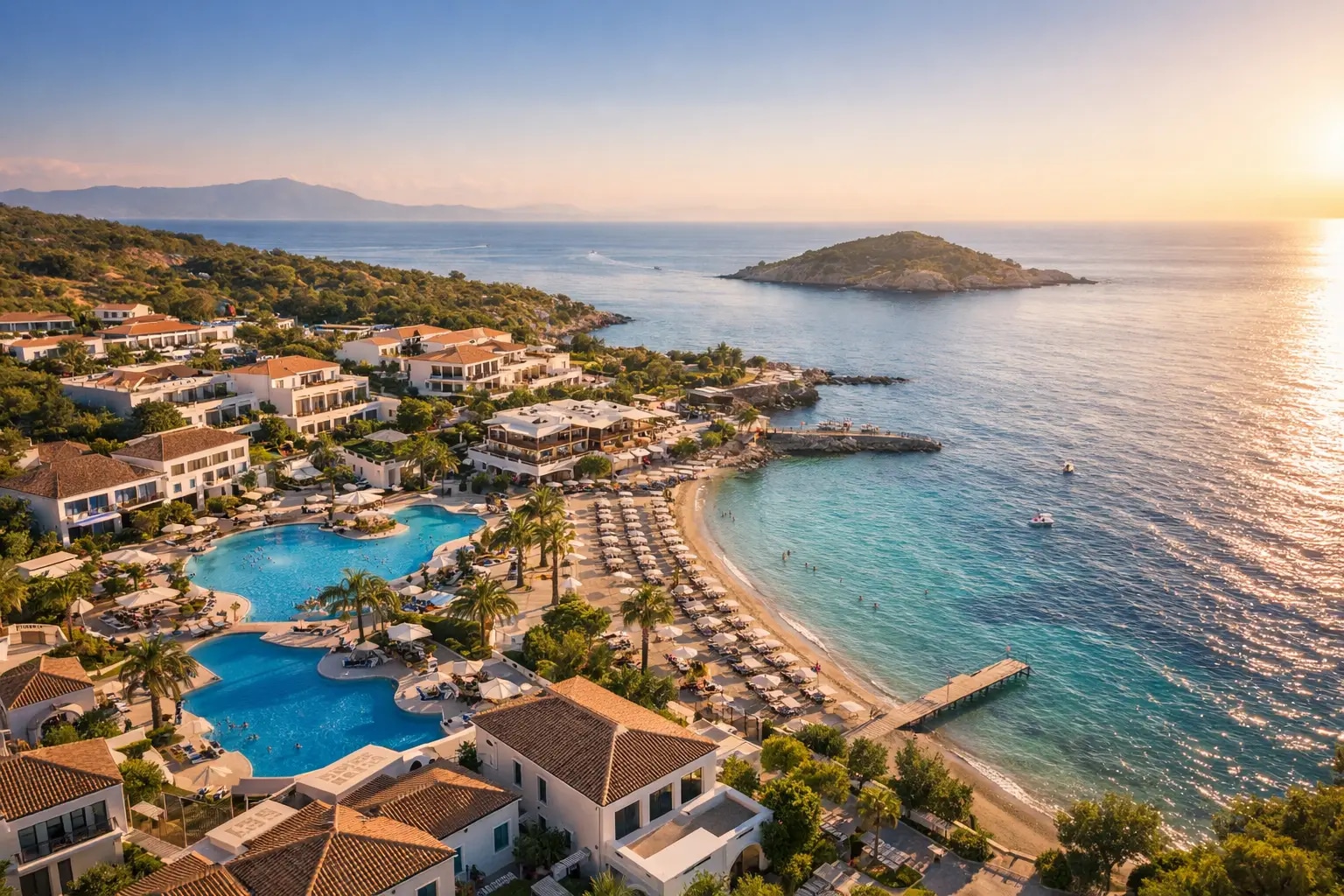
Beachfront is another label worth reading carefully. In Greece, beachfront can mean a sandy stretch steps from your room, or it can mean a rocky shoreline with a platform and ladders. Adults may not mind. Small kids usually do.
Then there is the size question. Big resorts are better for facilities, but they can also mean more walking, more noise, and less of that easy, contained feeling parents often want. Smaller resorts can feel calmer and more manageable, but they may have fewer activities and less backup if the weather turns windy or one pool gets crowded.
What families from the Balkans and diaspora often prioritize
Families planning from Belgrade, Zagreb, Sarajevo, Vienna, Munich, or Chicago often think about the same practical issues, even if budgets differ. They want a destination that feels worth the effort, but not exhausting. They want clear pricing, airport logic, and a setup that does not punish them for traveling with children.
That is one reason Greek resorts remain such a strong choice. You can find a broad range, from straightforward value stays to polished all-inclusive properties, without sacrificing sea quality. For diaspora families meeting relatives halfway in Europe, Greece also works well because flight options are often easier to coordinate than more fragmented Mediterranean destinations.
Still, the cheapest family deal is not always the best value. A lower room rate can hide expensive transfers, paid drinks, weak air conditioning, or a room category that barely fits four people. When comparing options, it is usually smarter to ask what your total stress level will cost, not just the booking total.
How to read resort reviews without wasting time
Look past average scores first. A resort with an 8.4 and highly specific family feedback can be a better choice than one with a 9.1 built around couples.
The most useful reviews mention concrete details: whether the beach is sandy or pebbly, how far rooms are from the main restaurant, whether the kids' club is active, how evening noise carries, and whether family rooms feel renovated or tired. Reviews that only say amazing or terrible are rarely enough.
Pay attention to patterns, not one-off complaints. If several families mention that sunbeds are impossible after 8 a.m., transfers are long, or buffet quality drops after the first days, believe the pattern. The same applies in a positive direction. If parents repeatedly say the staff handled children well and the layout was easy with strollers, that usually reflects reality.
So, is a Greek family resort worth it?
Usually yes, if you choose based on family rhythm rather than postcard beauty. Greece is at its best for families when the resort is close enough to the airport, the beach is genuinely child-friendly, and the room gives everyone enough breathing space. Crete, Rhodes, and Kos are often the safest bets. Corfu can be excellent if you pick the right pocket of the island.
The best family resort Greece review is not the one that says everything was perfect. It is the one that tells you who the resort is really for. A family with a toddler, a ten-year-old, and two grandparents does not need the same hotel as parents traveling with teenagers. Once you match the resort to your real routine, Greece becomes much easier to get right.
A good family vacation is rarely about finding the fanciest place. It is about finding the one where daily life becomes simpler the moment you arrive.
Ready for your next adventure?
Compare flights, accommodation and activities – ljetovanje.com helps you find the best deals for your perfect holiday.
ljetovanje.com
Travel expert and contributor for Ljetovanje.com