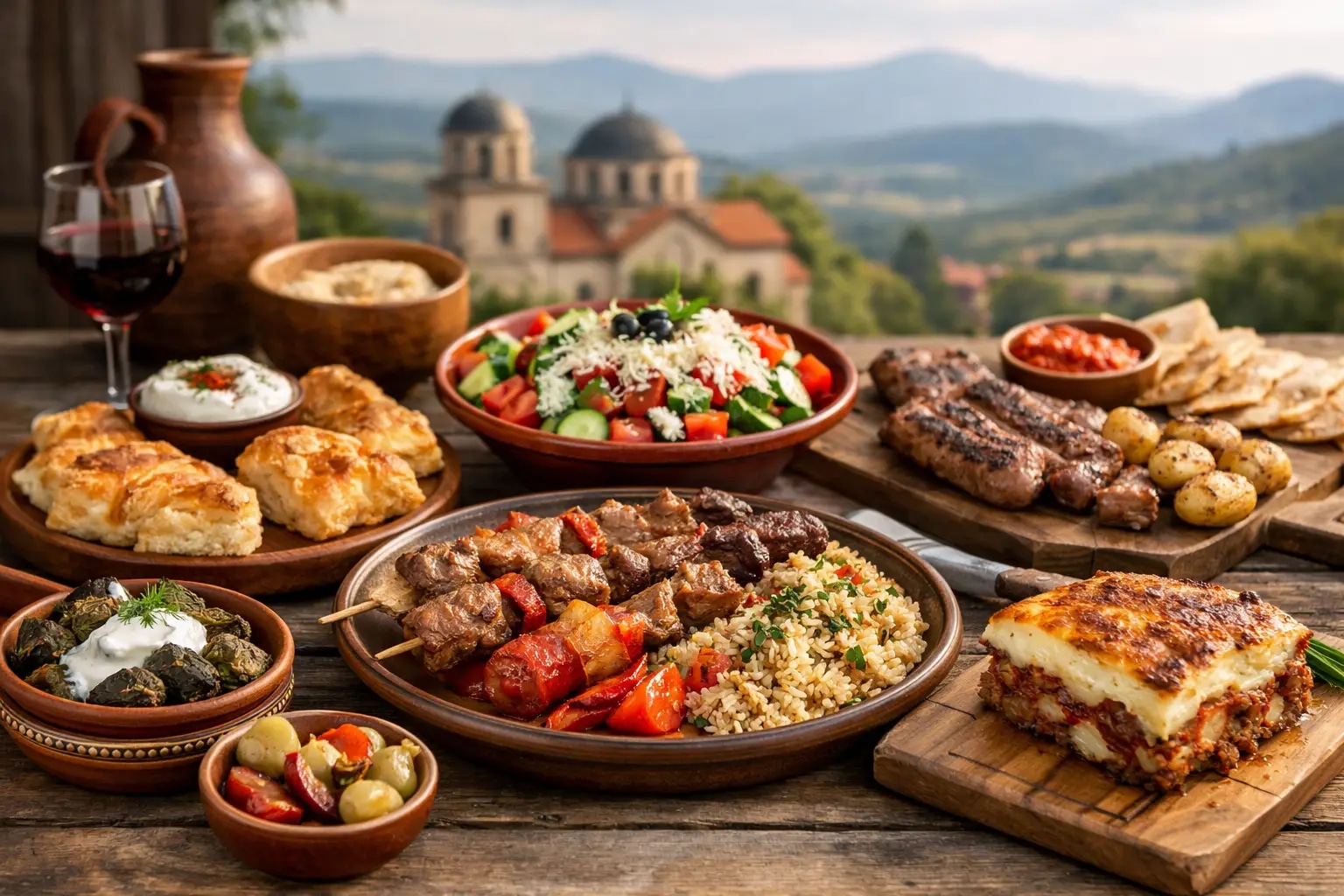
A Bulgarian breakfast can begin with a warm banitsa from a neighborhood bakery, continue with salty white cheese and ripe tomatoes at lunch, and end with a slow dinner built around grilled meat, vegetables, and rakia. That range is why a good Bulgaria food guide matters. The country is easy to underestimate if you only order a familiar salad and kebab, but its food rewards travelers who eat a little more locally.
For travelers from the Balkans, many flavors will feel recognizable: grilled meat, flaky pastry, yogurt, peppers, beans, and shopska salad all have cousins across the region. The difference is in the details. Bulgarian yogurt is tangier, the white cheese is often more assertive, and many traditional dishes lean into savory, slow-cooked comfort rather than heavy seasoning. For American visitors, it is one of the easier regional cuisines to enjoy because the ingredients are straightforward and meals tend to be generous without being complicated.
Bulgaria Food Guide: Start With the Everyday Classics
The best meals are not always in the most polished restaurant. In Sofia, Plovdiv, Varna, or Burgas, look for busy spots where locals are stopping for lunch, families are sharing several plates, and the menu includes both grilled dishes and cooked specials. A restaurant with a huge photo menu aimed entirely at passing tourists may be convenient, but it is rarely where the kitchen is trying hardest.
Banitsa is the breakfast worth waking up for
Banitsa is one of Bulgaria's essential foods: thin layers of pastry filled most commonly with sirene, a brined white cheese, then baked until crisp on top and soft inside. It is sold in bakeries, small takeaway counters, and sometimes cafés. Order it early, ideally when it is still warm, with ayran, boza, or coffee.
The classic cheese version is the safest choice, but you may also find spinach, pumpkin, or leek fillings. It is filling enough for breakfast on a travel day, especially before a drive toward the coast or the mountains. Do not expect it to be delicate or diet-friendly. That is not the point.
Shopska salad is simple, but order it anyway
Shopska salad combines tomatoes, cucumbers, roasted or fresh peppers, onion, and a large snowfall of grated sirene. It is on nearly every menu for a reason. In summer, when the vegetables are at their best, it is fresh, salty, and exactly what you want beside grilled meat or a cold beer.
This is one dish where season matters. A winter shopska can be perfectly acceptable, but it will not have the same flavor as one made with sun-ripened tomatoes. If you are visiting the Black Sea coast between late June and September, order it often and without overthinking it.
Kebapche, kyufte, and grilled meat
Bulgarian grills are direct and satisfying. Kebapche are elongated minced-meat rolls, while kyufte are seasoned meat patties. Both are usually served with fries, salad, or bread, and often arrive without much ceremony. A side of lyutenitsa, a thick red pepper and tomato relish, makes the plate better.
These dishes are ideal for an inexpensive lunch, but quality varies. The best versions taste meaty and lightly smoky, not overly greasy or aggressively spiced. If a place is known for its grill, ordering a mixed plate for the table is practical. It lets you try kebapche, kyufte, pork skewers, and grilled vegetables without turning dinner into a guessing game.
The Dishes That Show Bulgaria's Slow-Cooked Side
Bulgaria is not only about pastry and grilling. Its deeper food culture appears in pots, casseroles, and dishes that need time.
Kavarma is a good example. It is usually a baked stew of meat, onions, peppers, tomatoes, and herbs, sometimes served in an earthenware pot. The recipe changes by region and restaurant, which is part of its appeal. One version may be pork-heavy and rich; another may use chicken or vegetables. It is a strong dinner choice in cooler weather or after a day in the Rila Mountains or Pirin National Park.
Sarmi, vine or cabbage leaves stuffed with rice and sometimes minced meat, are familiar across Southeast Europe but still worth trying in Bulgaria. The vegetarian versions are common and often served with yogurt. For a more rustic option, seek out patatnik in the Rhodope Mountains. This baked potato dish, often mixed with onion, cheese, and herbs, is humble food with real character. It is not flashy, but it tells you more about the region than another generic platter ever could.
Bean dishes also deserve attention. Bob chorba is a comforting bean soup, while baked beans may appear as a main dish with herbs and vegetables. These are particularly useful choices for vegetarians, although travelers should still ask whether meat stock has been used.
Cheese, Yogurt, and the Foods You Should Not Skip
Sirene and kashkaval are central to Bulgarian cooking. Sirene is a brined white cheese, salty and crumbly, used in salads, pastries, and baked dishes. Kashkaval is a firmer yellow cheese that is often melted, grilled, or breaded and fried. Kashkaval pane, fried cheese, is delicious in moderation. It is also the kind of dish that can make a long afternoon feel much longer, so consider sharing it.
Bulgarian yogurt is another staple, typically thicker and more tart than the sweetened yogurt many American travelers know. Eat it plain with breakfast, alongside sarmi, or in tarator. This cold soup of yogurt, cucumber, dill, garlic, walnuts, and sometimes a little oil is one of the best summer lunches in the country. On a hot day in Sofia or on the coast, it is refreshing rather than heavy.
If you see mish-mash on a menu, order it for a relaxed breakfast or light meal. It is a soft scramble of eggs, roasted peppers, tomatoes, and sirene. The name sounds casual because the dish is casual, but a well-made version is far better than it has any right to be.
What to Drink With Bulgarian Food
Rakia is the traditional fruit brandy and often appears before a meal, especially when people are eating slowly and sharing plates. It is stronger than it looks. Sip it rather than treating it like a quick shot, and pair it with salad, cheese, or grilled food. Homemade rakia can be excellent, but strength and style vary widely.
Bulgarian wine is a better choice if dinner is the main event. The country produces capable reds from local grapes such as Mavrud and Melnik, as well as familiar international varieties. In a good restaurant, ask for a Bulgarian bottle or glass recommendation rather than defaulting to the most recognizable label. It is usually better value and more connected to the meal.
For something nonalcoholic, ayran is a salty yogurt drink that works surprisingly well with banitsa and grilled dishes. Boza, a thick, lightly fermented grain drink, is more divisive. Some visitors love its malty sweetness; others do not get past the texture. Try a small glass once. A food guide should help you avoid bad choices, but it should also leave room for harmless experiments.
How to Eat Well Without Overplanning
The most useful strategy is simple: eat a bakery breakfast, have one substantial local lunch, and reserve dinner for a dish you would not make at home. This keeps food spending sensible and prevents every meal from becoming a heavy grill plate.
At restaurants, portions can be large enough for sharing, particularly salads, appetizers, and mixed grills. It is normal to order several dishes for the table, but solo travelers may be better off choosing one main and a salad. Menus are often available in English in major cities and resort areas, though translations can be inconsistent. If a dish sounds vague, ask what meat is used and whether it is served with a side.
Markets are another good way to understand what people actually eat. Look for seasonal tomatoes, peppers, peaches, cherries, honey, cheese, dried herbs, and jars of lyutenitsa. In coastal towns, fish is worth ordering when it is clearly local and simply prepared, but quality depends on the restaurant and the day's catch. Do not assume that every sea-view menu has the same standards.
A few useful ordering words
You do not need fluent Bulgarian to eat confidently, but a few words help. “Sirene” means white cheese, “kiselo mlyako” is yogurt, “skara” refers to grilled food, and “desert” means dessert. If you see “mehana,” expect a traditional-style restaurant, often with hearty dishes, regional decor, and sometimes live music. That can be fun, but choose based on the food and atmosphere you want, not just the costume of the place.
Bulgaria is at its best when you let the meal fit the day: banitsa before an early departure, tarator in the heat, a shopska salad beside the sea, or kavarma after mountain air. Leave one dinner unplanned, ask what the kitchen does well, and order the dish that sounds like someone has been cooking it for a long time.
Ready for your next adventure?
Compare flights, accommodation and activities – ljetovanje.com helps you find the best deals for your perfect holiday.
ljetovanje.com
Travel expert and contributor for Ljetovanje.com