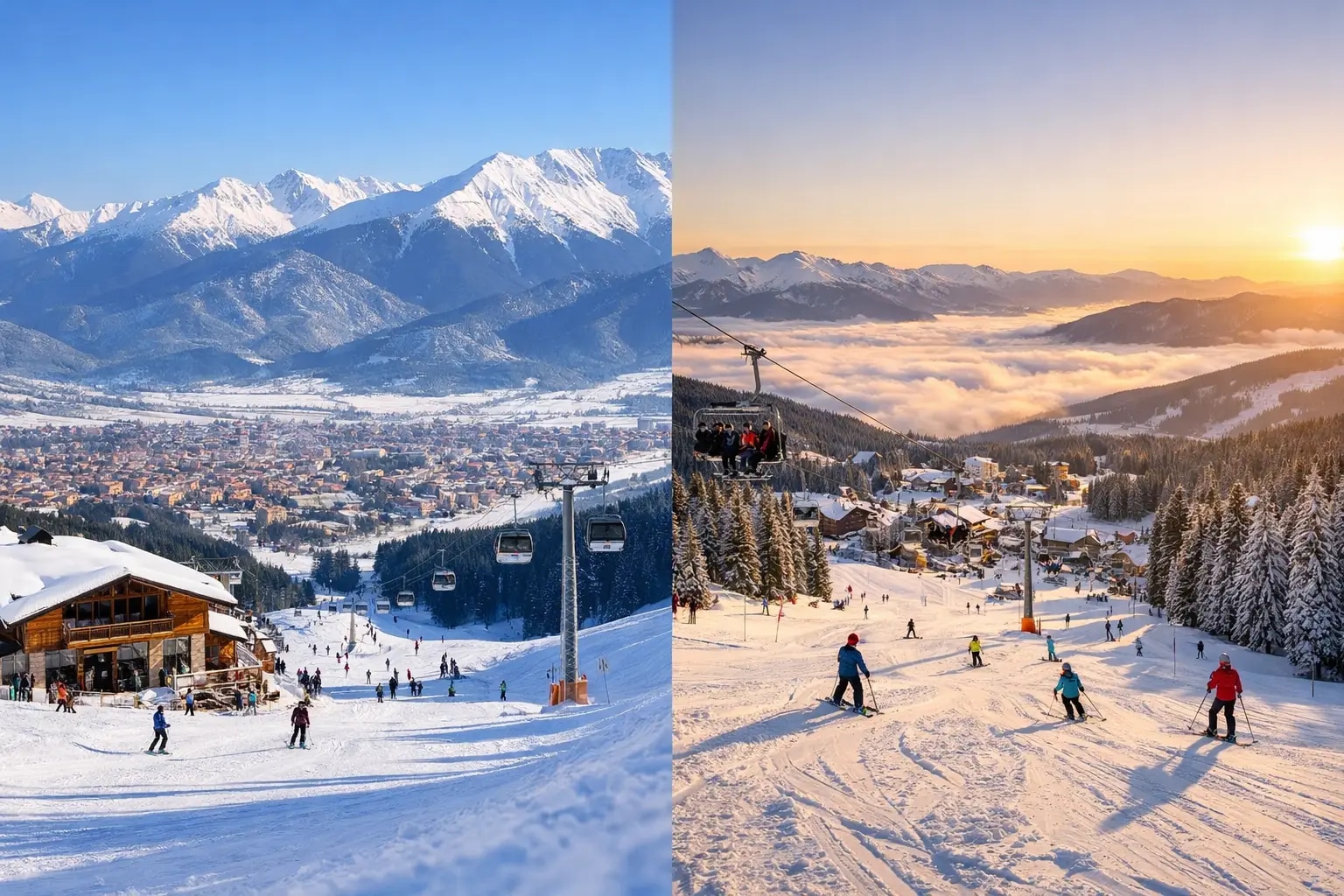
A winter trip can look very different depending on one decision: do you want a larger Bulgarian ski setup with a lively town, or a Sarajevo-area mountain break that feels closer to a classic Balkan weekend away? Bansko versus Jahorina skiing is not simply a question of which resort has more runs. It is about how much time you want to spend in transfers and lift lines, who is traveling with you, and whether your ideal evening ends in a busy restaurant or a quiet mountain apartment.
Both resorts offer good value compared with many Alpine destinations, reliable winter infrastructure, and enough terrain for a proper week on snow. But they suit different types of ski trips.
Bansko versus Jahorina skiing: the quick answer
Choose Bansko if you want the broader ski area, more choice in town, a stronger scene for mixed groups, and a trip that can combine skiing with restaurants, bars, and spa hotels. It is usually the better fit for confident intermediates, groups where not everyone skis all day, and travelers flying through Sofia.
Choose Jahorina if proximity to Sarajevo matters, you prefer an easier mountain escape, or you are planning a shorter family or friends' trip. Its terrain is more compact, but that can be an advantage when you want simple logistics, less time navigating, and a relaxed rhythm on the mountain.
Neither is automatically “better.” For a four-day break with friends arriving from different European cities, Jahorina can be the easier call. For six or seven ski days, Bansko's extra variety is more likely to pay off.
The slopes: range versus an easy-to-learn layout
Bansko sits below the Pirin Mountains and has the more extensive marked network. The skiing stretches from the town-side base up toward a high alpine zone, with long blue and red pistes that let intermediates build confidence without repeating the same short run all day. The upper mountain can feel impressively open when visibility is good, and stronger skiers have enough red terrain to stay interested for several days.
Bansko is especially good for someone who has moved beyond beginner lessons but does not need a resort built around extreme terrain. Its long groomed runs reward skiers who want mileage. There are beginner areas, too, although first-timers may find the main access and the busy base area slightly more intimidating than a smaller resort.
Jahorina has a more contained ski area, spread across gentle ridges and forested pistes. It does not have Bansko's sense of vertical scale, but its layout is friendly. Beginners can progress gradually, and intermediates have a useful mix of blue and red runs without the pressure of a huge trail map. The mountain is also easy to understand after a first morning, which matters when traveling with children, occasional skiers, or relatives who would rather meet for lunch than study lift connections.
Advanced skiers can enjoy both resorts, particularly after fresh snowfall, but neither should be chosen solely for challenging off-piste skiing. Conditions, local guidance, and safety practices matter far more than a trail-map label. If your trip is built around deep powder and technical terrain, look carefully at snow conditions before booking rather than relying on a resort's general reputation.
Snow and timing: plan for the part of winter you want
Bansko benefits from its higher top elevation, which generally gives it an advantage later in the season. Snowmaking also supports key pistes when natural cover is thinner. For a trip in late February or March, that higher terrain is a meaningful reason to lean toward Bansko, particularly if you want long days on groomed slopes.
Jahorina can be excellent in the heart of winter, especially from January through February, when its wooded terrain and natural snowfall create a more classic winter atmosphere. A heavy snow week can make the resort feel far bigger than the map suggests. But weather swings are part of skiing anywhere in the Balkans, and lower sections deserve attention when booking at the edges of the season.
For either destination, avoid choosing dates by price alone. Check which lifts and runs were operating in the same period last season, look at current snow depth closer to departure, and keep one non-ski day in mind. A spa afternoon, Sarajevo visit, or Bansko old-town dinner can rescue a weather day without making the trip feel wasted.
Getting there: Sarajevo convenience or Sofia connections
Jahorina's major practical advantage is Sarajevo. The mountain is within a manageable transfer distance from the city and its airport, making it realistic for a long weekend. That is valuable for diaspora travelers who can find a direct flight to Sarajevo, or for anyone combining the slopes with two nights in the city. You can land, transfer, rent equipment, and still be settled before dinner without losing a full day to travel.
Bansko is normally reached via Sofia. The road transfer is longer, usually around two and a half to three hours depending on traffic and winter conditions. It is not difficult, but it changes the shape of a short break. For a two-night trip, the travel time can feel disproportionate. For a week, it is much less of an issue, especially when Sofia offers the best flight options from your departure city.
Drivers should factor in winter tires, mountain-road conditions, and accommodation parking rather than assuming a rental car makes everything easier. If you are staying close to Bansko's gondola area or directly on Jahorina, a prearranged transfer can be simpler than driving every day.
Accommodation and the feel after skiing
Bansko is a functioning town, not just a cluster of slopeside hotels. That brings a wider range of apartments, family hotels, larger spa properties, casual restaurants, bakeries, and nightlife. Prices can vary sharply between the old town, the gondola zone, and quieter edges of town, so location deserves more attention than hotel star rating. An inexpensive apartment can be a great deal, but not if it adds a daily shuttle routine with ski boots and children.
The trade-off is that Bansko can feel busy in peak weeks. The morning gondola is the part of the experience travelers discuss most often. If you hate queues, choose lodging within easy walking distance, get out early, or consider accommodation with access to alternative lift points where available. The resort's scale is an asset once you are on the mountain, but access at the start of the day needs planning.
Jahorina feels more mountain-focused. Staying up on the resort puts you close to lifts and gives the trip a quieter, snowier atmosphere. There are hotels and apartments, but evening choice is narrower than in Bansko. That is ideal for families who want dinner, a drink, and an early start. A group looking for a different restaurant every night may prefer to stay in Sarajevo and commute, though that sacrifices the convenience of waking up by the slopes.
Costs: compare the full trip, not just the lift pass
Both resorts can be sensible choices for travelers watching the total budget, but the cheapest lift ticket does not necessarily produce the cheapest vacation. Compare flights, airport transfers, baggage fees for ski equipment, rentals, lessons, accommodation location, and meals before deciding.
Bansko's larger accommodation supply often creates more options for couples and groups sharing an apartment. It can also make it easier to find a hotel with a pool or spa, useful when part of the group is not skiing. Jahorina can work out very well for a short break because the Sarajevo transfer is shorter, but slopeside rooms can become limited during school holidays and popular weekends.
For families, lesson availability and the distance between your room, rental shop, and beginner area may matter more than a small difference in daily price. Book these details early. A resort only feels affordable when the practical extras do not keep appearing after arrival.
Who should choose each resort?
Bansko is the stronger choice for intermediate skiers planning five days or more, groups with different evening preferences, and travelers who want a resort town rather than a purely mountain-based stay. It also makes sense for a ski-and-spa vacation where some people will ski less than others.
Jahorina is particularly convincing for a first or second ski trip, a family break, and a long weekend built around Sarajevo. It suits travelers who value a compact resort, slopeside convenience, and a calmer pace over maximum trail mileage.
A practical way to decide is to ask one question before comparing photos: what would frustrate your group more, a longer airport transfer or fewer runs to explore? If the answer is travel time, Jahorina is likely the better match. If the answer is repeating pistes after three days, book Bansko and plan around the gondola.
Your best ski trip is the one that leaves enough room for the people traveling with you. Pick the mountain that fits your actual schedule, budget, and energy level, then reserve the easy details early so snow days stay snow days.
Ready for your next adventure?
Compare flights, accommodation and activities – ljetovanje.com helps you find the best deals for your perfect holiday.
ljetovanje.com
Travel expert and contributor for Ljetovanje.com