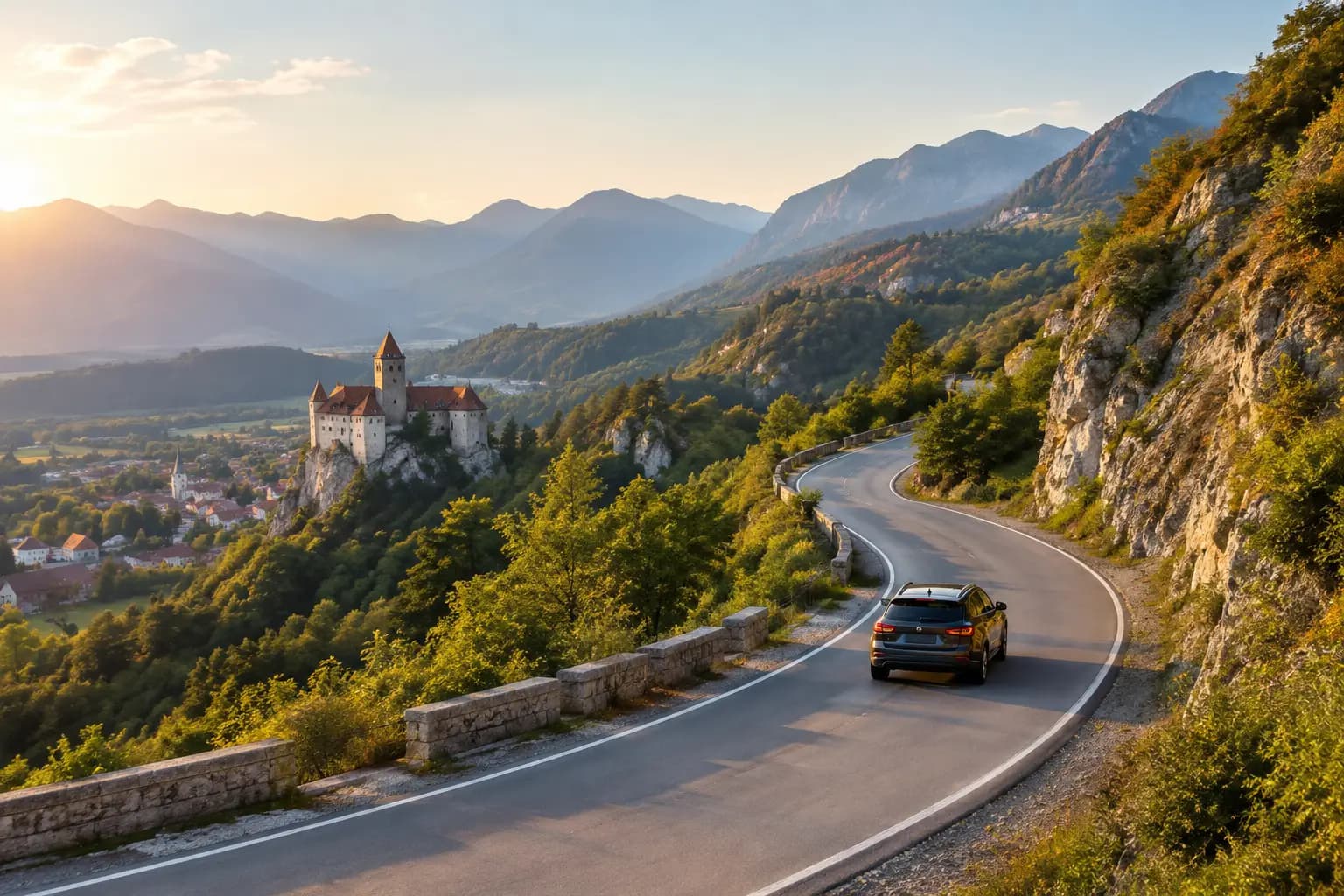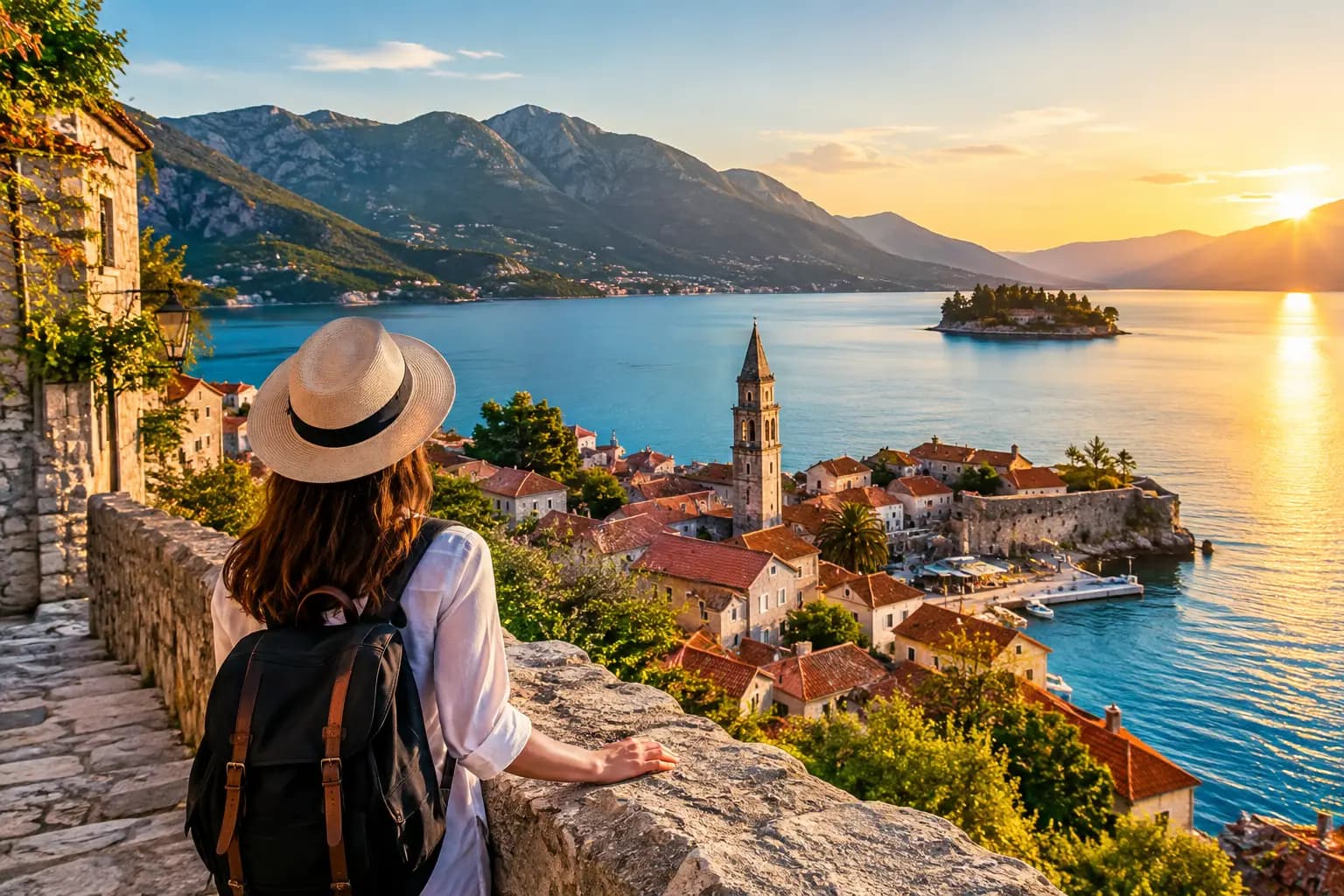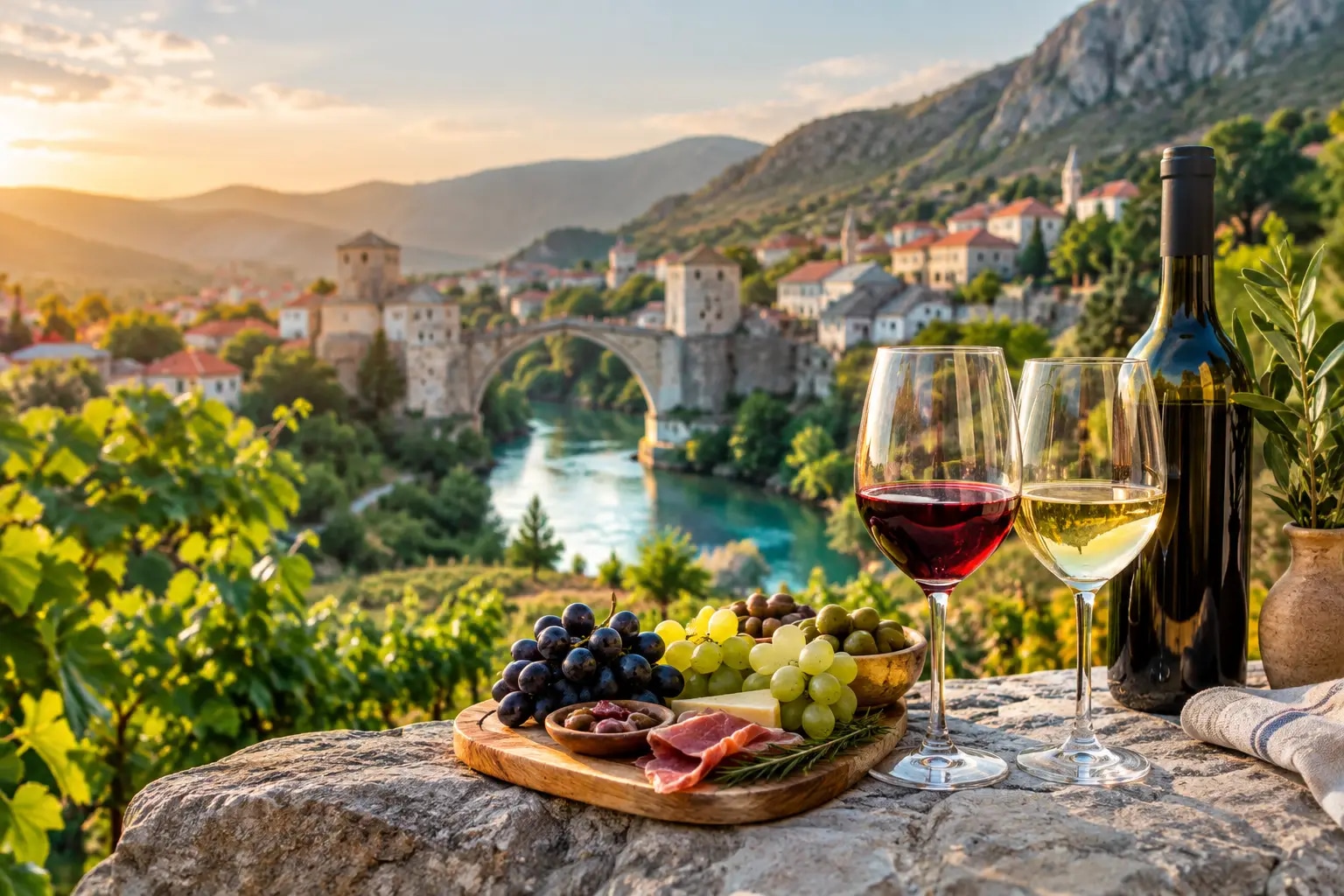
The best Herzegovina wine route guide starts with one practical rule: do not try to treat the region like a checklist. The distances are manageable, but the point is to slow down between Mostar’s stone streets, vineyards under the karst hills, long lunches, and small cellar doors where someone may still be pouring the wine they helped make.
Herzegovina is not a polished, bus-tour wine destination, and that is exactly its advantage. It rewards travelers who like regional food, local varieties, and an itinerary with room for detours. For visitors arriving from the diaspora or pairing a family visit with a short break, it is also one of the easiest ways to see a more relaxed side of Bosnia and Herzegovina.
Why Herzegovina works for a wine weekend
Wine has been part of this landscape for centuries. The hot summers, mild winters, limestone-rich soil, and steady sunlight give local grapes a distinct character: bright, dry, herbal whites and reds with more structure than many first-time visitors expect.
The route is less a single signed road than a cluster of wine areas connected by scenic regional drives. Most travelers begin in Mostar, then move west toward Čitluk, Međugorje, and Ljubuški, or east and south toward Stolac and Trebinje. You can cover parts of both directions in a long weekend, but choosing one side usually makes for a better trip.
Mostar is the practical choice if you are flying in, joining the route from the coast, or want restaurants and accommodation within walking distance. Trebinje suits travelers who prefer a smaller base, quieter evenings, and a more Mediterranean rhythm. Neither is automatically better. It depends on whether your trip is centered on city energy and day trips, or on a slower wine-country stay.
Herzegovina wine route guide: know the local grapes
A tasting is much more enjoyable when you know what to ask for. Herzegovina’s wine identity rests primarily on two native varieties: Žilavka and Blatina.
Žilavka is the white to order first
Žilavka is Herzegovina’s signature white grape. At its best, it is dry, fresh, and textured, with citrus, yellow apple, Mediterranean herbs, and a mineral edge that reflects the stony terrain. Some versions are light and easy for a warm afternoon; others spend time on lees or in oak and have enough body for grilled fish, chicken, or creamy local cheese.
Do not assume every Žilavka tastes the same. The producer’s style, vineyard elevation, harvest date, and cellar approach can change it considerably. Ask for a classic expression and, if available, a more structured reserve-style bottle. Comparing the two tells you more about the region than ordering several unrelated international wines.
Blatina deserves time, not a quick sip
Blatina is the red grape to look for. It can be softer and more fragrant than the heavy reds travelers often expect from hot climates, showing dark cherry, plum, dried herbs, and gentle spice. In stronger examples, it has the depth to stand up to lamb, slow-cooked veal, or grilled meat.
There is a useful local detail behind its personality: Blatina has a demanding flowering pattern and needs other grape varieties nearby for successful pollination. That sensitivity is one reason yields can vary, and why a good bottle can feel particularly tied to the vineyard rather than made to a formula.
You will also see Vranac, Trnjak, and international varieties such as Cabernet Sauvignon or Merlot. They can be excellent, especially in blends, but a first visit should prioritize Žilavka and Blatina. They are the wines that make the place memorable.
Choose a route that leaves room for lunch
Trying to visit five wineries in one day is not good planning. Tastings take time, opening hours vary, and the most interesting conversations usually happen after the formal pour. A realistic pace is two wineries in a day, perhaps three only if they are close together and you have a designated driver.
Mostar, Čitluk, Međugorje, and Ljubuški
This is the easiest route for first-time visitors. From Mostar, vineyard country begins quickly, and the roads lead through broad, sunlit valleys framed by low rocky hills. The Čitluk area is especially associated with wine production, while Međugorje provides a wide range of accommodation and dining options. Ljubuški is a useful addition if you want to combine a tasting day with Kravice Waterfalls, although the falls are much more pleasant outside peak summer hours.
Plan the day around an early cellar visit, a proper lunch, and one afternoon tasting. If you are traveling in July or August, reserve any outdoor sightseeing for early morning or late afternoon. Midday heat can make even short stops feel like work.
Stolac and the eastern vineyards
The drive toward Stolac is a strong choice for travelers who prefer heritage sites, quieter roads, and a less obvious route. The scenery feels more open and less built up, while Stolac itself offers a worthwhile pause between tastings. This direction works well from Mostar, but it is even better as part of a route that continues toward Trebinje.
The trade-off is simple: you may find fewer spontaneous options than around Čitluk. Call ahead, especially outside the main travel season. In return, the experience often feels more personal and less rushed.
Trebinje for a slower wine-focused stay
Trebinje sits at the southern edge of Herzegovina and makes an excellent base for couples, small groups, and anyone who would rather have dinner on a leafy square than return to a larger city. Nearby vineyards, stone villages, and the Trebišnjica River give the area a calm, lived-in feel.
A Trebinje stay is particularly practical if you are combining Herzegovina with a coastal trip. It is also a good answer for travelers who want wine without spending every day in a car. Book a local transfer or arrange a driver for tasting days, then keep the rest of your schedule deliberately light.
The logistics that make or break the trip
A rental car gives you the most flexibility, but it is not essential if one person does not want to drive. The real issue is alcohol, not distance. Small roads, summer heat, and unfamiliar turns are a poor combination after a generous tasting. Decide on a designated driver before the first bottle appears, or ask your accommodation about a local driver for half or full days.
Appointments matter. Some wineries welcome walk-ins during busier months, while others operate by reservation or open limited hours. A quick call or message before setting out prevents the common frustration of arriving at a locked gate. It also gives the host time to prepare a tasting in English when needed.
Bring water, sunglasses, and shoes that can handle gravel. Dress casually but neatly. Wine country here is relaxed, not formal, yet cellar visits are still personal hospitality rather than an anonymous attraction. If you buy bottles, ask how they have been stored and whether they are suitable for travel. In summer, do not leave wine in a hot car while you continue sightseeing.
For travelers from the United States, one more practical point: tasting pours can be more generous than what you are used to at commercial tasting rooms. Eat beforehand, pace yourself, and do not feel obliged to finish every glass. A good host will understand.
What to eat with Herzegovinian wine
The food is not an extra beside the wine. It is part of why the route works. Order local cheese, cured meats, grilled vegetables, trout where it is fresh, and dishes cooked under a bell-shaped metal lid when available. Žilavka is especially good with river fish, lighter grilled plates, and salty cheese. Blatina works naturally with lamb, beef, and smoky grilled meats.
Avoid choosing restaurants solely because they advertise a view or a large menu. A smaller place with a short menu, busy local tables, and wine from nearby producers is often the better lunch stop. In Herzegovina, the most memorable meal may be the one that takes longer than planned.
When to go and how long to stay
Late April through June and September through October are the strongest months for a wine route trip. Days are warm, vineyards are active, and the roads are generally easier to enjoy than in the peak summer heat. Harvest season can be especially atmospheric, though availability for visits may be tighter because producers are busy.
July and August work if your schedule is tied to summer holidays, family visits, or a wider Adriatic trip. Start early, book accommodation with air conditioning, and build in an afternoon break. Winter is quieter and can be rewarding for serious wine drinkers, but confirm winery hours in advance.
Two nights is the minimum worth planning: one day for the Mostar or Čitluk side, another for Stolac or Trebinje. With three nights, you can travel at the pace the region deserves, leave space for a long lunch, and still have time to sit with a final glass instead of racing to the next stop.
A Herzegovina wine trip is best judged by what you remember afterward: the vineyard view, the bottle you carried home, the lunch that turned into late afternoon. Plan the practical details, then leave the rest of the day open enough for the region to do its work.
Ready for your next adventure?
Compare flights, accommodation and activities – ljetovanje.com helps you find the best deals for your perfect holiday.
ljetovanje.com
Travel expert and contributor for Ljetovanje.com