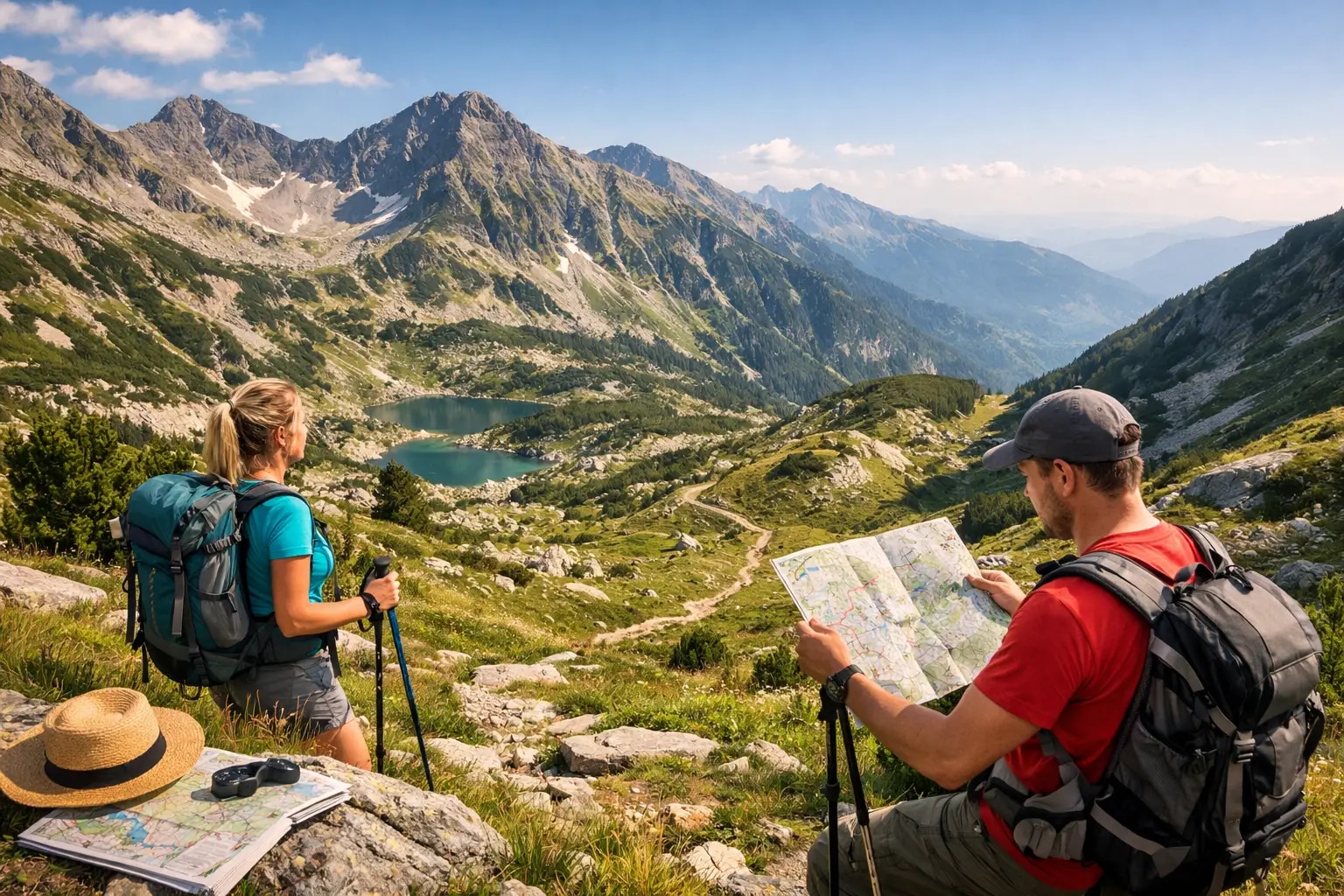
Bansko summer hiking is the reason many travelers return after ski season ends. Once the snow clears, the town becomes a practical base for the Pirin Mountains: high alpine lakes, sharp granite ridges, long valley walks, and huts that still feel refreshingly unpolished. It is not a destination for a lazy resort stroll, but it can work equally well for serious hikers, couples who want mountain days with good dinners, and families prepared to choose shorter routes.
The main advantage is simple: Bansko gives you mountain access without requiring a complicated expedition. You can sleep in town, stock up on food, arrange a taxi or transfer to trailheads, and finish the day with a proper meal rather than cooking from a backpack. The trade-off is that the best trails are exposed, weather changes quickly, and some logistics - especially lifts - depend on the season and day of the week.
When to plan Bansko summer hiking
Late June through September is the most reliable hiking period. July and August bring the warmest temperatures and the widest choice of open routes, but they also bring afternoon thunderstorms, busier trailheads, and stronger sun above the tree line. For most travelers, early September is the sweet spot: days are still pleasant, the air is often clearer, and Bansko is quieter than during the school holiday peak.
June can be beautiful but is less predictable at higher elevations. Snow patches may linger in shaded areas, while swollen streams can make certain crossings awkward. By October, conditions can turn quickly, particularly on ridges and around the highest lakes. If your dates are fixed outside the core season, plan for lower walks and treat any high route as a weather-dependent bonus.
Start early. In Pirin, a 7 a.m. departure is not excessive, especially for a full-day ascent. It gives you cooler temperatures, more time for breaks, and a better chance of being off exposed ground before storms build in the afternoon.
The best Bansko summer hiking routes
The right route depends less on fitness labels and more on how comfortable you are with elevation gain, uneven stone paths, and a long day outdoors. A hike that looks moderate on a map may still feel demanding if it climbs 3,000 feet over rocky terrain.
Vihren Peak from Vihren Hut
At 9,560 feet, Vihren is Bulgaria's second-highest peak and the classic objective from Bansko. The usual route begins at Vihren Hut and follows a steep, rocky path to the summit. The views across Pirin are outstanding, but this is not a casual half-day outing. Expect sustained climbing, exposure near the top, and a descent that can feel harder on the knees than the ascent.
A taxi from Bansko to the hut is often the easiest option for travelers without a car. In summer, the road and parking area can become busy, so an early transfer is worth arranging. Choose Vihren only with stable weather, good hiking shoes, enough water, and a realistic pace. If cloud builds early or the forecast is unsettled, save it for another day.
Banderishki Lakes and the Todorka area
For a classic Pirin landscape without committing to Vihren, the Banderishki Lakes area is a strong choice. These glacial lakes sit beneath dramatic slopes and can be reached on routes that vary in length depending on your starting point. Some hikers use the Bansko gondola when it is operating in summer, then continue from the upper station; others arrange transport to higher trailheads.
This is a good area for travelers who want high-mountain scenery but prefer to adapt the day as they go. You can build a shorter lake walk, continue toward Todorka, or turn back when the weather changes. The terrain is still rocky and exposed in places, so it is better suited to active families with older children than to strollers or very young hikers.
Bezbog Hut and Popovo Lake
Bezbog Hut, near Dobrinishte, offers one of the most rewarding lake-focused days in the region. The chairlift from the Dobrinishte side can reduce the initial climb when it is running, leaving a scenic walk toward Popovo Lake, one of Pirin's largest and most striking alpine lakes.
This route feels more approachable than a peak ascent, although it should not be underestimated. The walk can be extended into a full day, and the weather at the lake is often much cooler than in town. It is a smart choice for couples, mixed-ability groups, and anyone who wants a memorable mountain day without the pressure of reaching a summit.
Demyanitsa Valley for a greener day
When the forecast is hot or unstable at higher elevations, Demyanitsa Valley is a sensible alternative. The route follows a forested valley toward waterfalls and mountain huts, with enough elevation and distance to feel like a proper hike but less exposure than the high ridges.
It is also one of the better options for families who are used to walking but do not want a full alpine day. The path can be long, so decide in advance whether you are aiming for a specific hut or simply walking out and back at a comfortable pace. In mountain travel, turning around early is good judgment, not a failed plan.
Lifts, taxis, and getting to the trailhead
Bansko's gondola may operate during the summer season, but its schedule can change by month, maintenance plans, and demand. The Dobrinishte chairlift is also seasonal. Check current operating days and hours shortly before travel rather than building a nonrefundable itinerary around them.
A rental car gives you the most flexibility, particularly if you want to combine Bansko with other parts of Bulgaria. But it is not essential. Taxis and private transfers can handle the main trailheads, and many local drivers are familiar with early pickups and agreed return times. Confirm the price, pickup point, and return arrangement before setting off, since mobile reception can be patchy in the mountains.
For international visitors, Sofia is the practical arrival airport. The drive to Bansko typically takes around two and a half to three hours, depending on traffic and stops. Travelers arriving from Western Europe often find that a late flight into Sofia works best with one overnight near the airport or in the city, followed by a relaxed transfer to Bansko the next morning.
What to pack for Pirin, not just for a summer walk
The temperature difference between Bansko and a high ridge can be dramatic. A sunny morning in town can become wind, cold rain, or fog above the tree line. Wear broken-in hiking shoes with grip, carry a waterproof layer and an insulating layer, and bring more water than you think you need. Sun protection matters too: the altitude makes a cool breeze misleading.
Offline maps are useful, but they are not a substitute for judgment. Trail markings are generally present on popular routes, yet fog can make junctions difficult to read. Tell someone where you are going, keep a power bank in your pack, and do not rely on a mountain hut being open unless you have confirmed it for your dates.
For Vihren, Todorka, or any long route above the forest, add a small first-aid kit, snacks with salt and carbohydrates, and a headlamp. Even a straightforward hike becomes more serious when a group moves slowly or weather delays the descent.
Where to stay in Bansko in summer
Summer visitors have a useful choice. Staying near the old town means quieter evenings, traditional restaurants, and a more lived-in feel. Staying around the gondola area makes early lift access easier and usually offers a wider supply of apartment-style accommodations, pools, and parking.
For a hiking-focused trip, an apartment with a kitchen can be more practical than a hotel room, especially for families or travelers staying four nights or longer. You can prepare early breakfasts, store trail food, and dry gear after a wet day. A hotel may be the better fit for a short break when you want breakfast handled and do not plan to rent a car.
Bansko is also a good value compared with many Alpine hiking bases, but avoid assuming every summer week is cheap. Weekends, school holidays, and event dates can lift prices. Comparing the total cost - accommodation, transfers, lift tickets, and meals - gives a more honest picture than looking only at the nightly rate.
Make room for a rest day
The most common mistake is treating Bansko as a place to conquer in two hard days. Pirin rewards a slower plan. Put a demanding peak day between easier walks, leave one day open for weather changes, and enjoy the town when the mountains say no.
That flexibility is what makes Bansko work so well for a summer break. Plan one route you genuinely want to complete, keep two easier alternatives in reserve, and let the forecast make the final decision. You will see more of the mountains by respecting them than by forcing an itinerary.
Ready for your next adventure?
Compare flights, accommodation and activities – ljetovanje.com helps you find the best deals for your perfect holiday.
ljetovanje.com
Travel expert and contributor for Ljetovanje.com