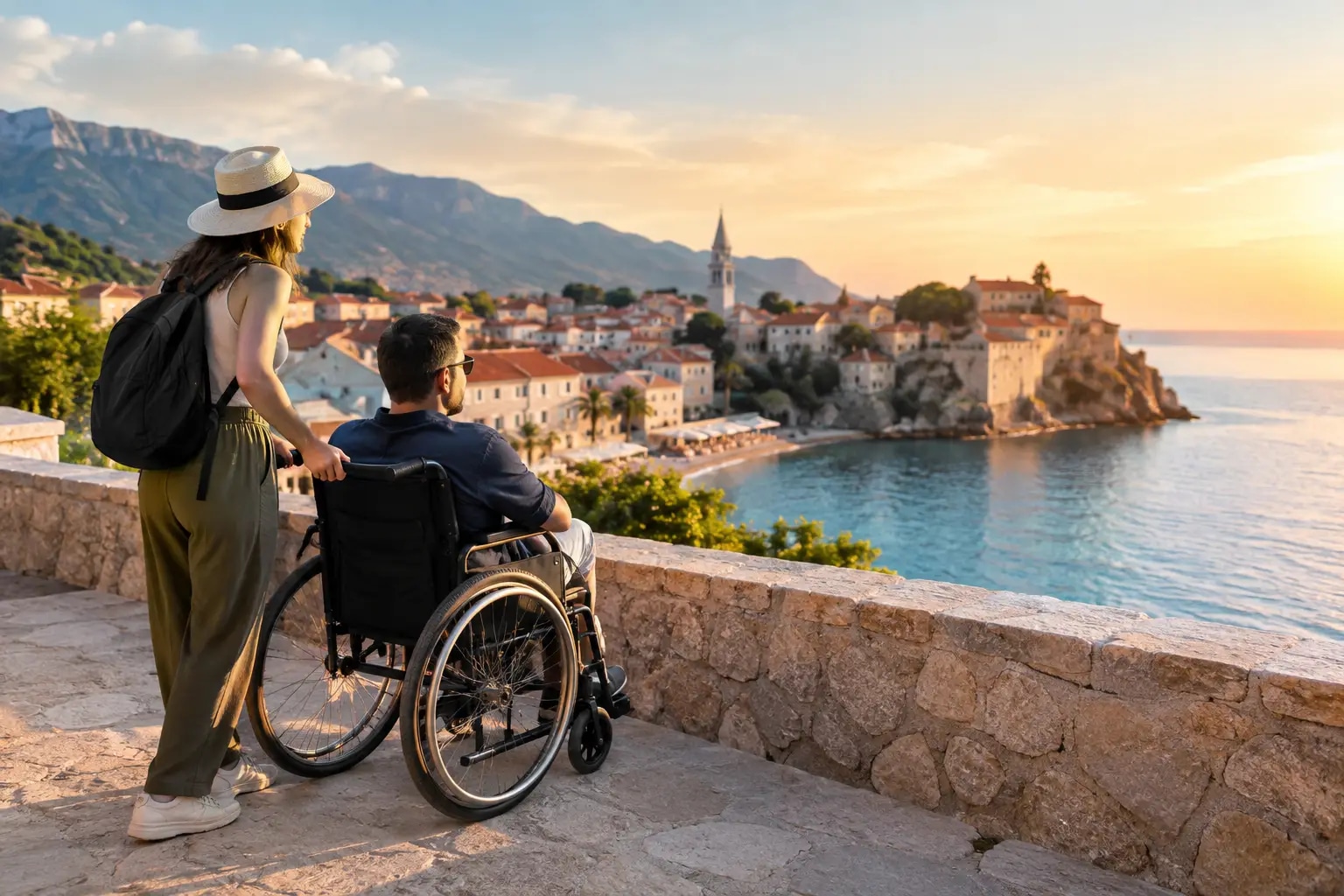
A room described as “accessible” can still have a heavy entrance door, a bathroom that only partly works, or a route to the beach that involves steep steps. That is why learning how to plan accessible holidays is less about finding one label and more about checking the details that will shape each day. A little careful planning before booking can turn a stressful trip into a proper break.
For travelers visiting the Adriatic, the Balkans, or the wider Mediterranean, accessibility varies widely between newer hotels, family-run apartments, historic old towns, islands, and rural stays. The best choice depends on the traveler, not a generic accessibility badge. Start with what makes travel comfortable for you or the person you are traveling with, then build the trip around those non-negotiables.
Start with your own access needs
“Accessible” covers very different realities. A traveler using a power wheelchair may need step-free transfers, a roll-in shower, elevator dimensions, and reliable charging access. Someone with limited stamina may be more concerned with short walking distances, shade, benches, and a hotel close to restaurants. Travelers with sensory sensitivities may value quiet rooms, predictable transport, and the option to avoid crowded areas.
Write down the practical requirements before you choose a destination. Be specific: maximum number of steps, minimum doorway width, whether a shower chair is needed, bed height, accessible parking, dietary needs, medical equipment, or proximity to a pharmacy or clinic. Separate these into essentials and preferences. An ocean view is a preference; being able to enter the bathroom safely is not.
If you are traveling with family, discuss the pace of the trip as well. A destination may look close on a map but still involve cobblestones, hills, long promenades, or multiple transfers. Planning a lighter schedule is not settling for less. It is often what allows everyone to enjoy the holiday rather than recover from it.
How to plan accessible holidays around the right destination
Choose the base before you plan the sightseeing. For a beach break, a modern resort area with a flat seafront may be more practical than a beautiful historic center reached by stairs. For a city break, staying near the places you want to see can matter more than finding the lowest nightly rate on the edge of town.
Along the Croatian coast, for example, newer waterfront areas and larger towns can offer more level promenades, adapted beach access, and a wider choice of accommodations than small hillside villages. But even within one town, the difference between the waterfront and the old center can be significant. In Montenegro, a coastal base may be easier for a relaxed stay, while mountain areas often require more advance checks for terrain and transport.
Do not rule out older destinations automatically. Places such as Split, Dubrovnik, Mostar, or Ohrid are rewarding precisely because they have character, but historic streets can be uneven and steep. They work best when you choose accommodation outside the most challenging lanes, identify accessible routes in advance, and accept that not every attraction will be practical on every trip.
Season matters too. July and August bring fuller beaches, hotter pavement, and more crowded public spaces. May, June, September, and early October can be more comfortable for travelers who need cooler weather, calmer transport, or more room to move. The trade-off is that some seasonal services, including adapted beach facilities or boat schedules, may be reduced outside peak months. Confirm rather than assume.
Check the journey door to door
A flight is only one part of the journey. Think through the route from your home to the airport, airport to accommodation, and accommodation to the places you want to visit. This is where many otherwise well-planned trips become tiring.
When flying, request assistance directly with the airline well ahead of departure and reconfirm it before travel. Explain what you need in plain language: help through the airport, an aisle chair, a specific mobility device arrangement, or support with connections. If you travel with a wheelchair or scooter, provide its dimensions, weight, battery type, and instructions for handling it. Keep those details printed or saved on your phone.
For diaspora travelers arriving from the United States, Canada, Germany, Austria, or Switzerland, a connection can add complexity. A slightly longer layover in a well-organized airport is often a better choice than a tight connection that leaves no margin for assistance or delayed baggage. The cheapest itinerary is not always the best value if it creates unnecessary strain at both ends of the trip.
Arrange the airport transfer before you book the stay, especially if you need a vehicle with a ramp, space for equipment, or a driver who can assist with luggage. Ask for the vehicle model, entry method, and whether the quoted service is genuinely suitable for your needs. “Large car” does not automatically mean accessible transport.
Verify accommodation details, not marketing language
Photos and filters are useful starting points, but they are not enough. Contact the property directly with a short, practical list of questions. Ask whether the route from drop-off to reception is step-free, whether there is an elevator and its internal width, and whether the accessible room is in the building you are booking.
For the bathroom, ask for photos of the shower, toilet area, grab bars, and clearance beside the bed. A grab bar alone does not make a bathroom usable. You need to know whether there is a threshold, whether the shower is level-entry, and whether there is enough turning space.
Apartments can be excellent for longer stays, families, and travelers who want a kitchen or more privacy. They also require closer checking because standards are less consistent. Confirm the floor, elevator access, building entrance, parking, air conditioning, and the route to nearby groceries or restaurants. If a host cannot answer basic access questions clearly, treat that as useful information and keep looking.
Keep written confirmation of the features that matter most. It is not about being difficult. It gives the property a clear record of what you need and reduces the chance of confusion at check-in.
Plan beaches, excursions, and rest days realistically
A beach labeled accessible may have a ramp to the sand but no pathway close to the water, no adapted changing room, or limited availability of beach wheelchairs. Ask what is actually provided, when it operates, and whether equipment must be reserved. Also check the surface between your accommodation and the beach. A 10-minute walk can be easy on a flat promenade and exhausting on loose gravel or a steep road.
Day trips need the same level of attention. Boat excursions, national parks, wineries, rafting bases, and historic sites may be possible, but access can depend on the dock, weather, group size, or vehicle used that day. Ask operators about boarding steps, accessible restrooms, terrain, shade, and the amount of walking involved. A good operator will answer directly rather than offering a vague “no problem.”
Build in open time. One main activity per day may be enough, especially after a travel day. Leave space for a long lunch, a swim, or simply sitting by the water. This is good travel planning for anyone, but it is particularly valuable when energy, pain, medication schedules, or heat sensitivity are part of the picture.
Bring a backup plan, not a suitcase full of worry
Before departure, save offline maps, accommodation contacts, transfer confirmations, and screenshots of important reservations. Identify a nearby pharmacy, grocery store, and medical facility. Pack essential medication in carry-on luggage, along with a basic copy of prescriptions and any device instructions that may be needed during security or transport.
Travel insurance deserves close reading. Check coverage for pre-existing conditions, mobility equipment, rental equipment, medical transport, and trip disruption. The wording matters, and it is better to understand exclusions at home than during an emergency abroad.
Finally, tell your travel companions what support is helpful and what is not. Independence can mean having the right assistance arranged, rather than having to solve every obstacle alone. The best accessible holiday is not the one that looks perfect in a brochure. It is the one where the practical details are handled well enough that you can focus on the sea, the food, the people, and the reason you came.
Ready for your next adventure?
Compare flights, accommodation and activities – ljetovanje.com helps you find the best deals for your perfect holiday.
ljetovanje.com
Travel expert and contributor for Ljetovanje.com