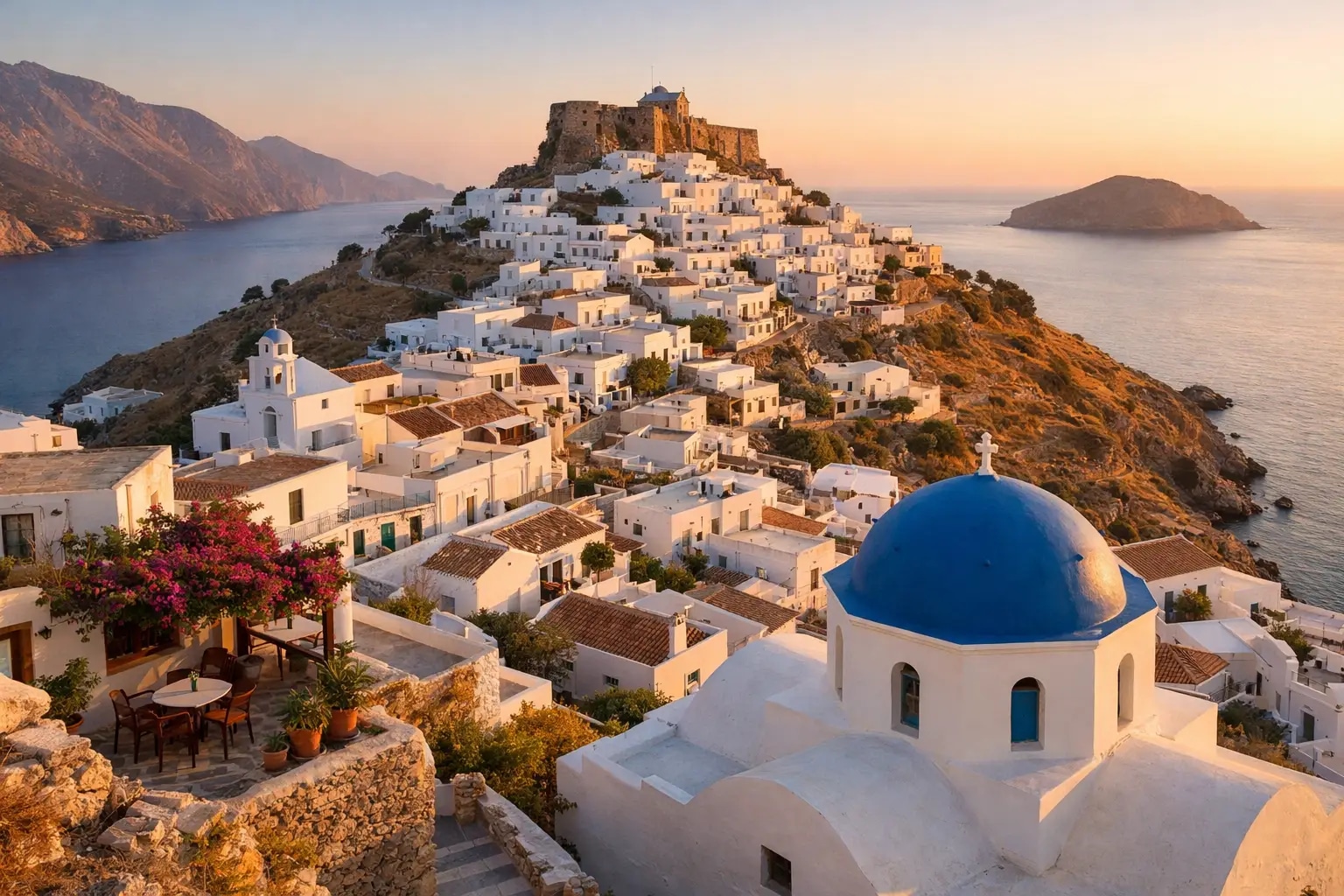
If your idea of Greece is a beachfront hotel, a crowded promenade, and the same souvenir shops repeated from island to island, you are missing the part many travelers remember most. The authentic villages in Greece are where the country still feels lived in rather than staged - where old men argue over coffee, church bells set the rhythm of the day, and dinner starts when the kitchen is ready, not when a tour bus arrives.
For travelers from the Balkans and diaspora families planning summer with a bit more substance, these places make sense. They are slower, often better value than famous hotspots, and usually easier to enjoy if you like simple apartments, local food, and evenings that do not depend on a beach club playlist. That does not mean they are untouched or secret. It means they still have a center of gravity outside tourism.
What makes authentic villages in Greece actually feel authentic?
This is where travel advice often gets vague. A village is not authentic just because it has stone houses and bougainvillea. Plenty of attractive places have been polished so heavily for visitors that daily life moved somewhere else.
In Greece, authenticity usually shows up in smaller details. The bakery opens for locals first. The square is used by residents, not just photographed by visitors. There is still a working community outside July and August. Menus are short, seasonal, and not translated into five languages with glossy seafood photos. You will still see renovation and tourism, of course. Greece is not a museum, and that is part of the appeal.
The trade-off is practical. Truly local villages can be less convenient if you want nightlife, large hotels, organized beach services, or easy parking. Some are best for couples and slower family trips, while others work better as a half-day stop from a coastal base.
10 authentic villages in Greece worth your time
Afitos, Halkidiki
Afitos is one of the easier places to recommend if you want character without giving up beach access. Set above the sea in Kassandra, it has traditional stone houses, courtyards, and a village core that still feels distinct from the resort-heavy image many people have of Halkidiki.
Yes, it is known and yes, summer brings visitors. But the setting helps. You come for the atmosphere as much as the coast, and the evenings here feel calmer than in louder beach towns nearby. For travelers arriving by car from the Balkans, that matters. You get a familiar road trip route with a destination that feels more rooted.
Arnaia, Halkidiki
Most visitors pass through Halkidiki without ever heading inland, which is exactly why Arnaia stands out. In the mountains of northeastern Halkidiki, it offers a different side of Greek summer - cooler air, preserved architecture, and a pace closer to a northern village than a beach resort.
This is a good pick if you want a stopover before or after the coast, or if your trip mixes sea and inland driving. It is not for people chasing beach convenience. It is for travelers who enjoy old houses, local products, and places where tourism has not replaced everyday life.
Makrinitsa, Pelion
Makrinitsa is sometimes called the balcony of Pelion, and in this case the description is deserved rather than lazy. The village looks over Volos and the sea, but what makes it memorable is the way Pelion combines mountain and coast in one region.
The village itself has stone mansions, shaded squares, and the sort of built environment that immediately feels older and more substantial than purpose-built holiday settlements. It can get busy, especially on weekends, but Pelion still attracts a more domestic and independent type of traveler. If you like road trips and do not mind curves, this area rewards effort.
Tsagarada, Pelion
Not far from Makrinitsa, Tsagarada has a looser, greener feel. It is spread across several neighborhoods, surrounded by chestnut trees and plane trees, and works well if you want access to the wild beaches of eastern Pelion without sleeping directly in a beach strip.
This is the kind of place where a family apartment or small guesthouse makes more sense than a resort. You drive, you explore, you eat where locals suggest. That flexibility is ideal for travelers who do not want every day organized in advance.
Apeiranthos, Naxos
On an island known for good beaches and relatively easy family travel, Apeiranthos offers a more serious interior character. Built in marble and sitting on the slopes of Naxos, it has narrow lanes, old houses, and a village identity that feels separate from the port and beach areas.
If you only know Greek islands through coastal postcard scenes, Apeiranthos is a useful correction. It shows that island life is not just tavernas by the water. The only caution is logistics - if your trip depends on walking everywhere from your accommodation, staying inland may feel limiting. Many travelers do best by combining a beach base with a visit here.
Volax, Tinos
Tinos has been getting more attention, but it still feels more grounded than some better-known Cycladic islands. Volax is one reason why. Surrounded by unusual granite boulders, it has a landscape that is striking without feeling artificial.
The village is small, and that is part of the point. You come here for craft traditions, a quieter island mood, and a sense that local life still has priority. It is better for a slow afternoon or a day of inland exploration than for people expecting a long checklist of attractions.
Pyrgi, Chios
Pyrgi does not look like anywhere else in Greece. Its houses are decorated with geometric black-and-white patterns called xysta, giving the village a visual identity that is immediately recognizable and deeply local.
That distinctive look could easily make it feel theatrical, but Pyrgi avoids that because it is not just aesthetic. It is part of a living settlement in the mastic-producing villages of Chios. For travelers who value culture that comes from local history rather than branding, this is one of the strongest choices in the country.
Mesta, Chios
Also on Chios, Mesta feels more fortress-like, with narrow enclosed streets and a medieval layout that still shapes how the village works. It is one of those places where getting slightly lost is the experience.
There is tourism here, naturally, but the structure of the village keeps it from feeling too open or performative. If you enjoy destinations with strong identity and a real sense of place, Mesta is more rewarding than many prettier but less memorable villages.
Olympos, Karpathos
Olympos is often described as one of the most traditional villages in Greece, and while that phrase gets overused, this is one of the cases where it holds up. Remote, dramatic, and culturally distinct, it preserves customs, dress, and dialect more visibly than most villages that appear on standard island itineraries.
That said, it is not the easiest add-on. Karpathos already requires more intention than islands on the usual ferry circuit, and Olympos is best for travelers who genuinely want this experience rather than just one scenic lunch stop. If you make the effort, it gives you a Greece that feels less filtered.
Vatheia, Mani
In the Mani peninsula, Vatheia is famous for its stone tower houses and stark landscape. It is one of those villages that feels almost too cinematic, except the architecture comes from the history of the region rather than any tourist design idea.
Vatheia is not about convenience. It is about atmosphere, silence, and the feeling of being somewhere that developed on its own terms. Pair it with a road trip through Mani and it makes perfect sense. On its own, as a quick stop, it can feel more impressive than intimate.
How to choose the right village for your trip
The best choice depends less on beauty than on how you travel. If you are driving from Serbia, North Macedonia, or further north through the usual summer corridors, northern Greece villages like Afitos and Arnaia are easier to fold into a practical itinerary. You lose less time in transfers and can still get that local feel.
If you are flying and want an island, think carefully about whether you want a village as your base or as a day trip. Many authentic villages in Greece are best appreciated for a few hours, then balanced with beach time and easier access to restaurants, shops, or family-friendly facilities. That is especially true if you are traveling with small children or older relatives.
There is also the seasonal question. In peak summer, even very good villages can feel strained by traffic and parking. June and September are often the sweet spot. You still get lively tavernas and warm weather, but with more breathing room and a better chance of seeing local life instead of just seasonal turnover.
What travelers often get wrong
The biggest mistake is chasing authenticity as if it were a trophy. A village does not become better simply because it is harder to reach or less known on social media. Sometimes the smarter choice is a place that still has character but also gives you decent roads, nearby beaches, and accommodation that does not complicate the whole trip.
Another mistake is expecting villages to function like resorts. In many of these places, the appeal is exactly that they do not. Shops may close midday. Dinner may start later than you planned. Parking may be annoying. The reward is a trip that feels less standardized.
If you are planning Greece with the usual mix of budget, comfort, and real atmosphere, that is the balance worth aiming for. Not the most famous village, not the most hidden one - just the one that fits the way you actually travel.
A good Greek holiday does not always need another beach bar or bigger hotel. Sometimes it just needs a village square, a slow dinner, and the sense that you ended up somewhere with a life of its own.
Ready for your next adventure?
Compare flights, accommodation and activities – ljetovanje.com helps you find the best deals for your perfect holiday.
ljetovanje.com
Travel expert and contributor for Ljetovanje.com