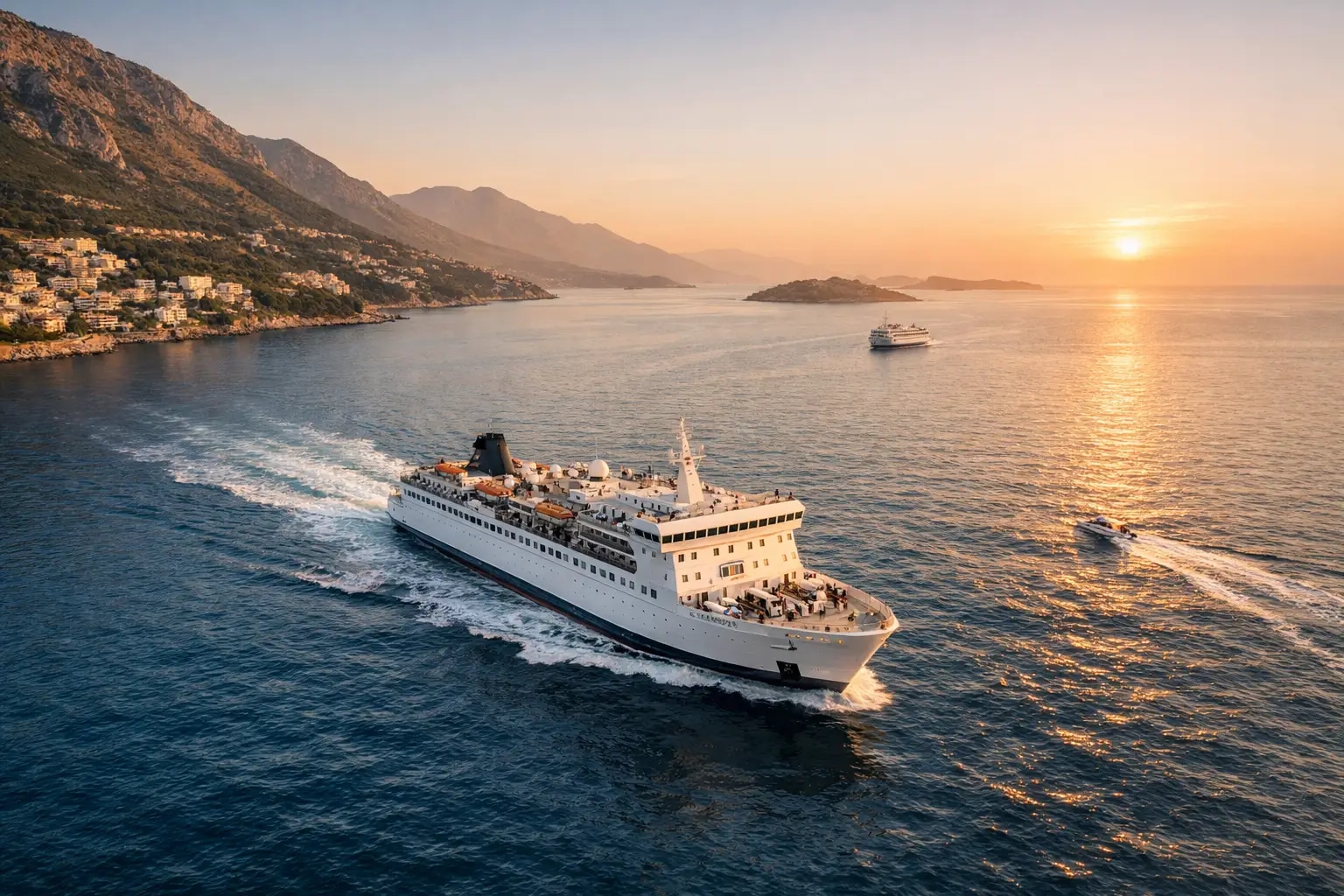
A ferry to Albania makes the most sense when the sea route actually saves you a difficult overland drive, gives you room for the family car, or turns the journey into part of the vacation. Albania ferries connect Italy and Corfu with three very different arrival points: Durres for the central coast and Tirana, Vlore for the southwest, and Saranda for the Albanian Riviera. The right choice depends less on the shortest crossing and more on where you plan to sleep on your first night.
For travelers coming from Italy, the ferry is often the practical alternative to flying and renting a car. For visitors already on Corfu, it is a quick way to pair a Greek island stay with a few days in Saranda, Ksamil, or the quieter beaches farther south. Schedules, vessels, and seasonal frequency can change, so treat published journey times as a planning guide rather than a promise.
Albania ferries: the main routes
Bari to Durres
Bari-Durres is the most established route and usually the best fit for travelers heading toward Tirana, Golem, Durres itself, or central Albania. Most sailings are overnight, with crossings commonly taking around eight to ten hours depending on the vessel and conditions.
An overnight departure can be efficient: you leave Italy in the evening, sleep in a cabin, and arrive ready to drive onward in the morning. But it is only comfortable if you book the right setup. A reserved cabin is worth considering for families with children, anyone traveling after a long drive to Bari, and passengers arriving early for an important event. Deck or lounge tickets cost less, but a full night in a busy shared space can feel long.
Durres is also the most straightforward port if you are taking your own vehicle. From here, Tirana is within easy reach, while the drive south toward Vlore and the Riviera is manageable but should not be underestimated on a hot summer arrival day.
Ancona to Durres
Ancona-Durres is a longer crossing, generally around 16 to 19 hours. It is most useful for travelers starting in northern or central Italy, or for diaspora families driving from Switzerland, Austria, Germany, or northern Italy who want to avoid adding several more hours on the road to Bari.
The trade-off is clear: you spend more time at sea, so a cabin becomes much more important. On the other hand, reducing a long highway day before boarding can make the overall journey calmer, especially when several people are sharing the driving. For a family car packed with luggage, beach gear, and children who need space, that calculation often beats a low-cost flight plus car rental.
Brindisi to Vlore
Brindisi-Vlore is a useful route for travelers focused on the Albanian south. Vlore sits at the gateway to the coast that leads toward Himare, Dhermi, Borsh, and Saranda, so it can save substantial driving time compared with arriving in Durres.
The crossing is usually shorter than the routes to Durres, often around five to eight hours, though timing depends on the service. This route can be especially appealing if your plan is beach-first rather than city-first. Still, check the arrival time carefully. Reaching Vlore late at night before continuing along coastal roads is not everyone’s idea of a relaxed start to vacation.
Corfu to Saranda
The Corfu-Saranda crossing is the short, scenic option. Fast services can take roughly 30 minutes, while conventional ferries take longer. It is highly seasonal, with the widest choice of departures in the warmer months.
This is the route for a flexible Balkan-Mediterranean itinerary: a few days on Corfu, then Saranda as a base for Ksamil, Butrint, inland villages, or the Riviera. It works beautifully without a car if you stay near Saranda and arrange local transport selectively. If you want to explore beaches beyond the town every day, a car gives you more freedom, but parking and peak-season traffic can change the equation.
Choose the port around your first three days
A common planning mistake is choosing the cheapest ticket first and only then looking at the map. Albania is not huge, but coastal driving takes time. Curving roads, summer traffic, fuel stops, and late check-ins matter more than a straight-line distance suggests.
Choose Durres if your trip includes Tirana, central Albania, or a first overnight around Durres and Golem. Choose Vlore if the south coast is your priority and you want to start closer to the Riviera. Choose Saranda if you are arriving from Corfu or want a compact south-Albania stay without covering the entire country by road.
If you are traveling with relatives, children, or a car full of luggage, give yourself a buffer night near the arrival port. It may not be the most photogenic stop on the itinerary, but it prevents the first vacation day from becoming a race against fatigue, darkness, and a missed apartment check-in.
Booking Albania ferries with a car
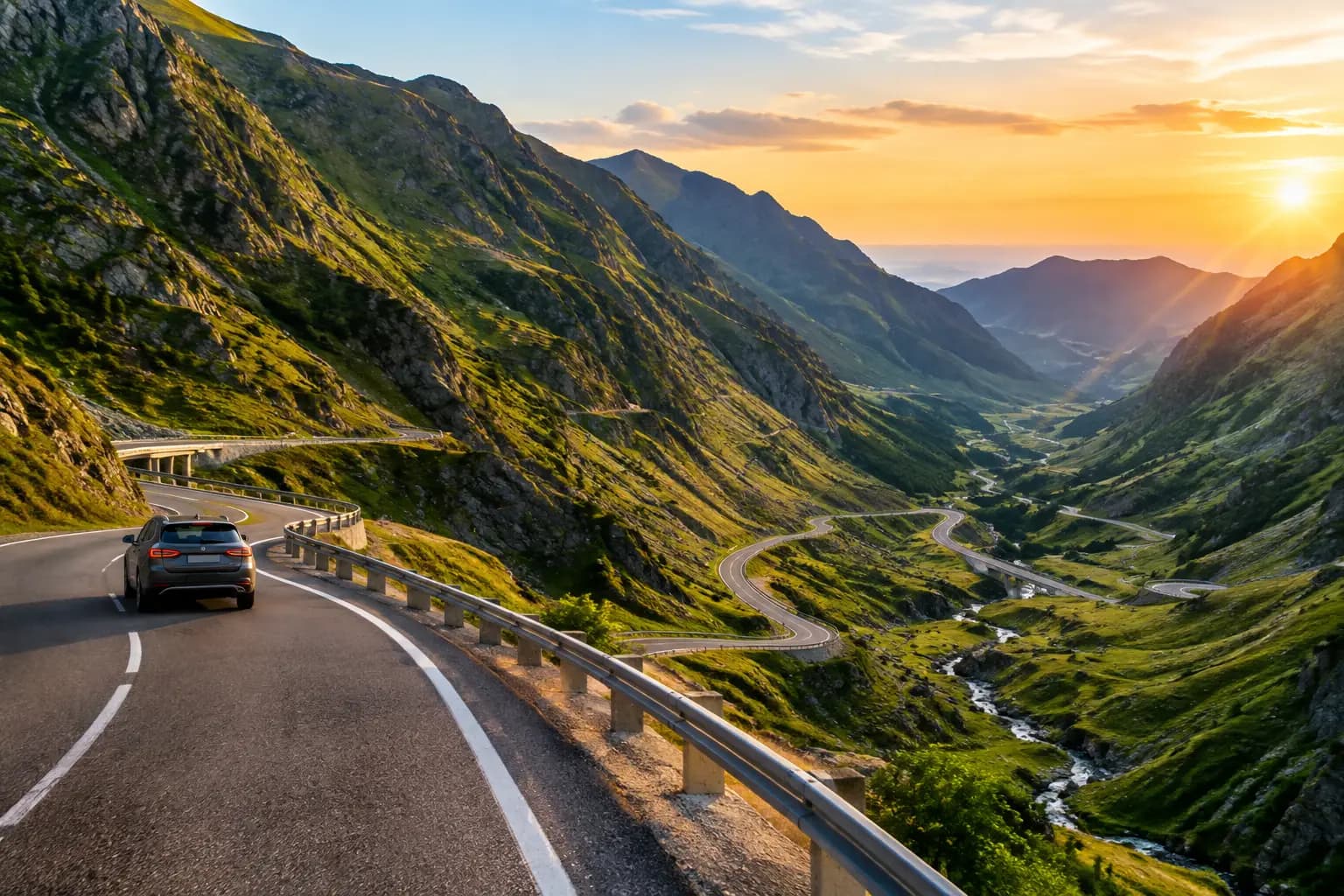
Taking your own car is one of the strongest reasons to use a ferry, particularly for travelers from the Balkans and diaspora households making a longer summer trip. You control your luggage, avoid car-rental rules, and can carry what a family vacation actually requires.
When booking, enter the vehicle details accurately. Ferry pricing and space allocation depend on the vehicle category, length, height, and whether there is a roof box, bike rack, or trailer. Do not assume a standard car category covers a taller vehicle. A mismatch can create delays or extra charges at the port.
Arrive earlier than you would for a passenger-only trip. Vehicle check-in, boarding lines, and document checks can take time, especially during July and August. Keep passports, booking confirmation, vehicle registration, and any required insurance documents together rather than packed in the suitcase at the bottom of the trunk.
If four or more people are traveling overnight, compare the total cost of a cabin against individual lounge or deck tickets. The cabin price can look high at first glance, but privacy, showers, sleep, and a locked space for the night may justify it. For a couple on a tighter budget, a shorter daytime crossing can be the better place to save.
What the ferry ticket does and does not include
A ferry ticket gets you across the water, but it does not automatically make the arrival easy. Food, cabins, pet access, priority boarding, and flexible changes may be priced separately. Read the fare conditions before paying, especially for summer travel when plans can change around work, family visits, or traffic on the way to port.
You should also check baggage rules if you are traveling without a vehicle. Ferries are generally more forgiving than airlines, but passengers still need to manage their own bags through terminals and boarding areas. A large suitcase, stroller, and several beach bags are easier to handle when you know whether the vessel uses stairs, shuttle buses, or walk-on boarding.
For sea conditions, longer crossings can be uncomfortable for travelers prone to motion sickness. Choose a lower-deck cabin or seat near the center of the ship when possible, bring medication you know works for you, and avoid treating a rough-weather forecast as a minor detail. Fast boats on the Corfu-Saranda route can be particularly sensitive to wind, and delays or cancellations are more likely outside the calmest summer conditions.
Timing your crossing for the season
Summer offers the greatest choice of Albania ferry departures, but it also brings the highest fares and busiest ports. If your dates are fixed around school holidays, booking vehicle space well ahead is sensible. Cars, cabins, and convenient departure times can disappear before passenger-only tickets do.
May, June, September, and early October can offer a better balance of warm weather, more reasonable accommodation prices, and fewer people moving through the ports. The catch is reduced frequency on some routes, particularly from Corfu and Vlore. In winter, route availability may be limited, so plan around the timetable rather than assuming a daily sailing exists.
A morning arrival is usually easiest if you have a long drive ahead. A late-evening arrival can work if you have booked accommodation close to the port and your host can accommodate a delayed check-in. It depends on your energy, who is traveling with you, and whether the first day is meant for rest or for covering distance.
A calmer way to arrive
Before leaving for the port, save your reservation offline, confirm the terminal location, and check the latest sailing status. Ports can be busy and confusing when several departures are loading at once. Bring water, snacks, a light layer for air-conditioned indoor spaces, and chargers in your hand luggage rather than in the car.
Most of all, build the itinerary so the ferry helps rather than dictates the trip. Albania rewards travelers who leave room for a slow coffee in Vlore, an unplanned beach stop south of Himare, or an extra evening in Saranda when the weather is good. Choose the crossing that puts you closest to the kind of vacation you actually want, then let the coast set the pace.
Ready for your next adventure?
Compare flights, accommodation and activities – ljetovanje.com helps you find the best deals for your perfect holiday.
ljetovanje.com
Travel expert and contributor for Ljetovanje.com