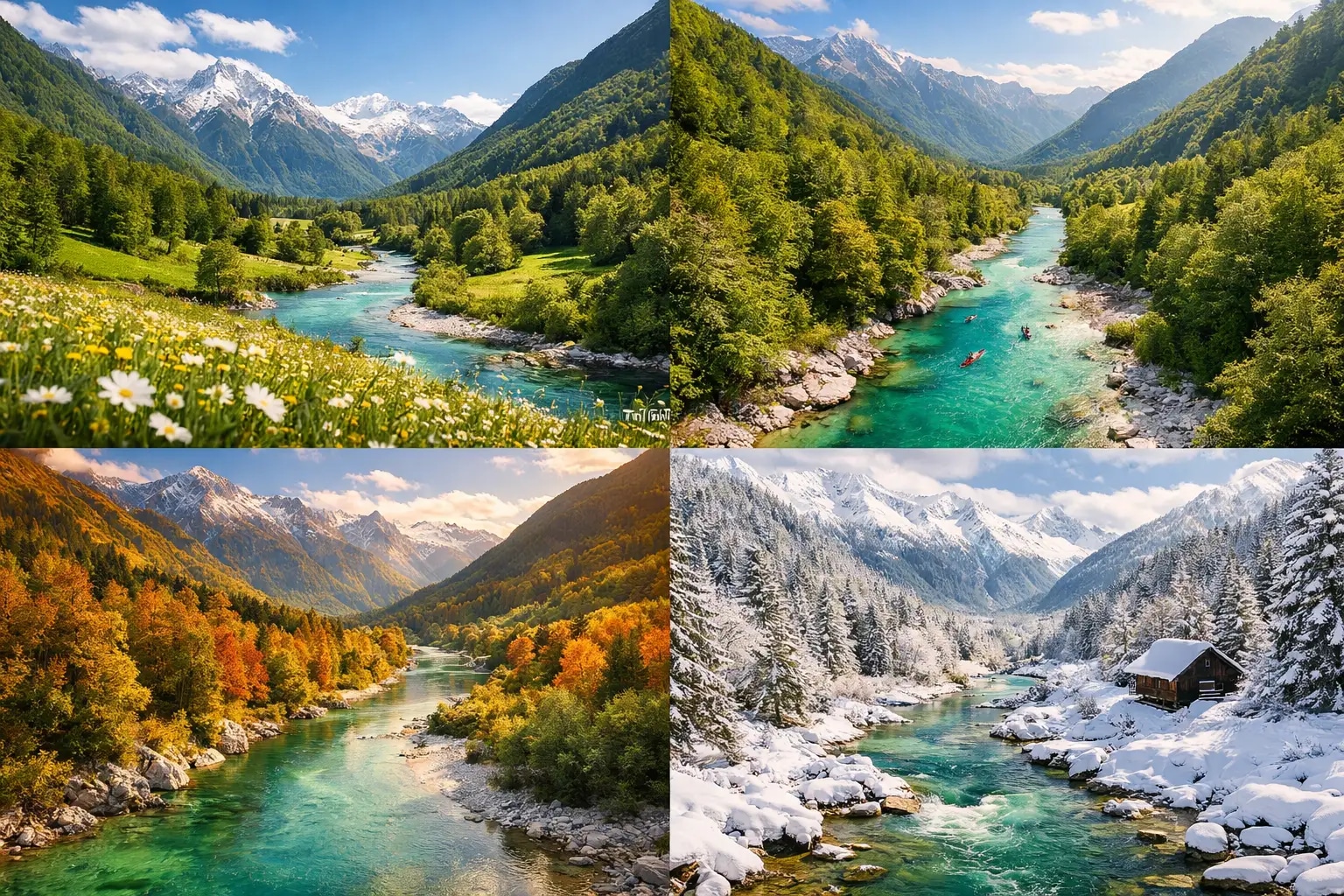
The color of the Soča is the reason people come, but it is not the same trip in every month. When to visit Soča Valley depends less on finding a single perfect week and more on deciding what matters most: rafting water levels, clear hiking trails, lower accommodation prices, or simply having space to enjoy the valley without summer traffic.
For many travelers from the Balkans or the diaspora, Slovenia fits naturally into a longer Alpine road trip. The practical question is whether you want the lively Bovec version of the valley, a quieter base around Kobarid, or a slow autumn stay with good food and walks. Each season favors a different kind of trip.
When to Visit Soča Valley for Your Travel Style
Late May through September is the main travel window, but those months are far from interchangeable. July and August deliver the most dependable access to outdoor activities and the fullest choice of open restaurants and tours. They also bring the highest prices, more cars on narrow valley roads, and busier trailheads.
June and September are often the best compromise. Days are usually long enough for full itineraries, the valley is greener and calmer than peak summer, and apartment availability is generally better. If your priority is active days followed by quiet evenings rather than a packed resort atmosphere, aim for these shoulder-season months.
Spring and late fall suit travelers who are flexible and do not need every activity to be operating. Winter is a specialist choice: beautiful, peaceful, and potentially snowy, but not the time to arrive expecting a classic rafting-and-hiking vacation.
Spring: Best for High Water and Fresh Green Landscapes
From April through early June, snowmelt feeds the Soča and its tributaries. The river looks especially powerful, waterfalls are at their most dramatic, and the valley turns intensely green. It is an excellent period for rafting enthusiasts, particularly those comfortable with cooler conditions and a wetter, more energetic river.
The trade-off is unpredictability. Rain can change water levels quickly, higher trails may still hold snow, and mountain passes can have limited access early in the season. If you are traveling with young children or planning gentle walks only, late May or early June is usually easier than April.
Spring works well for a short break based in Bovec or Kobarid, with room to adjust plans according to the forecast. Book accommodation with flexible conditions if possible. A rainy afternoon here is not a failed day - it can be the right time for a longer lunch, a local museum visit, or a drive through the lower valley.
Summer: Best for First-Time Visitors and Active Families
July and August are the simplest months for a first visit. Rafting, canyoning, kayaking, cycling, and guided hiking are widely available, while most mountain roads and higher routes are accessible. Families benefit from the reliable activity choice, and couples can combine river sports with swimming spots, scenic drives, and evenings in small valley towns.
This is also when Soča Valley asks for more planning. Bovec is the busiest base, especially during school vacation weeks. Parking near popular river access points and trail starts can fill early, while the most attractive apartments may require a longer minimum stay. Travelers driving from Austria, Italy, Croatia, or elsewhere in the region should expect slower progress on local roads than the map suggests.
A practical summer strategy is to start early. Do your hike, waterfall walk, or river activity in the morning, then keep the warmest part of the day for a late lunch, a swim, or a quieter drive toward Kobarid or Tolmin. Booking a place just outside the busiest center can offer better value, but check whether you are comfortable relying on a car for dinner and supplies.
If you want to travel in August, do not expect solitude at the valley's headline spots. You can still find calm, but you need to be willing to walk farther, choose less obvious trails, and avoid the middle of the day.
September and October: The Smart Choice for Fewer Crowds
For many adults traveling without school-age children, September is the strongest answer to when to visit Soča Valley. The river remains central to the experience, daytime temperatures can still be comfortable, and the summer rush eases noticeably after the first part of the month. It is a particularly good period for hiking, road trips, photography, and travelers who prefer a table at dinner without a reservation made days ahead.
By October, the valley shifts into a slower rhythm. Forest colors become part of the attraction, mornings can be crisp, and accommodation prices may soften. This is a rewarding time for Kobarid and the lower valley, where you can balance shorter walks with good meals and scenic drives.
There are limits. Some activity providers reduce departures as demand falls, daylight becomes shorter, and mountain weather can turn quickly. Do not build an October plan around one exposed high-altitude route. Have a lower-elevation alternative and bring layers that handle both sun and rain.
Winter: Quiet, Scenic, and Not for a Standard Valley Itinerary
From November through March, Soča Valley is at its least crowded and most atmospheric. Villages are quiet, the mountains feel close, and a clear winter day can be extraordinary. But this is not a low-cost substitute for a summer adventure trip. Many seasonal businesses operate with reduced hours, some accommodations and restaurants close, and road conditions can affect mobility.
Winter makes sense if your priority is peace, photography, nearby snow activities, or a few restful days rather than a full schedule. Stay flexible, check conditions shortly before departure, and choose a base with the services you need. A rental car is useful, but drivers unfamiliar with mountain roads should be realistic about snow, ice, and short daylight hours.
Choose Your Base According to the Season
Bovec is the obvious choice for rafting, canyoning, and access to high mountain scenery. In peak summer it is also the most convenient, and usually the most in demand. Kobarid has a more relaxed feel and works especially well for hikers, food-focused travelers, and those visiting in spring or fall. Tolmin can be a sensible lower-valley base for travelers continuing toward Ljubljana, the coast, or other parts of Slovenia.
Do not choose only by the lowest nightly price. A cheaper apartment can mean longer daily drives, limited dining options, or difficult parking. For a two- or three-night stay, being close to the activities you actually want is often worth more than saving a small amount on accommodation.
What to Pack and Plan Around
Soča Valley is Alpine terrain, even when the forecast looks mild. Pack a rain layer, shoes with grip, a warm layer for evenings, swimwear, and sun protection. In summer, the sun can feel strong on exposed trails while river water remains cold. In spring and fall, the temperature gap between a sunny valley floor and a higher viewpoint can be significant.
Build your itinerary around conditions, not a rigid checklist. River activities may shift with water levels, while high trails depend on snow and weather. That flexibility is not a compromise - it is how you get the better version of the valley.
If you want the widest choice of activities, visit from late June to early September. For the best balance of good conditions, value, and breathing room, choose June or September. And if the goal is to see the Soča Valley at its quietest, come in October with a warm jacket, a flexible plan, and enough time to let the weather set the pace.
Ready for your next adventure?
Compare flights, accommodation and activities – ljetovanje.com helps you find the best deals for your perfect holiday.
ljetovanje.com
Travel expert and contributor for Ljetovanje.com