Sarajevo has the kind of café culture that makes solo travel feel less solitary: order a Bosnian coffee, sit awhile, and no one will rush you. But is Bosnia solo safe beyond the postcard moments? For most independent travelers, yes. Bosnia and Herzegovina is generally a safe, welcoming, and manageable place to travel alone, provided you use the same awareness you would in any unfamiliar European city and take rural safety seriously.
The bigger challenge is usually logistics, not personal security. Bus schedules can be imperfect, mountain roads demand patience, and English is less universal once you leave the main visitor areas. That is part of the appeal, but it rewards a traveler who plans the basics rather than assuming everything will work like a tightly scheduled city break.
Is Bosnia solo safe for most travelers?
Violent crime affecting visitors is uncommon. In Sarajevo, Mostar, Trebinje, Banja Luka, and other well-traveled places, solo visitors generally move around comfortably during the day and in busy evening areas. Locals are often direct, helpful, and curious about where you are from, especially if you have family roots in the region or are visiting from the diaspora.
The more realistic risks are petty theft, poorly lit side streets late at night, overpaying an unofficial taxi, and transport decisions made too casually. Keep your phone and wallet secure in crowded trams, bus stations, markets, and nightlife areas. Do not leave a bag hanging over the back of a chair on a busy terrace. These are ordinary travel precautions, not a sign that Bosnia is unusually dangerous.
A useful rule is simple: stay where people are, know how you are getting back to your accommodation, and do not turn a relaxed night out into a long solo walk through an unfamiliar neighborhood. Central Sarajevo is lively in the evening, while Mostar’s historic core is easy to enjoy after dark when restaurants are open and visitors are still around. Areas become quieter quickly once you move away from the center.
The safety issue that deserves real attention: rural areas
Bosnia’s mountains, rivers, and villages are a major reason to visit. They also require a different level of care than city sightseeing. Some remote and uncleared areas still contain landmine hazards from past conflict. This is not something travelers encounter while following established roads, marked hiking trails, or normal visitor routes. It becomes a concern when people wander into overgrown fields, abandoned buildings, forest shortcuts, or unmarked land.
Do not treat a countryside detour as an invitation to explore freely. Stick to signed paths, particularly around remote villages and mountain terrain, and use a local guide for less-established hikes. This matters around destinations such as Lukomir, Sutjeska National Park, and parts of the Via Dinarica route, where the scenery is extraordinary but the terrain is real.
The same caution applies to driving. Roads through Bosnia can be beautiful and slow in equal measure. Mountain bends, limited lighting, changing weather, and local driving habits make nighttime road trips less appealing than they look on a map. If you are renting a car, plan shorter driving days and arrive before dark. For a first solo visit, combining trains, buses, and a few pre-arranged transfers can be less stressful than trying to cover the whole country by car.
Sarajevo, Mostar, and the solo travel experience
Sarajevo is one of the easiest places in Bosnia for a solo traveler to begin. Its compact center, walkable streets, frequent cafés, and strong food culture create natural pauses in the day. You can spend the morning around Baščaršija, take the cable car toward Trebević, then settle into a restaurant without feeling conspicuous. Use licensed taxis or ask your accommodation to call one, especially when arriving late or leaving nightlife areas.
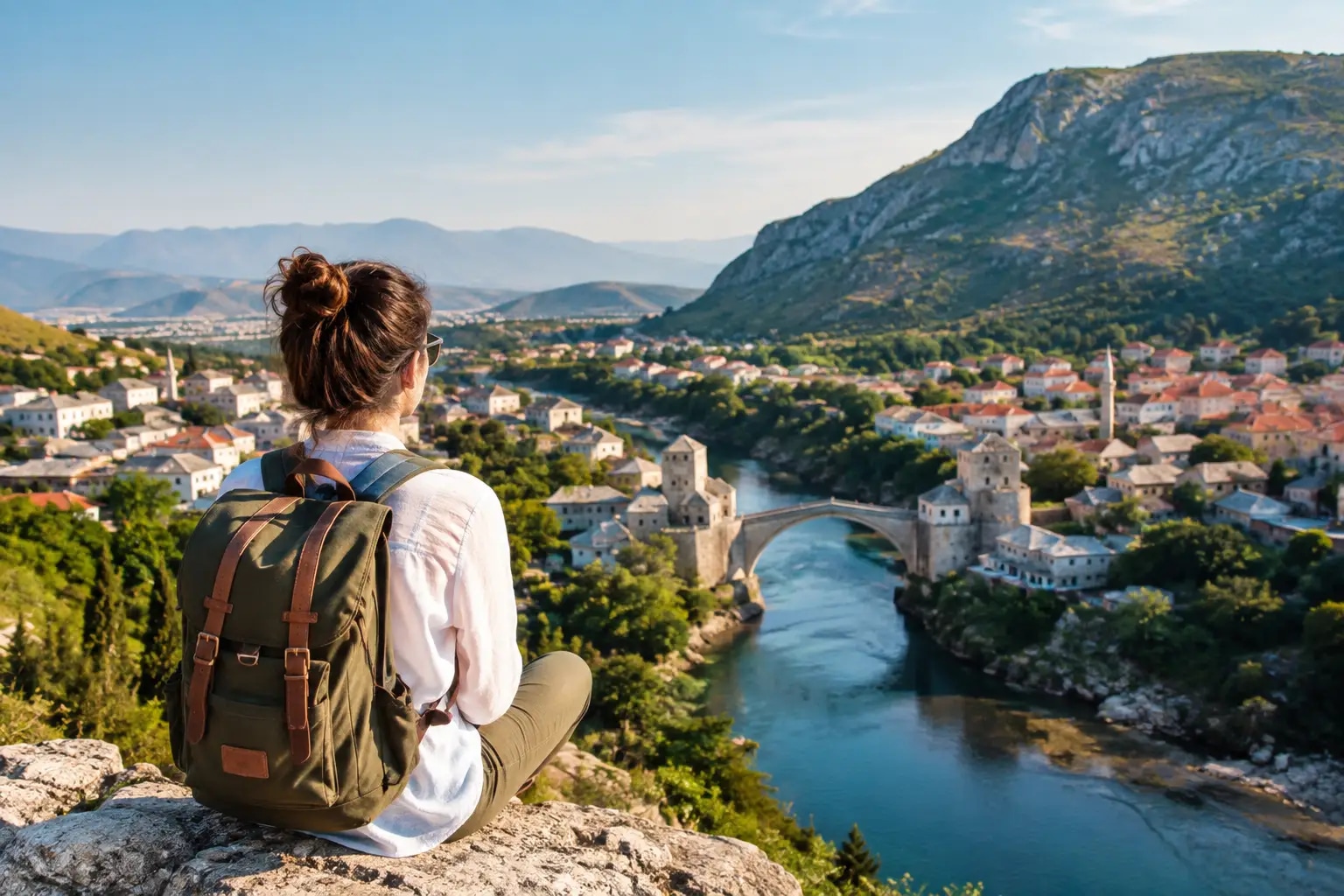
Mostar is smaller and more visually immediate. The old town around the bridge can get crowded in peak season, which is good for atmosphere but worth watching for pickpocketing. Outside the central lanes, the pace is calmer. Many travelers visit as a day trip, but staying overnight lets you see the city after day visitors leave and makes the experience feel much less rushed.
For a quieter southern stop, Trebinje is often a comfortable choice for solo travelers who prefer café terraces, stone streets, and a slower rhythm. It works well as part of a route through Herzegovina, alongside Blagaj, Kravice Waterfalls, or the region’s wineries. The trade-off is that public transport connections may be less convenient, so check your onward route before committing to a late arrival.
Practical habits that make a solo trip easier
A little preparation goes a long way in Bosnia. Save the address of your accommodation offline, including the local spelling, because some streets may be difficult to pronounce or locate quickly. Carry some convertible marks in cash. Cards are increasingly accepted in hotels, larger restaurants, and supermarkets, but cash still matters for small cafés, market purchases, rural stops, and some taxis.
For intercity travel, confirm departure points rather than relying only on a map pin. Sarajevo has more than one station area, and bus operators can have separate ticket windows and platforms. Arrive early when you have a fixed connection, particularly in summer or around holiday travel periods. If you are crossing the country between Sarajevo and Mostar, the train is one of the more pleasant options when its schedule suits your plans, with river and mountain views that make the journey part of the trip.
Keep your passport, main bank card, and backup cash separate. A small crossbody bag is practical in cities, while a daypack is better for hiking or bus travel. Share your broad itinerary with someone at home, not because Bosnia demands alarm, but because it is a sensible habit anywhere when traveling alone.
Advice for solo women and first-time visitors
Women traveling alone commonly report feeling comfortable in Bosnia, particularly in the main cities and visitor destinations. Street harassment can happen, as it can across Europe, but it is not typically the defining feature of a trip. A clear no, a change of direction, or stepping into a café or shop is usually enough if an interaction feels unwelcome.
Dress is your choice, and city centers are accustomed to visitors with different styles. If you plan to enter a mosque or a religious site, modest clothing is respectful and practical. More broadly, trust your instincts around invitations, rides, and drinking. Accepting warm local hospitality can lead to memorable conversations, but there is no need to accept a ride from a stranger or reveal exactly where you are staying.
First-time Balkan travelers sometimes expect communication to be difficult. In central Sarajevo and Mostar, younger people in tourism, cafés, and accommodation often speak good English. Elsewhere, a few phrases, an offline translation app, and a calm attitude cover most situations. People tend to respond well when you make even a small effort.
When Bosnia may not feel like the easiest solo destination
Bosnia is safe, but it is not always frictionless. If you need highly predictable public transportation, extensive English-language signage, polished sidewalks everywhere, or a packed itinerary with no room for delays, you may find it more demanding than larger Western European destinations.
It can also feel less convenient in winter, when short daylight hours and mountain weather affect driving and outdoor plans. That said, winter has its own appeal around Sarajevo, Bjelašnica, and Jahorina if you build in flexibility and choose accommodation with easy transport access.
For travelers who enjoy places with personality, Bosnia’s minor inconveniences are often part of the reward. A delayed bus may turn into an extra coffee in a town square. A conversation with a host may send you to a family-run restaurant you would never have found through a generic search.
Bosnia is a good solo destination for travelers who stay alert without becoming anxious. Keep to known routes in the countryside, organize your arrivals, and leave space for the country to unfold at its own pace. The safest and best version of the trip is rarely the fastest one.
Ready for your next adventure?
Compare flights, accommodation and activities – ljetovanje.com helps you find the best deals for your perfect holiday.
ljetovanje.com
Travel expert and contributor for Ljetovanje.com