A Croatia vacation can look simple on a map: arrive on the coast, pick an island, add a city, and enjoy. In July and August, however, a poorly planned transfer can take most of a valuable beach day. If you are researching how to split stay Croatia plans between more than one place, the goal is not to see everything. It is to combine two or three locations that feel different while keeping driving, ferry schedules, parking, and luggage under control.
For most travelers, Croatia works best as a contrast trip. Pair an old coastal city with a quieter island, or combine a lively base with a smaller town where dinner is still the evening plan. The right split depends on your arrival airport, travel month, and whether this is a couples trip, a family vacation, or a few extra days around visiting relatives.
Start with your arrival and departure airports
The biggest mistake is choosing destinations first and flights second. For travelers arriving from the US or Western Europe, airport timing often decides whether an itinerary feels relaxed or rushed. Split, Dubrovnik, Zadar, and Pula each open up a different part of the coast.
If you fly into Split and leave from Dubrovnik, a southbound route is usually the cleanest choice. You can begin around Split or Trogir, continue to an island such as Brač, Hvar, or Korčula, then finish in Dubrovnik. This avoids retracing the same road and gives the trip a natural rhythm.
A round-trip flight to Split is better for central Dalmatia. In that case, stay in Split for a night or two, choose one island or Makarska Riviera base, then return north. It is tempting to add Dubrovnik, but it can turn a one-week trip into a chain of check-ins. Add it only if you have at least nine or ten nights, or if Dubrovnik is the real reason you are coming.
For northern Croatia, flying to Pula or Zadar makes Istria and the Kvarner islands much easier than starting in Split. Istria is especially suited to travelers who prefer hill towns, local food, short drives, and a less ferry-dependent vacation. Pula plus Rovinj, or Zadar plus Dugi Otok, can deliver a very satisfying split without spending half the trip in transit.
How to split a stay in Croatia by trip length
The number of nights matters more than the number of pins saved on a map. Croatia rewards staying long enough to learn a place: where to swim in the morning, which konoba to return to, and when the waterfront finally becomes quiet.
Five to seven nights: choose two bases
With one week or less, use two bases. A practical version is two nights in Split and five nights on Brač, or three nights in Dubrovnik and four nights on Korčula. This gives you a city experience, a change of scenery, and enough time to settle into each stay.
Avoid treating Split as only a transit station. It is busy and can feel intense in peak season, but an overnight stay makes sense after a late flight or before an early ferry. Its value is convenience, good restaurant choice, and easy day trips. You do not need four nights there unless you want nightlife, history, and excursions as much as swimming.
Eight to 10 nights: add a third stop carefully
This is the sweet spot for three bases, provided each stop has a purpose. A strong route might be Split for two nights, Hvar Town or Stari Grad for three nights, and Korčula Town for four nights. Another good option is Zadar for two nights, Dugi Otok for three, and a quieter mainland base near Primošten or Šibenik for four.
The trade-off is accommodation turnover. Three check-ins mean packing three times, organizing transfers, and losing some flexibility if weather affects a ferry. Choose stops connected by direct seasonal routes where possible, and do not build the itinerary around a connection that only runs once a day.
Eleven nights or more: mix coast, island, and inland character
With nearly two weeks, you can make room for a slower third or fourth location. Consider Split, an island, Dubrovnik, and a final stop on the Pelješac peninsula. Pelješac gives you vineyards, smaller beaches, and a calmer finish after Dubrovnik's crowds.
You can also pair Istria with Kvarner. Spend several nights around Rovinj or Poreč, then move to Krk, Cres, or Lošinj. This works particularly well for families driving from Austria, Germany, Switzerland, or neighboring Balkan countries, where bringing a car can be more practical than coordinating ferries with children and beach gear.
Pick places that do different jobs
A split stay should not be two versions of the same vacation. Two major party-oriented island towns may sound exciting when booking, but after several hot days and crowded dinners they can blur together. Contrast makes the trip feel fuller without making it busier.
Split or Dubrovnik brings atmosphere, restaurants, history, and transport connections. Brač offers accessible beaches and a calmer pace. Hvar has style, good dining, and energy, but prices and crowds rise sharply in high summer. Korčula balances a handsome old town with a more relaxed feel, while Vis suits travelers willing to trade convenience for quiet coves and a more removed island rhythm.
On the mainland, Šibenik is an underrated base for travelers who want a real town rather than a resort strip. It is smaller and easier-going than Split, with access to coastal villages and national park day trips. Makarska works for beach-first vacations, though traffic and parking can be frustrating in peak season. If your priority is quiet swimming, look beyond the center toward smaller villages rather than booking the most central address by default.
Plan transfer days as part of the vacation
A transfer day is not automatically wasted, but it needs a realistic plan. In summer, ferries may be crowded, roads may be slow, and car pickup lines can be longer than expected. Build your itinerary around one meaningful activity at most: a leisurely lunch, a swim near your new accommodation, or an evening walk after check-in.
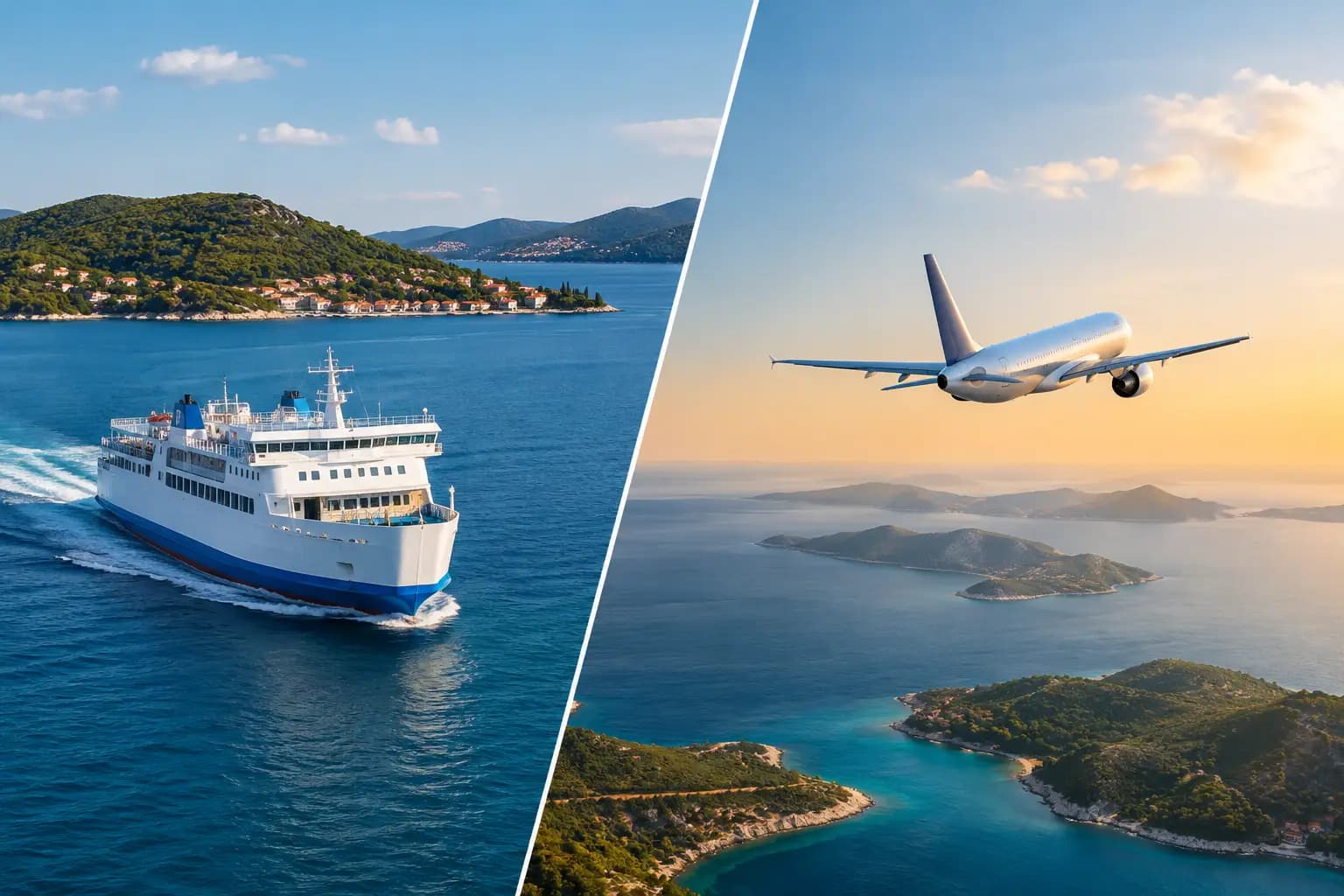
If you are traveling with a car, reserve vehicle ferry space early when reservations are available. For foot passengers, arrive with enough margin, especially on popular island routes. Do not assume that a ferry timetable tells the full story of your day. You still need time to reach the port, park or return the car, board, collect luggage, and get from the arrival port to your accommodation.
Travelers without a car have a different advantage: they can choose centrally located apartments and use passenger catamarans between islands. This is often faster and less stressful for couples or solo travelers. The limitation is that remote beaches, family-run restaurants, and smaller villages become harder to reach. Decide whether your vacation is built around easy evenings in town or independent exploration during the day.
Where to spend more and where to save
Not every stop deserves the same accommodation budget. Spend more where the location truly changes your experience: a sea-view apartment within walking distance of the old town, a family-friendly beach area that saves daily driving, or an island stay close to the ferry if you have an early departure.
Save money in the transit city or at a stop where you will mostly be out all day. A simple, well-reviewed apartment in Split can make more sense than a premium hotel if you are leaving for an island the next morning. On the other hand, choosing a cheap apartment far uphill or outside town can create unexpected taxi costs and turn every dinner into a logistical exercise.
For diaspora travelers, there is another useful calculation. If you are combining a family visit with a few true vacation days, keep those parts separate in your booking plan. Staying with relatives can be meaningful and economical, but it is not always the same as a restorative beach break. Even two or three nights in your own apartment near the sea can give the trip breathing room.
A simple Croatia split-stay checklist
Before booking, confirm these practical details:
- Your arrival and departure airports support the direction of travel.
- Every base has at least two full nights, preferably three on an island.
- Ferry times work with your flight, car rental, and check-in window.
- Your accommodation has realistic parking access if you are driving.
- You have left room for weather, traffic, and the occasional day when doing nothing is the best plan.
The best Croatia itinerary is rarely the one with the most islands. It is the one where your second destination feels like a genuine change of pace, and where you still have time to claim a favorite swimming spot before breakfast. Plan the connections carefully, then leave enough empty space for the coast to do its job.
Ready for your next adventure?
Compare flights, accommodation and activities – ljetovanje.com helps you find the best deals for your perfect holiday.
ljetovanje.com
Travel expert and contributor for Ljetovanje.com