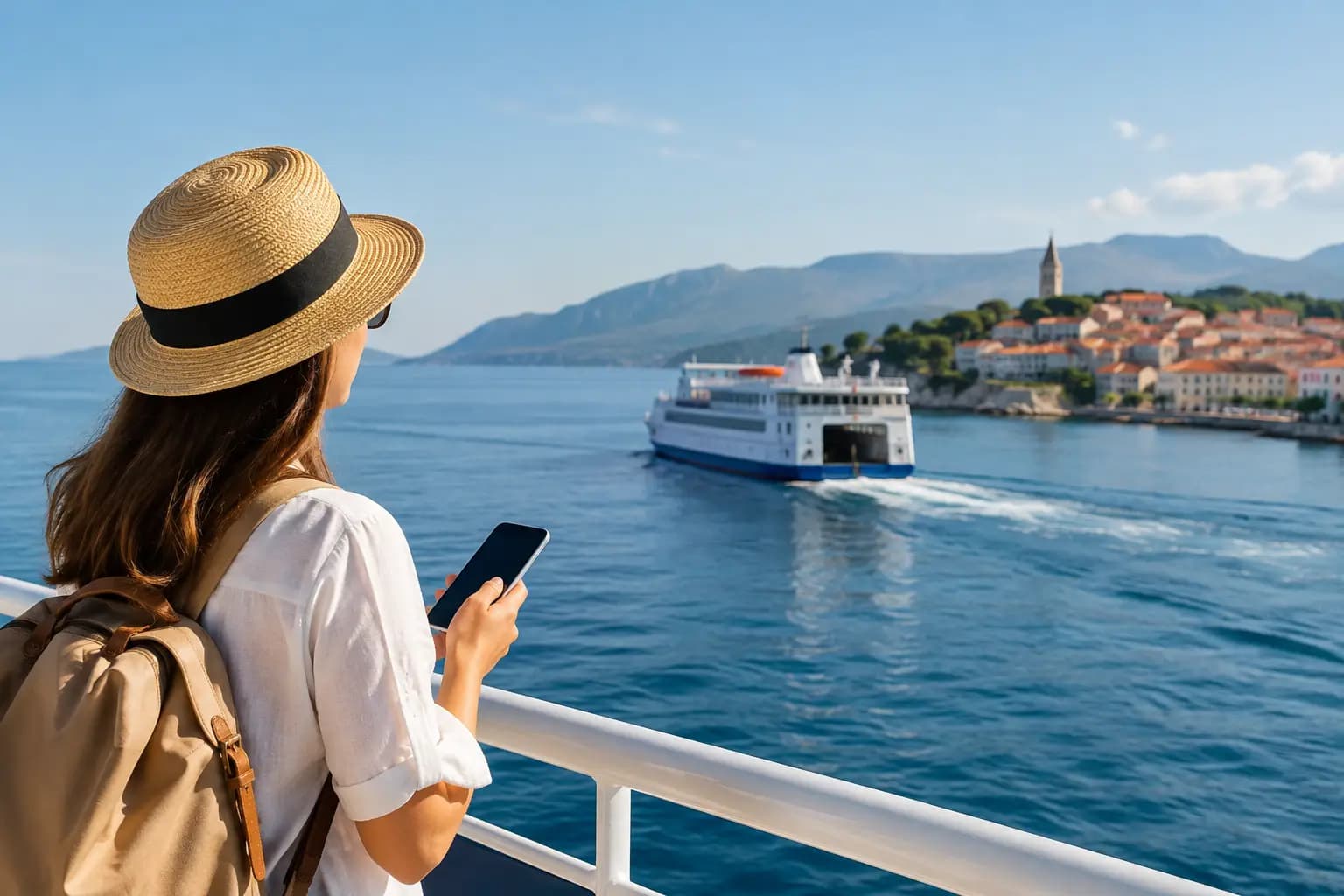
You can lose a full vacation day at the Split ferry port simply by choosing an island that looks perfect on a map but does not fit your arrival time, rental-car plans, or idea of a good evening. Knowing how to choose Adriatic islands is less about finding the prettiest photos and more about matching the island to the way you actually travel: with children, from a late flight, for a week of swimming, or for a few slower days before visiting family on the coast.
The Adriatic has an island for almost every kind of trip, but its choices are not interchangeable. Hvar is not Vis with better marketing. Brač is not just a beach day from Split. Korčula, Mljet, Rab, Lošinj, and Dugi Otok each reward a different pace, budget, and tolerance for logistics. Start with the reality of your trip, then let the island follow.
How to choose Adriatic islands by travel style
The most useful first question is not, “Which island is best?” It is, “What do we want our days to feel like?” If your answer includes dinner reservations, lively waterfront bars, boutiques, and plenty of restaurant choice, an island with a proper town and regular connections will suit you better. Hvar Town, Korčula Town, and the larger settlements on Brač offer that sense of activity, especially from June through September.
If you picture reading by a clear cove, cooking in your apartment, and taking one good walk each evening, look beyond the headline destinations. Vis has a quieter, more isolated character, although it requires more commitment to reach. Mljet is a strong choice for travelers who value nature over nightlife, while Dugi Otok works well for people happy to trade convenience for space, dramatic coastline, and fewer crowds.
Families usually benefit from choosing an island with easy supplies, calm swimming areas, shaded promenades, and accommodation near a town or village center. Rab, Lošinj, and Brač are often less stressful than an island where every beach requires a steep drive or a boat ride. Couples can be more flexible, but even then, a romantic stone house loses some appeal if the nearest grocery store is 25 minutes away on a narrow road.
Start with your arrival, not the island photo
For travelers coming from the United States, Germany, Austria, Switzerland, or elsewhere in Europe, flight timing often decides the sensible island choice. A midday arrival in Split gives you far more options than a late-evening landing. If your flight arrives after the last practical ferry, you may need a night on the mainland. That is not a failure of planning, but it should be planned rather than discovered with luggage in hand.
Split is the main gateway for Brač, Hvar, Šolta, Vis, and several central Dalmatian islands. Dubrovnik is more natural for Korčula, Mljet, and the Elaphiti Islands, though connections vary sharply by season. Zadar is useful for Dugi Otok, Ugljan, Pašman, and the islands farther north. From Rijeka and the Kvarner coast, Cres, Lošinj, Rab, and Krk become much easier propositions.
A practical rule: for a stay of three or four nights, prioritize the shortest reliable transfer. Spending four hours each way can be worth it for a 10-day vacation; it rarely feels worth it for a long weekend. If your group includes grandparents, small children, or anyone arriving after a long transatlantic journey, favor an island with frequent sailings and simple ground transport.
Ferry frequency matters more than distance
An island may be geographically close yet awkward to reach. Some routes run many times a day, while others have limited departures, particularly outside peak summer. Passenger catamarans can be fast and convenient, but they do not take cars. Vehicle ferries offer flexibility at the destination, though boarding in high season requires time, patience, and a reservation where available.
Do not assume you need a car. Hvar Town, Korčula Town, and several compact island centers can work very well without one, especially when your accommodation is walkable from the port. On Brač, Vis, Dugi Otok, Mljet, Cres, and Lošinj, a car can open up beaches and villages that would otherwise be difficult to reach. The trade-off is parking, road confidence, and ferry cost.
Pick the island based on your beach expectations
The Adriatic does not offer one uniform beach experience. Many first-time visitors imagine long, soft sandy beaches everywhere, then arrive at beautiful pebbled coves, rocky platforms, and clear water that calls for water shoes. That is part of the region’s appeal, but it is better to choose with open eyes.
For families who want easier entry into the sea and a more traditional beach setup, Rab has several sandy or shallow-water options, while parts of Lopud and Šolta can feel manageable and relaxed. Brač offers variety, from popular beaches to quieter coves, but the famous spots can become busy in July and August. Lošinj is especially appealing for pine shade, clean water, and a polished but not overly flashy family atmosphere.
Travelers who care more about swimming clarity, snorkeling, and secluded coves may prefer Vis, Mljet, or Dugi Otok. These islands are not necessarily about lying on a broad beach all day. They are about choosing a cove, arriving early, bringing water and snacks, and staying until the afternoon light changes the color of the sea.
If beach access is central to your trip, check the exact location of your accommodation rather than relying on the island name. An apartment described as “near the sea” may be close to a harbor, not a swimming beach. On hilly islands, a 10-minute walk downhill can become a much longer return in the midday heat.
Decide how much bustle you actually want
Some travelers say they want a quiet island, then feel stranded after two evenings with few dining choices. Others book a famous town and wonder why they cannot hear the waves over the late-night crowd. There is no wrong preference, but the gap between a busy harbor town and a small inland village can be enormous.
Hvar is the obvious example. Hvar Town can be energetic, stylish, and expensive in peak season. It suits travelers who enjoy being where things are happening. But the island also has calmer places, including Stari Grad and Jelsa, where the rhythm is less performative and accommodation may offer better value.
Korčula Town gives you historic streets, good restaurants, and an evening promenade without quite the same intensity. Vis Town and Komiža feel more laid-back, though their restaurant scene is smaller. On Mljet, the appeal is early mornings, forested landscapes, and nights that end naturally rather than with a packed schedule.
A useful compromise for couples and groups is to stay close enough to a lively center for dinner, but not directly above its waterfront. For families, a village with a bakery, small market, pharmacy access, and a nearby swimming spot often beats a remote villa with a dramatic view.
Budget for the whole island, not just the room
Island trips can look affordable until the extra costs begin adding up: ferry tickets, vehicle transport, taxis, beach equipment, restaurant prices, and limited grocery choice. The most famous islands tend to charge a premium in the busiest weeks, particularly around the main towns.
Brač, Rab, Ugljan, Pašman, and parts of Krk can offer more value than the highest-profile islands, depending on dates and accommodation type. Krk also has the advantage of road access by bridge, which removes ferry uncertainty and can be a relief for families traveling with a lot of luggage. It does not feel as remote as Vis or Mljet, but that is precisely why it works for many practical trips.
An apartment with a kitchen is often the sensible choice for a week or more, especially for families and diaspora travelers used to buying local fruit, fish, bread, and supplies rather than eating every meal out. A hotel can make more sense for a short stay when you value breakfast, pools, parking arrangements, and less daily organizing.
Timing changes the answer
The best island in August may not be the best island in May or October. In peak summer, frequent connections, open restaurants, and a social atmosphere favor larger, better-connected islands. The price is crowds, heat, and less flexibility with accommodation.
June and September are often the sweet spots for travelers who can choose their dates. The sea is inviting, evenings are easier, and islands such as Vis, Korčula, Brač, and Lošinj feel more like places with a local rhythm than a single summer event. In the shoulder season, however, check ferry schedules and restaurant openings before committing to a smaller island.
For a first Adriatic island trip, choose the option that leaves room for small mistakes: a regular ferry, a walkable base, a grocery store nearby, and more than one good place to swim. The quieter, harder-to-reach island can wait for the trip when you know exactly what kind of escape you are chasing.
Ready for your next adventure?
Compare flights, accommodation and activities – ljetovanje.com helps you find the best deals for your perfect holiday.
ljetovanje.com
Travel expert and contributor for Ljetovanje.com