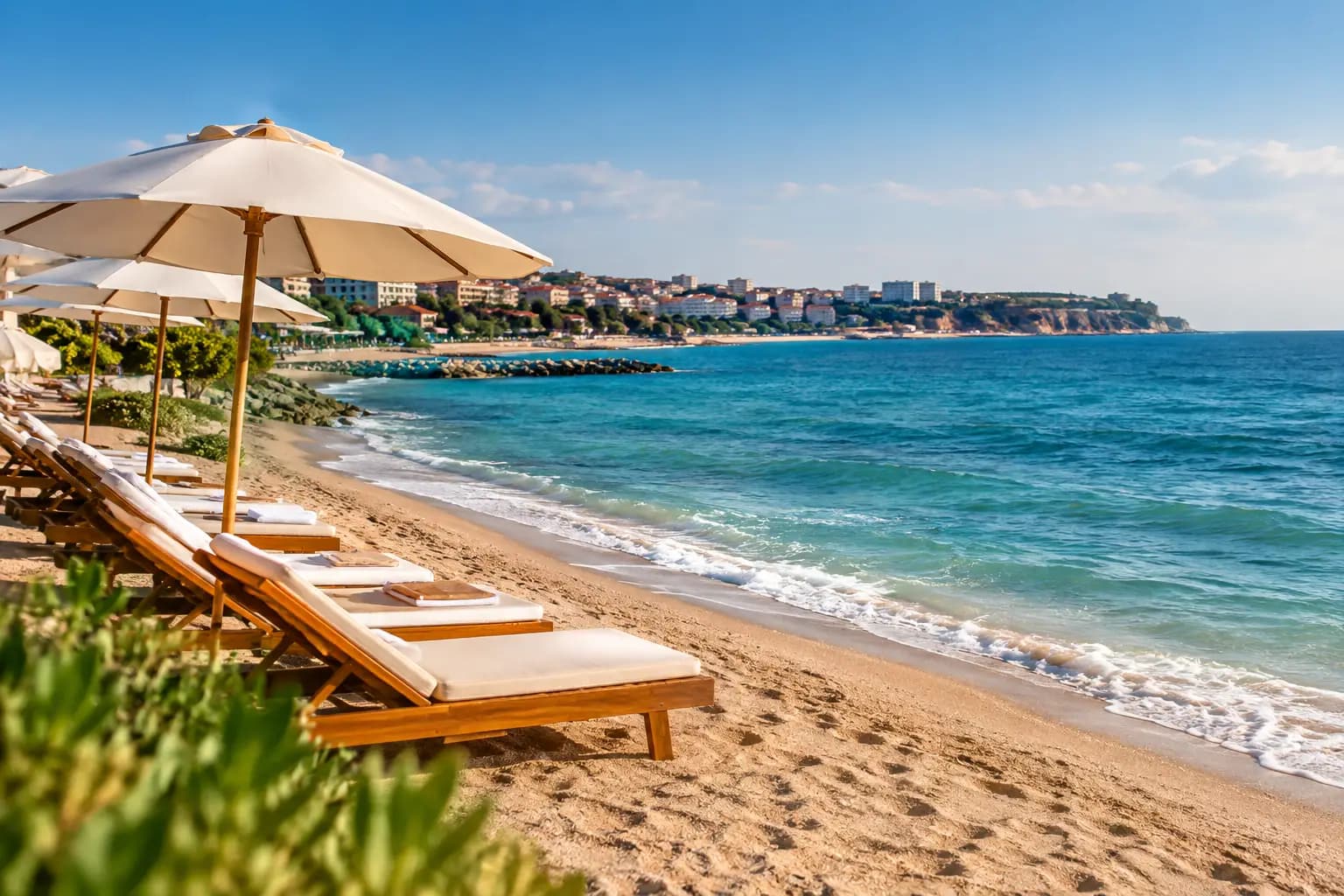
You can feel the difference within ten minutes of leaving the main resort strip. The music fades, the parking chaos thins out, and suddenly the coast starts looking like the place you thought you booked in the first place. That is the real appeal of hidden beaches near popular resorts - not some fantasy of having the sea entirely to yourself, but finding a stretch of coast that feels calmer, cleaner, and more local without giving up the convenience that made you choose a resort base.
For travelers from the Balkans and diaspora families flying in from Germany, Switzerland, Austria, or the US, this matters more than travel magazines usually admit. Most people do not want an isolated beach that takes half a day, two ferry rides, and a dirt road to reach. They want a practical compromise. Close enough for an easy day trip, far enough to avoid rows of rented loungers and the same three beach bars.
Why hidden beaches near popular resorts work
The best hidden beach is usually not truly secret. It is simply a place that mass tourism does not reward. Maybe there is no large hotel next to it, maybe access is a bit less obvious, or maybe it loses out to a sandy main beach because it is pebbly, smaller, or requires a short walk downhill. That small barrier is often enough.
This is especially true around Adriatic and Mediterranean resort zones. A famous base town gives you easy arrivals, more apartment choices, supermarkets, pharmacies, and late dinner options. The quieter cove nearby gives you the part of the trip you actually remember. For couples, that means a more relaxed swim and sunset. For families, it can mean less noise and fewer arguments over where to put the umbrella. For diaspora travelers visiting in peak summer, it is often the easiest way to make a busy destination feel manageable.
There is a trade-off, of course. Hidden beaches near popular resorts often come with less infrastructure. You may get cleaner water and more space, but also no showers, weak phone signal, and nowhere to buy coffee after 5 p.m. If you are traveling with small children, grandparents, or anyone with limited mobility, a beach that sounds charming online can become tiring quickly.
What makes a beach feel hidden, not inconvenient
A useful rule is this: if a beach is under 20 minutes from a resort by car, scooter, taxi, or moderate walk, it can be hidden in the right way. Beyond that, the logistics start to dominate the day. The sweet spot is a place close enough that you can leave after breakfast and still claim a decent spot before the midday crowd starts drifting out from the hotel zone.
The most reliable signs are practical, not romantic. Look for beaches that sit just beyond a headland from the main bay, below a residential area rather than a hotel strip, or near a secondary road without big signage. Small coves near apartment neighborhoods are often quieter than beaches heavily promoted in resort marketing. So are places where parking is limited but not impossible. If there is enough access for locals but not enough scale for tour buses, that is usually a good sign.
The beach itself also matters. In the Balkans and much of the Mediterranean, a pebbly cove with clear water often stays calmer than a sandy beach next to a resort center. Sand attracts volume. Easy access attracts volume. A broad promenade attracts volume. If your priority is peace, the less photogenic option on first glance is often the better one in real life.
How to find hidden beaches near popular resorts without wasting a day
Most travelers make one of two mistakes. They either trust social media too much, or they over-plan based on maps alone. Neither works well.
A beach that looks empty in photos may have been shot at 8 a.m. in June. A beach that seems close on the map may involve a steep descent with no shade and no easy place to turn around. The smarter approach is to shortlist two or three nearby options and judge them by access, parking, shade, and exit time. If a cove only works if everything goes perfectly, it is not a smart choice for a peak-season holiday.
Start with the resort you are already considering and think in rings. The first ring is the town beach or the hotel beach. The second ring is where the useful options usually are - small coves, local swimming spots, minor peninsulas, and beaches attached to apartment zones instead of resort complexes. The third ring is where you start spending too much energy unless the beach is genuinely exceptional.
This is also where local habits tell you a lot. If people arrive with coolers, folding chairs, and bakery bags rather than matching wristbands and inflatable unicorns, you are probably in the right place. Balkan travelers are good at spotting beaches worth the detour, and they vote with their car trunks.
The resort types where this works best
Not every popular destination has good nearby escapes. Some resort areas are built so tightly around one central beach that your only alternative is a long drive. Others are ideal because the coastline naturally breaks into coves.
Mid-sized coastal towns tend to offer the best balance. They are large enough to have infrastructure, but not so overbuilt that every meter of shoreline is commercialized. Island resort towns can also be excellent for this if you are willing to rent a small car or scooter, though parking and road quality vary a lot. On the mainland, places with older residential neighborhoods along the coast often hide the best swimming spots in plain sight.
Large, heavily packaged resorts are more mixed. They are convenient for flight arrivals and family logistics, but the nearest quiet beach may still feel busy in July and August. In those cases, timing matters as much as location. An ordinary cove at 8:30 a.m. can feel better than a so-called hidden beach at 1 p.m.
Timing matters more than people think
A hidden beach is not hidden all day. It can be peaceful in the morning, busy by noon, and empty again after 5 p.m. That is why late risers often feel disappointed. They do the hard part - finding the place - and then arrive exactly when everyone else does.
If you are staying in a popular resort, the easiest advantage you have is proximity. Use it. Go early, or go late. Morning works best for families with children because the heat is easier and parking is less stressful. Late afternoon works well for couples and shorter swims, especially when the beach has western exposure and decent sunset light.
High season changes the equation. In July and August, even quieter beaches can get crowded if access is easy. June and September are different. That same cove may feel almost private by comparison, with warmer sea temperatures than many visitors expect. For diaspora travelers who can choose shoulder season, this is often where the best value sits - lower accommodation pressure, easier parking, and a much better chance of actually enjoying the beach you came to see.
What to pack when the beach has less infrastructure
This is where practical thinking beats the usual postcard advice. If you are going beyond the main resort beach, assume the basics may be missing. Water, shade, reef shoes, and cash still matter in many coastal areas. So does a proper bag for trash. The quieter the cove, the more obvious bad visitor behavior becomes.
For families, comfort is less about luxury and more about friction. A light umbrella, easy snacks, and one cooler bag can turn a remote-feeling cove into a very manageable half-day trip. For couples, the main question is usually whether you want a swim stop or a full beach day. If it is a full day, no beach bar means you need to think ahead.
And yes, sometimes the main resort beach is the better choice. If the hidden option means 25 minutes of stairs in strong heat, no toilets, and grumpy kids by 11 a.m., that is not authentic travel wisdom. That is stubbornness.
The difference between local beaches and overhyped ones
A beach becomes overhyped when its reputation outruns its capacity. You will see this most often with small coves that appear on every short-form video feed for one season. Suddenly a place built for 40 towels is hosting 200 people, and everyone acts surprised.
The better strategy is to look for beaches that locals treat as normal. Not famous. Not branded. Just reliable. These places may have a concrete entry point, mixed rock and pebble shoreline, or no dramatic viewpoint at all. They work because they fit into a real holiday rhythm. Swim for two hours, grab lunch back in town, rest, then head out again later if you want.
That kind of beach suits the Ljetovanje.com reader especially well because it matches how people from this region actually travel. Not every day needs to be a full production. Sometimes the smartest plan is staying in a convenient resort apartment and rotating between one easy town beach, one quieter nearby cove, and one longer day trip that is genuinely worth the effort.
The best hidden beaches near popular resorts do not ask you to choose between convenience and character. They let you keep both, if you are realistic about timing, access, and what kind of beach day you actually want. Start with a strong base, stay flexible, and do not confuse harder-to-reach with better. The right cove is the one that leaves you relaxed enough to want to go back tomorrow.
Ready for your next adventure?
Compare flights, accommodation and activities – ljetovanje.com helps you find the best deals for your perfect holiday.
ljetovanje.com
Travel expert and contributor for Ljetovanje.com