To book Croatia island ferries well, start with the island you actually want to reach, not the ferry company or the first timetable you find. A route that looks simple on a map can mean a different port, a vehicle reservation, or a seasonal connection that does not run on your travel date. That distinction matters most when you are arriving from abroad with kids, luggage, a rental car, or one night already reserved on an island.
Croatia’s island network is one of the best ways to experience the coast, but it rewards a little planning. The good news is that you do not need to over-organize every crossing. You only need to know which sailings require a firm booking, which ones are flexible, and how much room to leave between your flight, drive, and ferry.
When to book Croatia island ferries in advance
Advance booking is most valuable from late June through early September, especially for popular car routes and weekend travel. Think of the busiest crossings as part of the summer road network: families heading to apartments, people returning to the coast, and day-trippers all tend to move on the same Saturday and Sunday patterns.
If you are traveling on foot, you will usually have more flexibility, though fast passenger boats can still sell out on routes connecting Split with Hvar, Brač, Vis, or Korčula. Book ahead if you have a fixed hotel check-in, are traveling in a larger group, or are catching a late-day sailing with no comfortable backup option.
A car changes the calculation. Vehicle capacity is limited even when passenger seats remain available. For islands reached by short car ferries, arriving early can work outside peak season, but a confirmed vehicle reservation removes unnecessary stress in July and August. This is particularly useful if you are driving down from Germany, Austria, Switzerland, or another long-distance diaspora corridor and do not want a delayed crossing to affect the first day of your vacation.
In shoulder season, schedules are thinner rather than necessarily full. A September or May ferry may have plenty of space, but only a few departures each day. Check the timetable before choosing your accommodation, especially on smaller islands where missing one boat can mean a long wait.
Choose the right boat: ferry, catamaran, or local connection
Not every sea crossing works the same way. A conventional ferry usually carries passengers, cars, motorcycles, and sometimes bicycles. It is the practical choice if you are bringing your own vehicle or a rental car permitted for island travel. These boats are slower, but often more forgiving for families, heavier luggage, and travelers who prefer a stable ride.
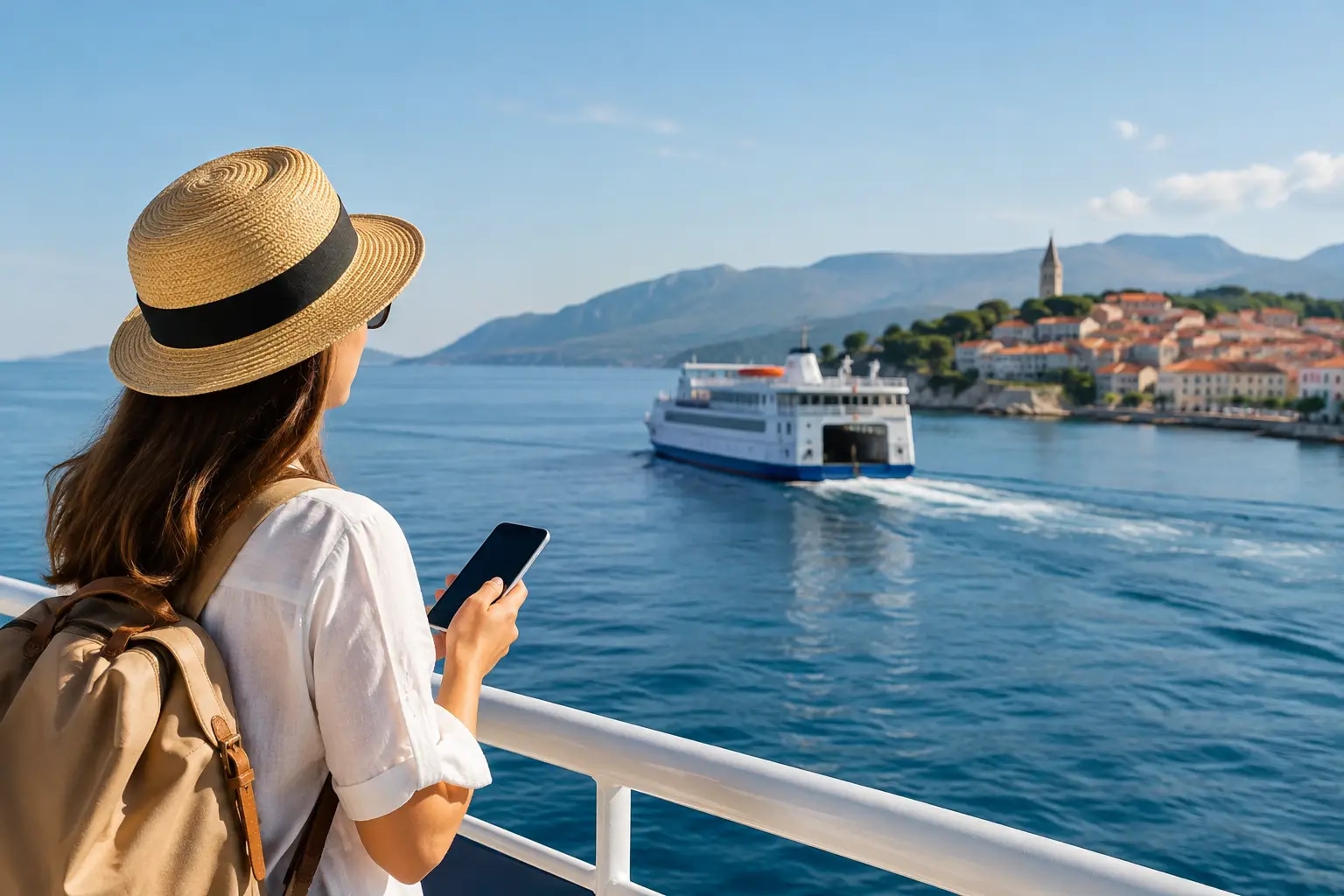
Catamarans are passenger-only and often faster. They are excellent for a couple staying in a walkable old town, or for travelers who plan to use local taxis, buses, and occasional boat trips instead of a car. The trade-off is that their luggage policies can be stricter, seating may be limited, and rough water is felt more than on a larger ferry.
Then there are local connections, including short shuttle-style routes and boats serving smaller settlements. These can be useful once you are already island-hopping, but do not build a tight international itinerary around them. If a late flight lands in Split and the final connection leaves 45 minutes later, that is not a plan - it is a gamble involving baggage claim, traffic, and finding the correct terminal.
Check the departure port, not just the city name
“Split to Hvar” sounds straightforward, but the exact port on Hvar can shape the rest of the trip. A boat arriving in Hvar Town is convenient for nightlife, restaurants, and pedestrian travel. A ferry arriving elsewhere on the island may be better for travelers with cars, families staying outside town, or those continuing toward quieter beaches.
The same principle applies along the coast. Look at the full route from airport or highway exit to ferry terminal, then from the arrival port to your accommodation. A cheaper room on a remote part of an island is not always a bargain if it requires an expensive transfer or an hour of driving after a late crossing.
How to time your journey from the mainland
For flight arrivals, leave a realistic buffer before the ferry. In summer, allow at least two to three hours after landing if you need to collect a rental car, pick up checked bags, and reach a major coastal port. Add more time for arrivals on Saturdays, late afternoons, or days when you are traveling with young children.
For drivers, aim to reach the terminal earlier than you think you need to. The final approach to a port can slow down during peak season, and vehicle lines may be organized separately from passenger entrances. Keep your booking confirmation and identification accessible rather than buried in a suitcase.
Do not rely on the last ferry of the day unless you have an overnight mainland backup you would genuinely be happy with. This is not pessimism. Summer thunderstorms, strong winds, road delays, and airport disruptions happen. A morning or early-afternoon crossing gives you options and lets you arrive on the island with enough daylight to find your apartment, groceries, and parking.
What to check before you pay
Before completing a ferry booking, confirm the travel date, departure port, arrival port, passenger count, and vehicle details. For cars, the length and height categories matter. A standard compact rental car is different from a van, camper, or car with a roof box, and choosing the wrong category can create problems at boarding.
Also check whether the ticket is tied to a specific departure or simply valid for a route and date. This differs by operator and route. A flexible ticket can be helpful if you are driving down the coast, while a fixed-time ticket may be better when coordinating an airport transfer or a stay with a strict check-in window.
Read the cancellation and change conditions before booking. Cheap tickets are not always the best value if your flight has a short connection or your itinerary is still uncertain. If you are traveling with a rental car, confirm that the rental agreement allows ferries and understand any insurance limitations before committing to an island route.
For families, look beyond the base fare. Check child categories, stroller access, toilet facilities, shaded waiting areas, and whether you can remain in the car during the crossing. On many routes, passengers need to leave the vehicle deck after boarding, so pack water, snacks, medication, and a light layer in a small day bag.
Luggage, bikes, pets, and the details that cause delays
Most ferry travel is relaxed once you are onboard. The awkward moments usually happen before departure, when travelers discover that a bike needs its own ticket, a pet requires a leash or carrier, or oversized luggage is inconvenient on a packed catamaran.
If you are traveling light and staying in a central town, a catamaran can be the cleanest option. If you have beach gear, a baby stroller, several suitcases, or supplies for a week in an apartment, a car ferry is often worth the extra travel time. It gives you room to travel like a family rather than like a weekend city-break traveler.
Bring a jacket even in high summer. The coast can be hot, but the wind on deck and air-conditioning inside can feel cool after sunset. Motion sickness medication is worth considering for sensitive travelers, particularly on fast boats or during windy conditions.
Build an island itinerary with margin
Island-hopping looks effortless on social media because no one posts the missed connection, the closed supermarket, or the taxi that costs more than expected. Croatia’s islands are best enjoyed with a little margin between crossings.
For a short vacation, choose one island and settle in. Brač works well for a mix of beaches, villages, and manageable travel from Split. Hvar suits travelers who want more energy and restaurant choice, while Vis rewards those willing to trade convenience for a quieter, more remote feel. For longer trips, two islands can work well if the connection is direct and you stay at least three nights in each place.
Avoid changing islands every day unless the ferry routes themselves are the point of the trip. You will spend more time checking terminals and carrying bags than swimming, eating dinner slowly, or finding the small beach that made you choose the Adriatic in the first place.
A practical booking approach
Start by choosing your island and accommodation area. Then identify the nearest suitable mainland port and whether you need a vehicle there. Check schedules for your exact dates, not a generic summer week, because routes and departure times shift across the season.
Book the essential crossing first: the vehicle ferry, the last available departure, or the boat that connects your airport arrival to the island. Keep less critical local trips flexible when possible. Ljetovanje.com is built around this kind of planning - comparing the route, stay, and real travel time together instead of treating the ferry as an afterthought.
The best ferry plan is rarely the fastest one on paper. It is the one that gets you to the island calm, with enough time to settle in, buy bread for the morning, and walk down to the water before the day is gone.
Ready for your next adventure?
Compare flights, accommodation and activities – ljetovanje.com helps you find the best deals for your perfect holiday.
ljetovanje.com
Travel expert and contributor for Ljetovanje.com