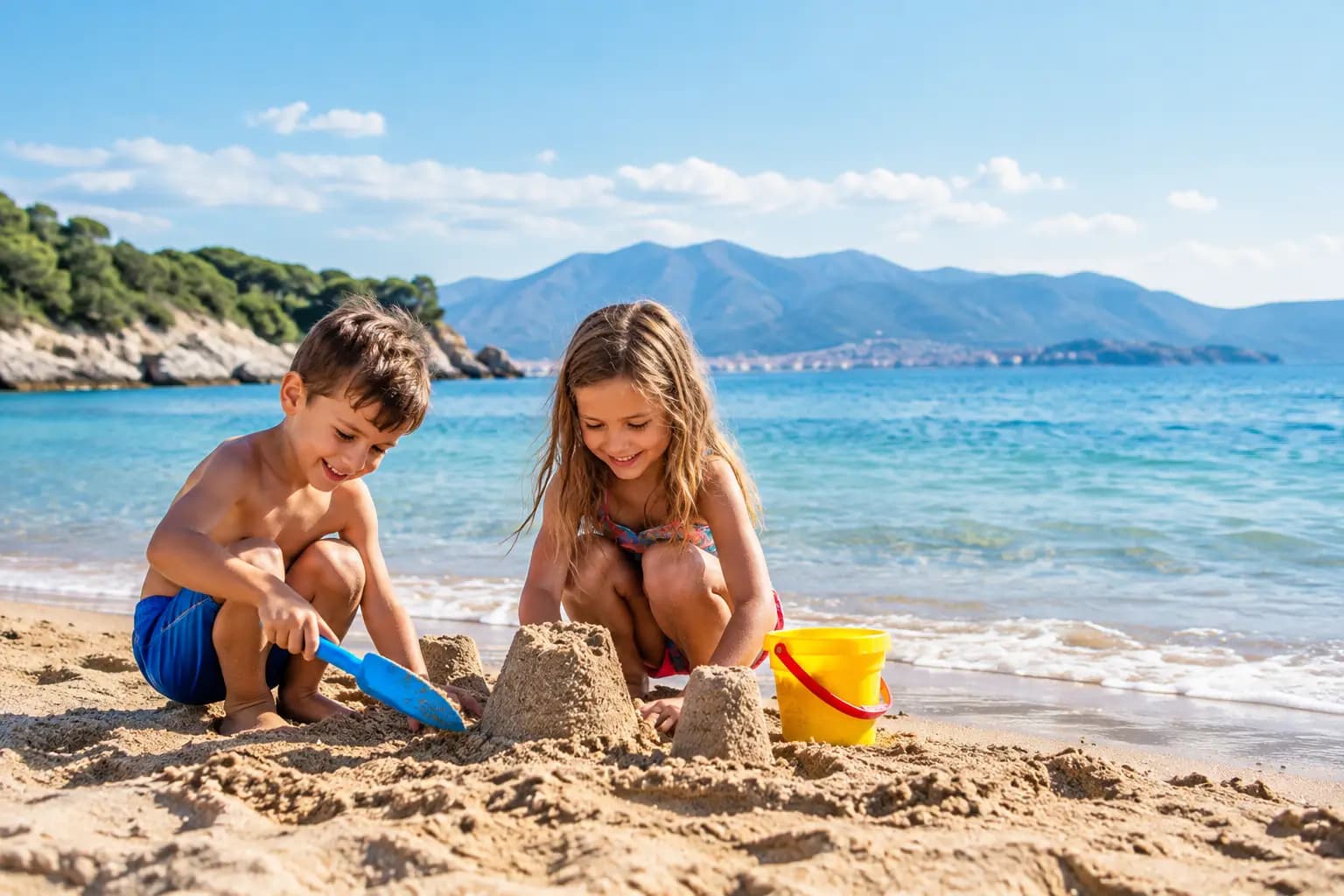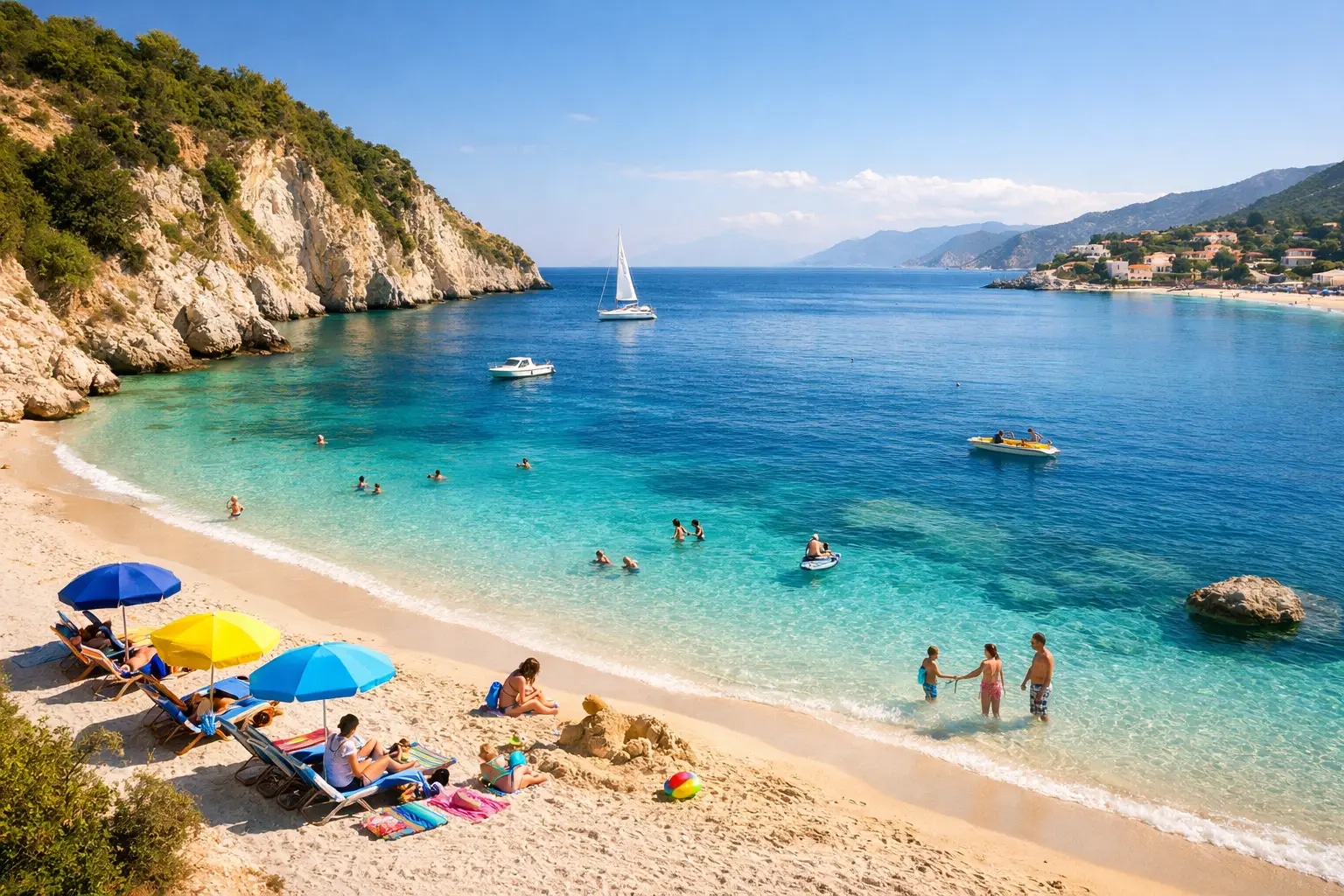
Some Greek beaches look perfect in photos, then turn into a headache the moment you arrive with a stroller, a tired 6-year-old, and a car full of beach bags. The best Greece beaches families love are usually not the wildest or most dramatic. They are the ones with shallow water, soft sand, easy parking or short walks, decent shade, and enough nearby tavernas or apartments to make the day feel simple.
That matters even more for travelers coming from the Balkans or diaspora families flying in from Germany, Switzerland, Austria, or the US. When you are planning around school breaks, flight times, luggage, and a family budget, you do not need a beach that is merely famous. You need one that works in real life.
What makes the best Greece beaches for families
For families, the first question is usually water conditions. Calm, shallow sea is more valuable than postcard scenery. A beach can be beautiful and still be stressful if it gets deep too quickly, has strong wind, or is covered in large pebbles that make entry difficult for smaller children.
The second factor is convenience. Some beaches are excellent for a two-hour visit but tiring for a full family day. Long downhill paths, boat-only access, and remote coves sound appealing until you are carrying snacks, towels, inflatables, and a sleepy child. That is why the best family beaches in Greece often sit near organized resorts, small towns, or apartment areas rather than in isolated corners.
Shade, toilets, food options, and parking also matter more than many guides admit. Families from our region often spend a full day at the beach, not just an hour between activities. You want a place where the day can stretch naturally without turning into logistics.
Best Greece beaches families should actually shortlist
Elafonissi, Crete
Elafonissi is one of the rare famous beaches that still makes sense for families. The lagoon-like sections are shallow and usually calm, so younger children can splash around without parents feeling constantly tense. The sand is soft, and the setting feels special without being complicated.
The trade-off is popularity. In peak summer, it gets crowded early, and the drive can be long depending on where you stay in Crete. For families, it works best if you treat it as an early-day trip rather than a spontaneous afternoon outing.
Agia Marina and Platanias, Crete
If you want practicality over bragging rights, these beaches near Chania are hard to ignore. They are long, organized, and easy to combine with apartment stays, supermarkets, restaurants, and evening walks. That combination is often exactly what families need.
The sea can be rougher on windy days than on protected lagoon beaches, so it is not ideal every single day. Still, for a week-long family stay, this area gives you flexibility that many prettier beaches do not.
Stalis, Crete
Stalis is a strong option for families who want a straightforward resort base. The beach is sandy, access is easy, and the town itself is simple to navigate. It is not the most characterful place in Greece, but that is also part of its strength. You spend less energy figuring things out.
For parents traveling with younger kids, that ease often beats chasing a more romantic location with weaker infrastructure.
Glyfada Beach, Corfu
Corfu works well for families who want a greener island and a shorter list of practical compromises. Glyfada has soft sand and beautiful water, and it is one of the island's better-known family-friendly options. It feels scenic but still accessible.
The main caution is that Corfu beaches vary a lot. Some are better for teens than toddlers, and some have steeper entries than they first appear. Glyfada is a safer family pick than many of the island's more dramatic coves.
Agios Gordios, Corfu
Agios Gordios has a wide beach, a relaxed atmosphere, and enough services to make family days easy. It also tends to suit families who want a quieter base than the busier parts of Corfu. The scenery is impressive, but the place still feels livable rather than overbuilt.
As with much of the Ionian coast, conditions depend on wind. It is worth checking the daily sea state rather than assuming every day will be equally calm.
Golden Beach, Thassos
Thassos is often underrated by international travel media, but for Balkan travelers it makes a lot of sense. It is accessible, relatively manageable in scale, and family-friendly in a very practical way. Golden Beach is the standout for many families because it is long, sandy, and easy to use day after day.
This is not a beach you visit for isolation. You choose it because children can play comfortably, parents can organize the day without stress, and the island itself does not feel overwhelming.
Potos and nearby beaches, Thassos
For families with slightly older kids, the south of Thassos can work very well too. Potos is livelier than some family resorts, but nearby beaches give you options, and the island's short driving distances help. If one beach is windy, switching plans is easier than on larger islands.
That flexibility is a real advantage when traveling with children.
Kalamaki Beach, Zakynthos
Kalamaki is one of the more family-sensible choices on Zakynthos. The beach is sandy, the sea entry is gentle in many sections, and the resort area has the kind of accommodation families often prefer. It is also a practical base if you want simple evenings and easy access from the airport.
Zakynthos has more photogenic beaches, but several of them are better for boat photos than for family beach days. Kalamaki wins on usability.
Tsilivi Beach, Zakynthos
Tsilivi is another good all-rounder. It has shallow areas, organized sections, and plenty nearby, which matters if you are traveling with children who need frequent breaks, snacks, or shade. It is one of those places where the holiday rhythm becomes easy quickly.
If your family prefers quieter, more local-feeling villages, Tsilivi may seem a bit too polished. But for convenience, it delivers.
Sani Beach, Halkidiki
Halkidiki remains one of the easiest Greek regions for family travel, especially for visitors arriving by car or short regional flights. Sani Beach is clean, well-kept, sandy, and very family-oriented. The water is usually calm, and the wider area is designed for relaxed summer routines.
The obvious downside is price. This is not the best choice if your trip is heavily budget-driven. But if you want comfort and predictability, it is one of the safer bets in northern Greece.
Vourvourou, Sithonia
Vourvourou is less about one single famous beach and more about a type of family holiday that works. The water is often shallow and clear, the pace is calmer, and apartment stays suit families who want space and self-catering. For many travelers from Serbia or North Macedonia, this part of Halkidiki feels familiar in a good way - practical, flexible, and easy to repeat.
If you want nightlife or a classic promenade atmosphere, it may feel too quiet. For young children, that quiet is usually a plus.
Naxos - Agios Prokopios and Agia Anna
Among the Cyclades, Naxos is one of the better islands for families. Agios Prokopios and nearby Agia Anna have excellent sand, attractive water, and a setup that is easier than the more fashionable islands. The beaches are beautiful, but the island still feels usable for normal family travel, not just couple-focused escapes.
The Meltemi wind can affect beach conditions in summer, and ferry logistics are not ideal for every family. But if you want a Greek island that feels both authentic and workable, Naxos deserves serious attention.
How to choose the right beach area for your family
The best choice depends less on rankings and more on your travel style. If you are flying with toddlers, staying close to the airport and choosing a beach town with supermarkets, pharmacies, and short transfers usually makes more sense than chasing a remote dream beach. Crete, Corfu, Zakynthos, and parts of Halkidiki are often easier in that respect.
If you are driving from the Balkans, northern Greece changes the equation. Halkidiki and Thassos become especially attractive because you avoid extra flight costs, car rental issues, and some of the packing stress that comes with air travel. For many families, that alone improves the vacation.
It also helps to be honest about what your children enjoy. Teenagers may prefer beaches with water sports and livelier evenings. Younger kids usually need shade, gentle entry, and nearby food more than dramatic scenery. Parents often know this, then ignore it during booking because the photos point elsewhere.
When Greece works best for family beach trips
Late June and early September are often the sweet spots. The sea is warm enough, prices are usually more reasonable than peak season, and the beaches are less chaotic. For families with preschool children, these weeks are often noticeably easier.
July and August still work, of course, but you need to plan around heat, crowds, and higher costs. In very popular areas, the difference between a good trip and a tiring one can be as simple as booking accommodation within walking distance of the beach.
A useful rule is this: the best family beach is not the one everyone posts. It is the one where your child can stay in the water safely, you can get lunch without a 20-minute drive, and the day still feels manageable by 5 p.m. That is usually where Greece gets family travel exactly right.
Ready for your next adventure?
Compare flights, accommodation and activities – ljetovanje.com helps you find the best deals for your perfect holiday.
ljetovanje.com
Travel expert and contributor for Ljetovanje.com