A good Adriatic meal is rarely about finding the restaurant with the best view. It is about arriving when the fish market is still active, choosing the house wine instead of an international label, and knowing which town does one thing exceptionally well. The best Adriatic towns for food reward travelers who plan their route around lunch as seriously as a beach or hotel.
For families driving down the coast, couples building a longer island trip, or diaspora travelers adding a few holiday days before visiting relatives, food can make the itinerary feel less interchangeable. These are towns where local cooking is still connected to the boats, vineyards, olive groves, and farms just beyond the old town walls.
What makes an Adriatic town worth eating in?
This is not a list of places with the most restaurants. The strongest food towns have a clear local identity: a morning market, a reliable tradition of small family-run taverns, ingredients that travel a short distance, and dishes you would genuinely miss if you left without trying them.
Summer has trade-offs. July and August bring the widest choice of open restaurants, but reservations, higher prices, and rushed service in the busiest centers. Late May, June, September, and early October are often better for travelers who want tables without planning every dinner days ahead. Seafood is excellent throughout the warm season, while truffle, game, and hearty inland-inspired dishes become more compelling when evenings cool.
9 best Adriatic towns for food
1. Rovinj, Croatia
Rovinj is polished, busy, and not the cheapest stop in Istria, but it earns its place through consistency. The harbor remains central to the table: grilled fish, scampi, squid, and simple pasta sauces made from the day’s catch are the right order here. Inland Istrian ingredients add another layer, especially olive oil, truffles, wild asparagus in spring, and Malvazija wine.
The smart approach is to eat one dinner near the old town for the atmosphere, then look slightly outside the most photographed lanes for a more relaxed konoba. Rovinj suits travelers who want food quality without giving up walkability, boutique stays, or a polished evening promenade.
2. Piran, Slovenia
Piran is compact enough to explore on foot before lunch, which is exactly how it should be enjoyed. Slovenian coastal cooking is shaped by the sea but has its own character: fish soups, grilled seafood, mussels, olive oil, and crisp local white wines all appear without the menu feeling copied from elsewhere on the coast.
The town is a particularly good choice for a two-night stop because it is easy to combine food with nearby salt-pan landscapes and the wider Slovenian coast. Book ahead in high season, and be prepared for limited parking. Piran works best when you arrive, leave the car behind, and slow down.
3. Zadar, Croatia
Zadar is often treated as a convenient gateway rather than a food destination. That is a mistake. Its market culture is among the strongest on the Croatian coast, with seasonal produce, island cheese, cured meats, olive oil, and fish giving you a quick read on the region before you sit down anywhere.
Look for Dalmatian classics prepared without too much decoration: brudet fish stew, grilled sardines, octopus salad, and pašticada when you want something more substantial. Zadar is practical for travelers flying in, renting a car, or continuing toward the islands. It offers a more livable food rhythm than destinations built entirely around evening tourism.
4. Split, Croatia
Split has plenty of average tourist menus, especially around the busiest stretches of the old center. It also has excellent food if you use the city like locals do: start around the green market, look for lunch spots just beyond the most crowded lanes, and favor short menus that follow the season.
This is the place for slow-cooked Dalmatian food such as peka, prepared under a bell-like lid with meat or seafood, potatoes, and herbs. It usually needs to be ordered in advance, so it is a meal to plan rather than an impulse choice. Split is ideal for a longer stay because its food scene combines traditional taverns, bakeries, modern wine bars, and easy access to island ingredients.
5. Trogir, Croatia
Trogir is smaller and calmer than Split, particularly once day visitors leave. Its historic center is an appealing setting for a seafood-focused dinner, but the real advantage is proximity to fishing villages and farms on the surrounding coast.
Choose it if you want fresh fish, black risotto, grilled vegetables, and local wine without the pace of a larger city. It is also a sensible overnight stop for travelers using Split Airport, especially when a late arrival makes an immediate island transfer impractical. One well-chosen evening in Trogir can be more satisfying than trying to force in another crowded sightseeing stop.
6. Korčula Town, Croatia
Korčula Town makes a strong case for staying on an island rather than treating one as a day trip. The local kitchen is defined by seafood, olive oil, goat cheese, and aromatic white wines, especially Pošip and Grk. The latter is closely associated with the island and worth ordering when you see it from a trusted local producer.
The town itself can feel busy at dinner, so a good balance is to eat one night within the walls and another in a quieter village or vineyard area. Korčula suits couples and food-minded travelers who can spare at least two nights. The ferry timing matters, especially with children or luggage, so avoid packing the arrival and departure days too tightly.
7. Ston, Croatia
Ston is a specialist destination, and that is its strength. This is where to eat oysters and mussels close to the waters where they are cultivated, preferably at lunch when you can give the experience time. The setting is less about glamorous nightlife and more about the pleasure of a long, salty, simple meal.
Pair shellfish with local white wine, then try the town’s famous salt-linked food heritage and traditional pasta dishes if you stay longer. Ston is easy to include on a route between Split and Dubrovnik, but it deserves more than a rushed roadside stop. Arrive hungry, and do not plan a long drive immediately afterward.
8. Hvar Town, Croatia
Hvar Town can be expensive and image-conscious, so it is not the best choice for every budget. Yet its food potential is real when you move beyond the waterfront’s most obvious menus. Hvar Island brings lavender, rosemary, olives, capers, fish, and excellent wine into the same culinary landscape.
Seek out dishes such as gregada, a gentle fish stew with potatoes, and ask for wines from the island rather than defaulting to familiar labels. Hvar makes sense for travelers who value a lively evening after dinner. For a quieter, more food-centered island experience, stay outside town and visit Hvar Town for one night out.
9. Kotor, Montenegro
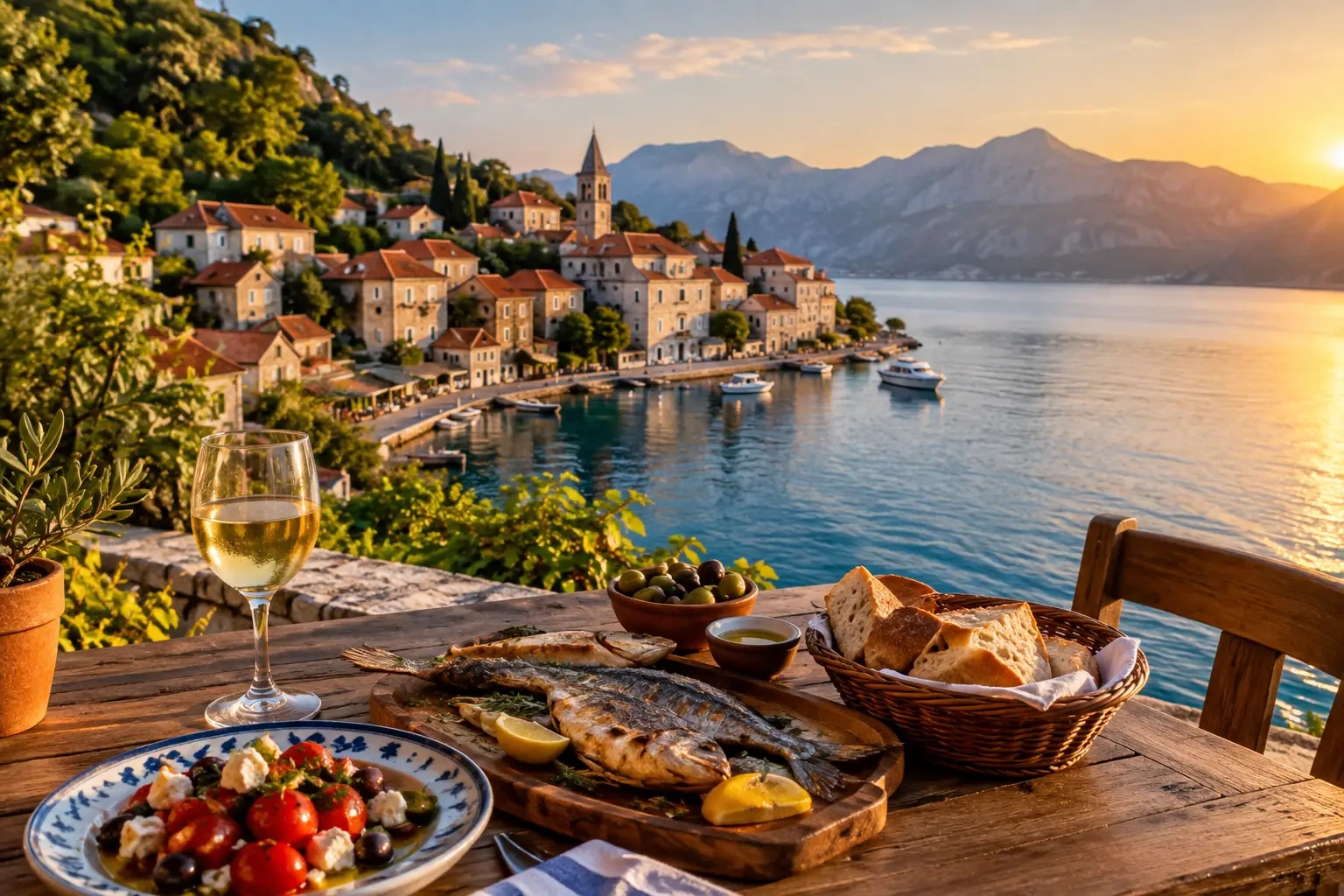
Kotor has a dramatic setting, but the food is better when approached through the broader bay rather than the old town alone. Bay of Kotor cooking leans into mussels, oysters, squid, grilled fish, cured meats, local cheese, and wines from the coastal and nearby inland areas.
The best strategy is to use Kotor as a base and eat around the bay as well. Small waterside settlements can offer a slower lunch and a more direct relationship with the sea than the busiest central streets. Kotor is especially convenient for travelers combining Montenegro’s coast with a short road trip, though summer traffic and parking require patience.
How to plan a food-first Adriatic route
Avoid trying to cover every coastal highlight in one week. A practical route gives each food town enough time for a market morning, a proper lunch, and an unhurried dinner. For example, a northern itinerary can connect Piran, Rovinj, and Zadar. A central Dalmatian route can focus on Split, Trogir, and Korčula. Further south, Ston and Kotor work well together if border crossings and driving days are planned conservatively.
Apartments are particularly useful on food-focused trips. A small kitchen lets you turn market finds into breakfast, save restaurant meals for the dishes worth ordering out, and make travel days easier for families. If you are arriving from the US or Western Europe, consider a first night near your arrival airport rather than driving several hours after a late flight. Good food is less enjoyable when everyone is exhausted.
When choosing restaurants, a short menu can be a positive sign, not a limitation. Ask what was brought in that day, whether a slow-cooked dish needs advance notice, and which local wine the staff would drink with the meal. Those three questions usually tell you more than a long online rating list.
The Adriatic is best eaten at a measured pace: market in the morning, swim before lunch, and dinner after the heat has dropped. Leave room in the schedule for the meal you did not plan for - it may become the reason you remember the town at all.
Ready for your next adventure?
Compare flights, accommodation and activities – ljetovanje.com helps you find the best deals for your perfect holiday.
ljetovanje.com
Travel expert and contributor for Ljetovanje.com